




Exploration of a Prediction Model for Delay Onset of Lactation Stage II in Cesarean Section Parturients
-
摘要:
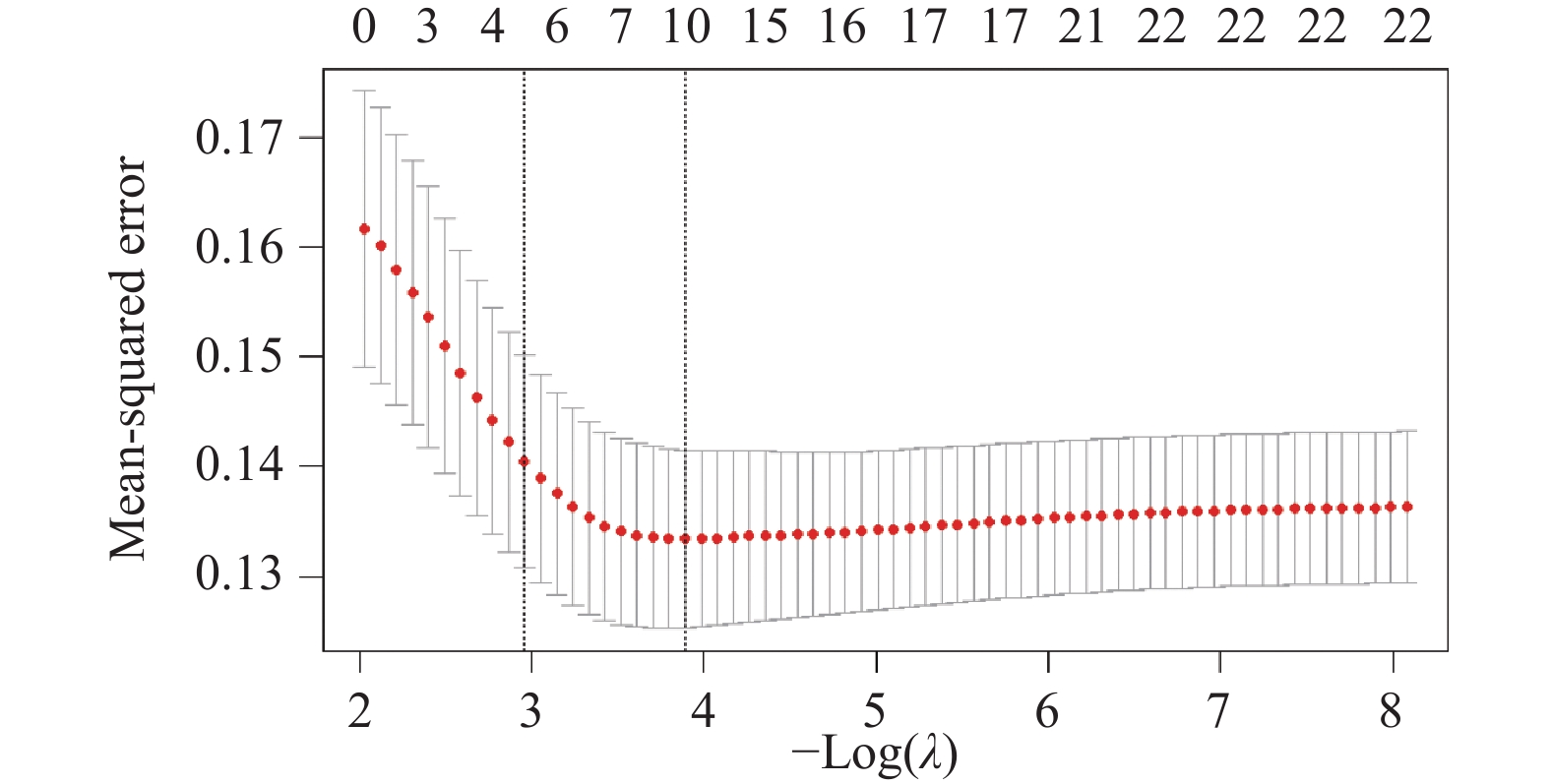
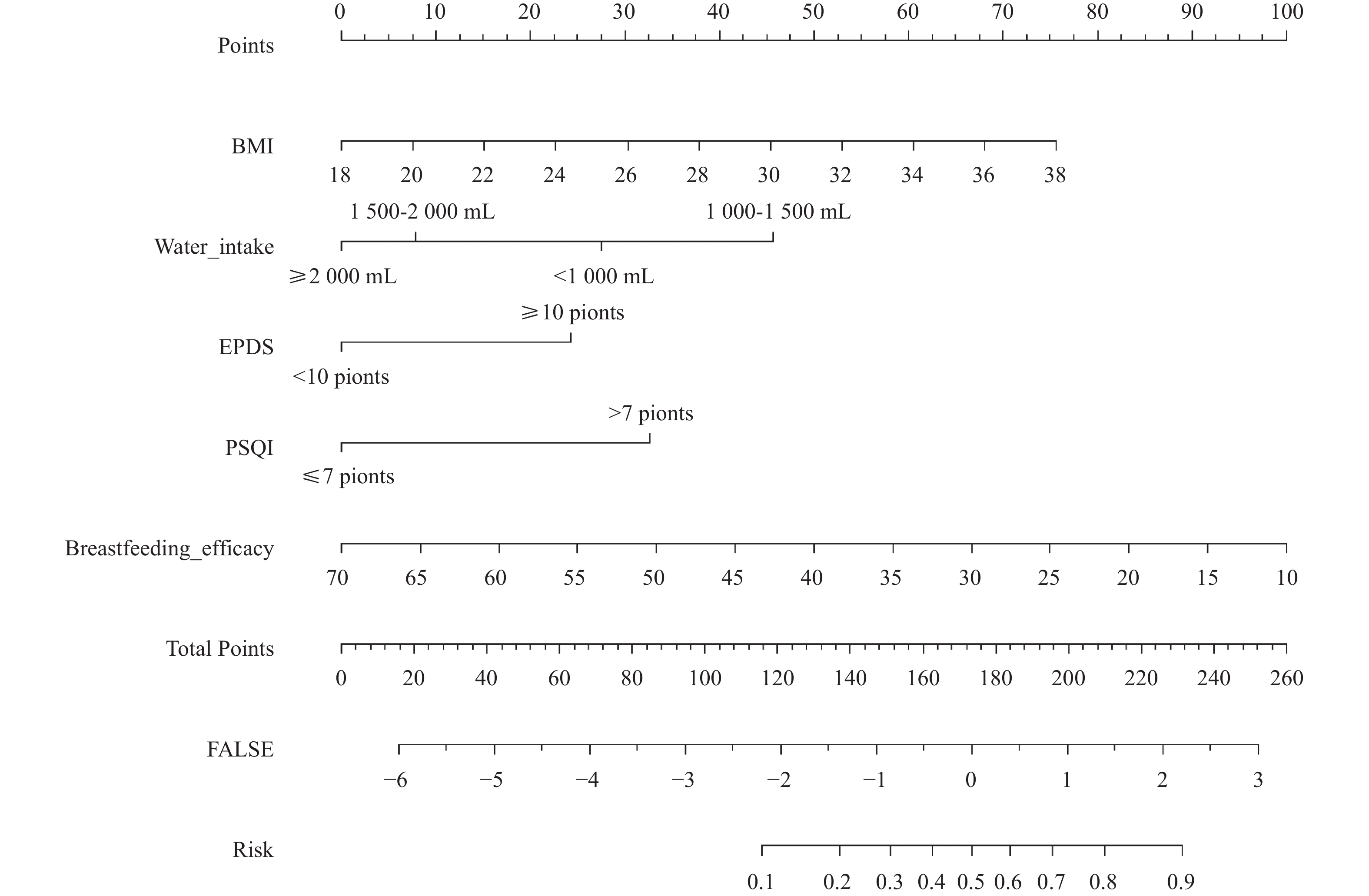
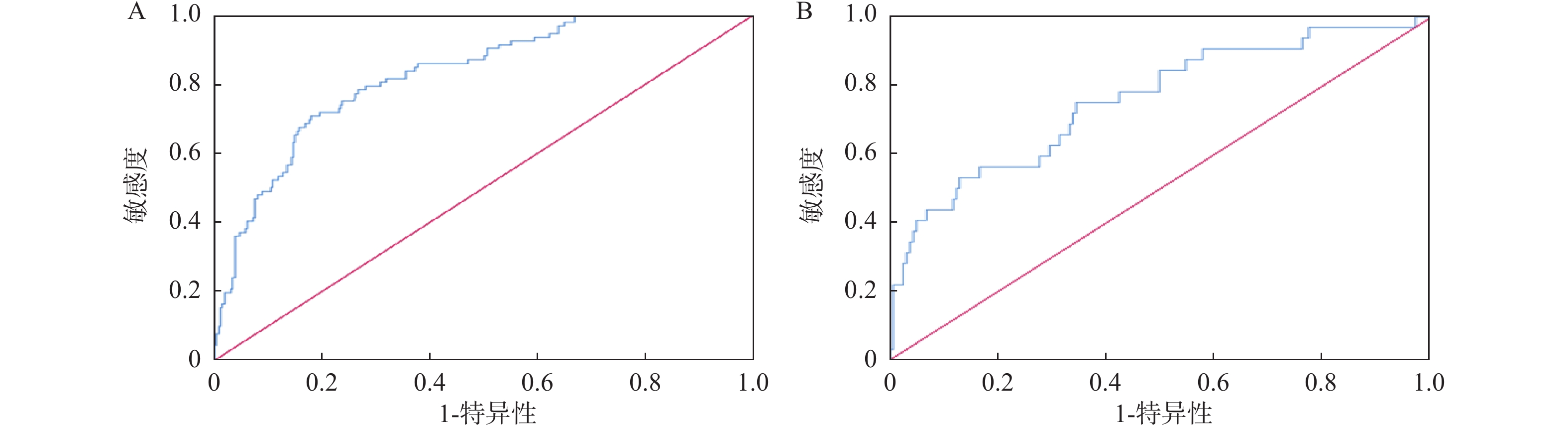
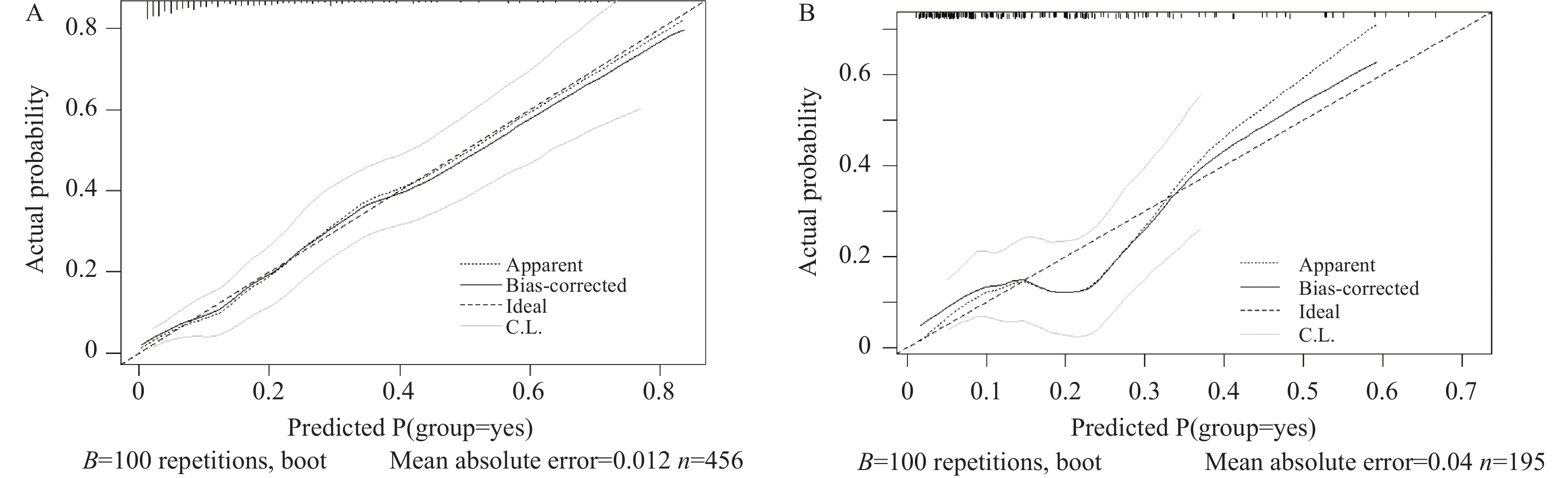
目的 探索剖宫产产妇泌乳II期启动延迟(delayed onset of lactogenesis Ⅱ,DOL II)预测模型并验证其预测效果。 方法 采取便利抽样法选择2023年12月至2025年1月就诊于昆明市某三级甲等妇幼保健院的651例剖宫产产妇为研究对象,将其随机分为建模组(n = 456例)和验证组(n = 195例),通过Lasso-Logistic回归构建剖宫产产妇DOL II预测模型,绘制列线图并评价其预测效果。 结果 建模组456例剖宫产产妇有92例发生DOL II,发生率为20.18%,验证组195例剖宫产产妇有32例发生DOL II,发生率为16.41%,Logistic回归分析结果示:术后日均饮水量: 1000 ~1499 mL(OR:5.700)、分娩时BMI值(OR:1.155)、爱丁堡产后抑郁量表评分(OR:2.521)、匹兹堡睡眠质量指数量表评分(OR:3.457)和母乳喂养自我效能简式量表得分(OR:0.939)是剖宫产产妇DOL II的影响因素。基于影响因素构建的预测模型在建模组和验证组中的采用受试者工作特征(receiver operating characteristic,ROC)曲线下面积(area under the curve,AUC)值分别为:0.83[95%CI(0.78,0.87)]和0.76[95%CI(0.66,0.85)],Hosmer-Lemeshow 拟合优度检验分别为:χ2 = 8.773和χ2 = 5.002,P > 0.005,绘制的校准曲线均与理想曲线相近,校准度较好。结论 本研究构建的预测模型可为产科护理人员早期识别剖宫产产妇DOL II高危人群并制定针对性护理措施提供工具支持。 Abstract:Objective To explore and a prediction model for Delayed Onset of Lactogenesis II (DOL II) in parturients who underwent cesarean section. Methods A convenience sampling method was used to select 651 parturients who delivered by cesarean section at a Grade A tertiary maternal and child health hospital in Kunming from December 2023 to January 2025. Participants were randomly divided into a modeling group (456 cases) and a validation group (195 cases). Lasso-logistic regression was used to construct the prediction model for DOL II. A nomogram was plotted, and its predictive performance was evaluated. Results Among the 456 cesarean section parturients in the modeling group, 92 cases developed DOL II, with an incidence rate of 20.18%. Among the 195 cesarean section parturients in the validation group, 32 cases developed DOL II, with an incidence rate of 16.41%. The results of Logistic regression analysis showed that the average daily water intake after surger: 1000 -1499 mL (OR: 5.700), BMI at delivery (OR: 1.155), Edinburgh Postnatal Depression Scale score (OR: 2.521), Pittsburgh Sleep Quality Index score (OR: 3.457), and Breastfeeding Self-Efficacy Scale-Short Form score (OR: 0.939) were the influencing factors of DOL II in cesarean section parturients. The prediction model based on these factors showed good discrimination, with Area Under the Receiver Operating Characteristic (ROC) Curve (AUC) values of 0.83 [95% Confidence Interval (CI)(0.78, 0.87)] in the modeling group and 0.76[95%CI(0.66, 0.85)]in the validation group. The Hosmer-Lemeshow goodness-of-fit test yielded χ2 values of 8.773 and 5.002 (both P > 0.05) for the modeling and validation groups, respectively. The calibration curves drawn were close to the ideal curve, indicating good calibration.Conclusions The prediction model constructed in this study provides instrumental support for obstetric nursing staff to early identify high-risk groups of DOL II among parturients undergoing cesarean section and develop targeted nursing interventions. -
Key words:
- Cesarean section /
- Puerperas /
- Delayed onset of lactogenesis /
- Predictive model /
- Nursing
-
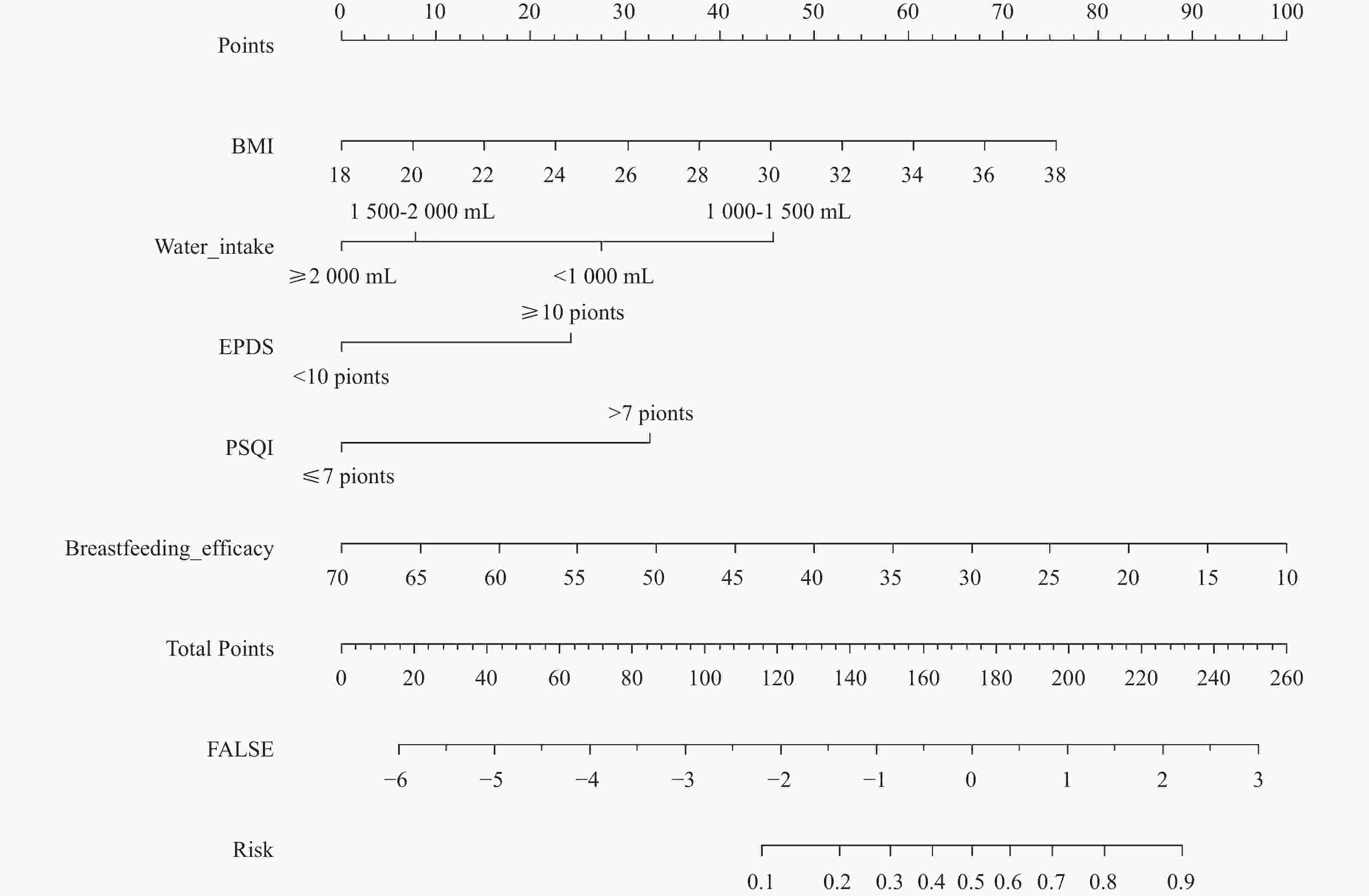
图 3 剖宫产产妇DOLII影响因素的列线图
Figure 3. Nomogram of influencing factors for DOLII in cesarean section parturients
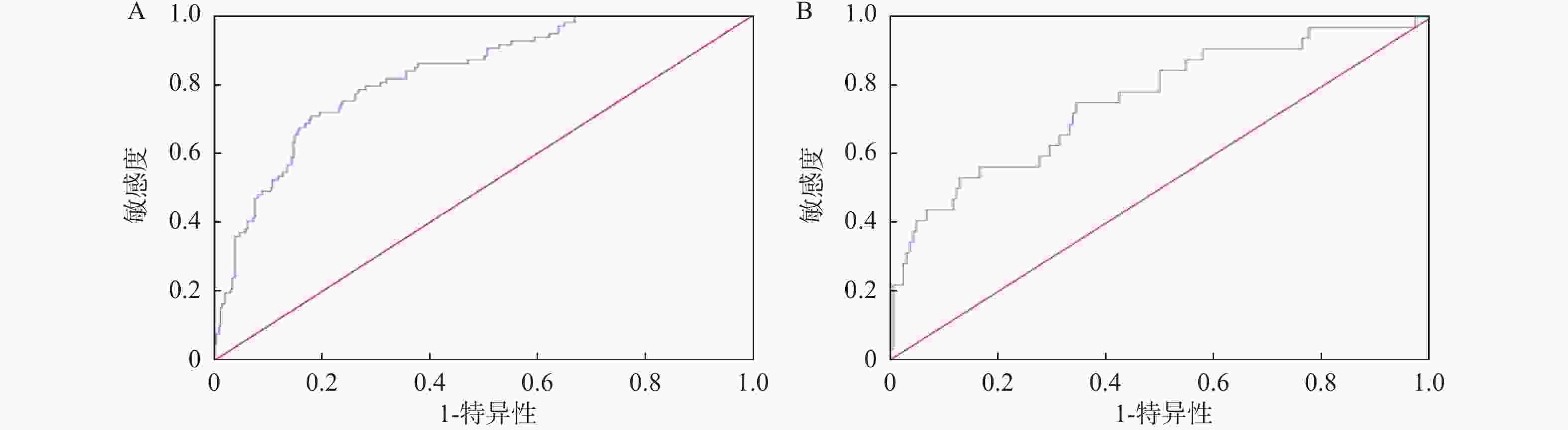
图 4 建模组和验证组ROC曲线
A:建模组ROC曲线;B:验证组ROC曲线。
Figure 4. ROC Curve of the modeling group and validation group
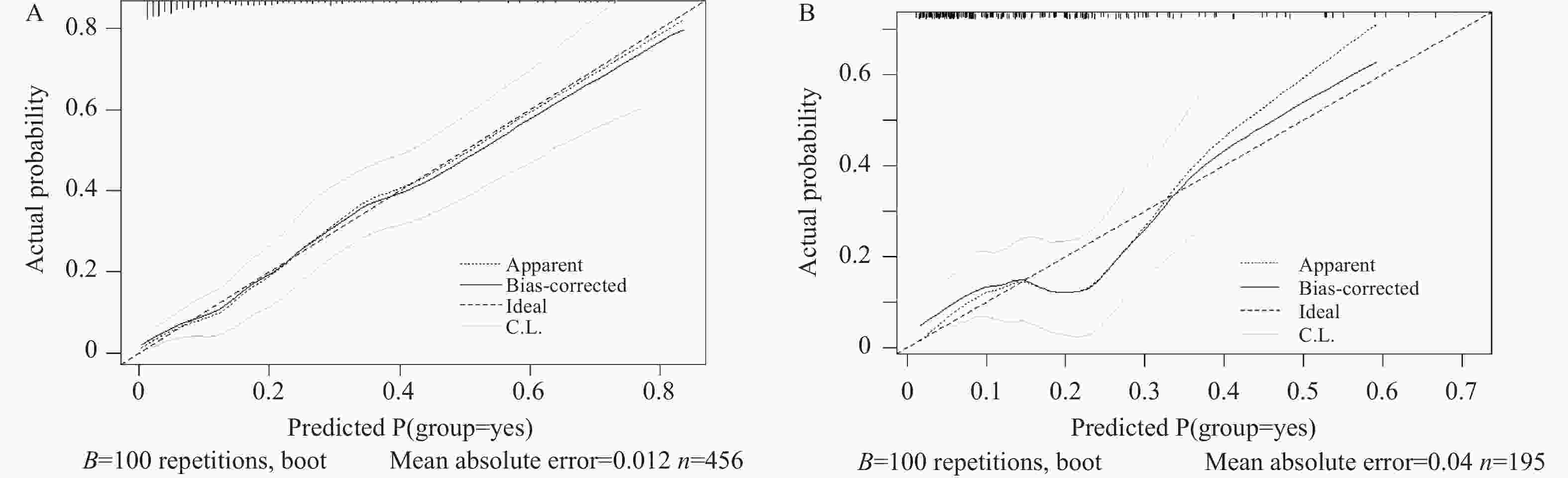
图 5 建模组和验证组校准曲线
A:建模组校准曲线;B:验证组校准曲线。
Figure 5. Calibration curve of the modeling group and validation group
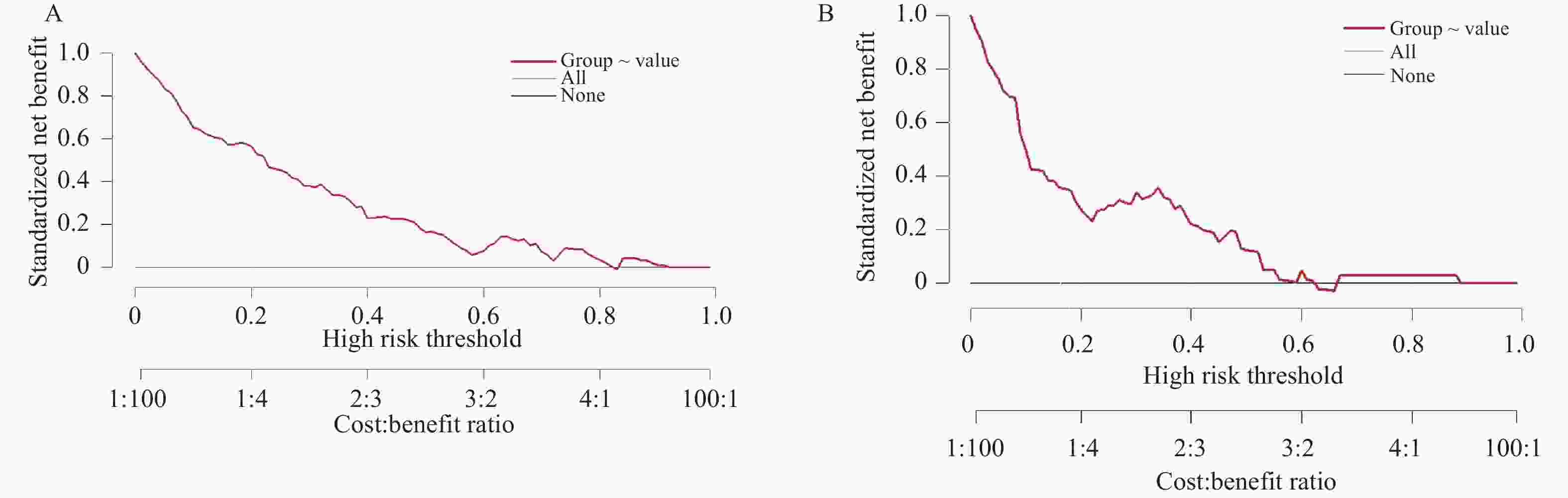
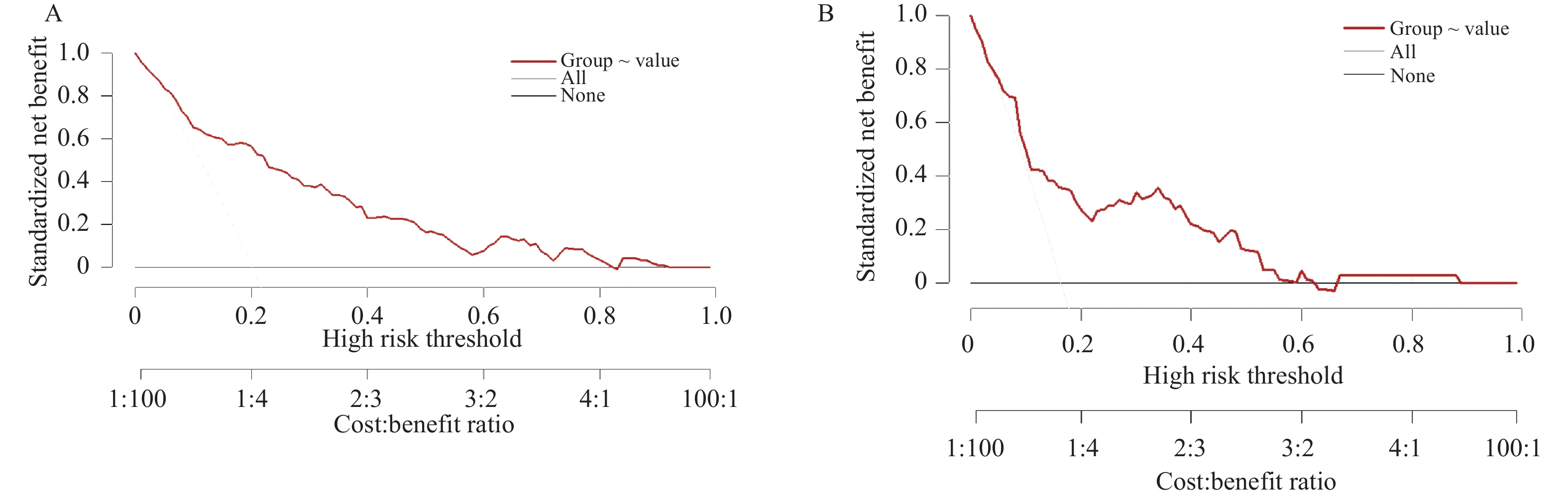
图 6 建模组和验证组的DCA曲线
A:建模组DCA曲线;B:验证组DCA曲线。
Figure 6. DCA curve of the modeling group and validation group
表 1 分类变量赋值表
Table 1. Categorical variable coding table
因素 赋值方法 结局指标 DOL II = 1 ,非DOL II = 0 年龄(岁) <35 = 1,≥35 = 2 文化程度 初中或以下 = 1,高中或中专 = 2,大专或本科 = 3,硕士或以上 = 4 家庭月总收入(元) 1000 ~2999 = 1,3000 ~4999 = 2,5000 ~7999 = 3,8000 ~9999 = 4,10000 以上 = 5孕期运动情况 从不运动 = 1,每周<3次 = 2,每周3-4次 = 3,每天运动 = 4 产次 初产妇 = 1,经产妇 = 2 妊娠期高血糖症 否 = 0,是 = 1 妊娠期高血压疾病 否 = 0,是 = 1 术后日均饮水量(ml) < 1000 = 1,1000 -1499 = 2,1500 -1999 = 3,≥2000 = 4每天母乳喂养频率(次) <8 = 1,8~12 = 2,>12 = 3 每次母乳喂养时间(min) <20 = 1,20~40 = 2,>40 = 3 血红蛋白值(g/L) <110 = 1,≥110 = 2 白蛋白值(g/L) <35 = 1,≥35 = 2 总蛋白值(g/L) <65 = 1,≥65 = 2 爱丁堡产后抑郁量表评分(分) <10 = 1,≥10 = 2 匹兹堡睡眠质量指数量表评分(分) ≤7 = 1,>7 = 2  下载: 导出CSV
表 2 剖宫产产妇DOLII单因素分析[n(%)/M(P25,P75)/($\bar x \pm s $)](1)
Table 2. Univariate analysis of DOLII in cesarean section parturients [n(%)/M(P25,P75)/($\bar x \pm s $)](1)
指标 非DOL II组(n = 364) DOL II组(n = 92) χ2/t/Z P 年龄(岁) 0.344 0.558 <35 295(81.04) 77(83.70) ≥35岁 69(18.96) 15(16.30) 文化程度 1.563 0.668 初中或以下 43(11.81) 10(10.87) 高中或中专 70(19.23) 21(22.83) 大专或本科 242(66.48) 57(61.96) 硕士或以上 9(2.48) 4(4.34) 家庭月总收入(元) 2.595 0.628 1000~ 2999 33(9.07) 12(13.04) 3000 ~4999 106(29.12) 26(28.26) 5000 ~7999 98(26.92) 19(20.65) 8000 ~9999 55(15.11) 16(17.40) 1万以上 72(19.78) 19(20.65) 孕期运动情况 6.290 0.098 从不运动 38(10.44) 8(8.70) 每周<3次 123(33.79) 41(44.56) 每周3~4次 80(21.98) 23(25.00) 每天运动 123(33.79) 20(21.74) 产次 0.139 0.709 初产妇 182(50.00) 48(52.17) 经产妇 182(50.00) 44(47.83)
下载: 导出CSV
表 3 剖宫产产妇DOL II的多因素分析
Table 3. Multivariate analysis of DOL II in cesarean section parturients
变量 B值 S.E Wald P OR 95%CI 常量 −6.914 1.618 18.254 <0.001* 0.001 — 术后日均饮水量(以≥ 2000 mL为参考)— — 27.775 <0.001* — — < 1000 mL1.043 0.547 3.633 0.057 2.839 0.971-8.302 1000 ~1499 mL1.740 0.394 19.527 <0.001* 5.700 2.634-12.335 1500 ~1999 mL0.300 0.423 0.504 0.478 1.350 0.590-3.091 分娩时BMI值 0.144 0.043 11.281 0.001* 1.155 1.062-1.256 爱丁堡产后抑郁量表评分 0.925 0.317 8.507 0.004* 2.521 1.354-4.694 匹兹堡睡眠质量指数量表评分 1.240 0.286 18.782 <0.001* 3.457 1.973-6.058 母乳喂养自我效能评分 −0.063 0.014 21.711 <0.001* 0.939 0.914-0.964 *P < 0.05。
下载: 导出CSV
表 4 建模组和验证组预测效能对比表
Table 4. Comparison of predictive performance between the modeling group and the validation group
指标 AUC(95%CI) Cut-off 灵敏度 特异度 P 建模 0.83(0.78,0.87) 0.20 0.78 0.73 <0.001* 验证 0.76(0.66,0.85) 0.14 0.75 0.65 <0.001* *P < 0.05。
下载: 导出CSV
-
[1] 秦美姣. 配偶支持母乳喂养健康教育方案的构建研究[D]. 广州: 广东药科大学, 2024. [2] 宋然. 我国母乳喂养咨询护士培养方案的构建[D]. 北京: 北京协和医学院, 2024. [3] Peng Y, Zhuang K, Huang Y. Incidence and factors influencing delayed onset of lactation: A systematic review and meta-analysis[J]. Int Breastfeed J, 2024, 19(1): 59. [4] 许子清. 产妇泌乳Ⅱ期启动延迟发生现状及影响因素和干预措施探析[J]. 中国医院统计, 2026, 33(1): 27-30. [5] 黄青青, 莫云长. 基于人工神经网络的母婴分离产妇泌乳延迟模型建立和验证[J]. 中国妇幼保健, 2025, 40(23): 4364-4368. [6] 胡珊珊, 刘君, 蒋盘华, 等. 产妇泌乳Ⅱ期启动延迟发生率及影响因素的系统评价[J]. 中国全科医学, 2021, 24(24): 3110-3115. [7] Li S, Wupuer T, Hou R. Factors influencing delayed onset of lactogenesis: A scoping review[J]. Int J Gen Med, 2024, 17: 2311-2326. [8] 李苏杭, 朱丽群, 金华怡, 等. 促进足月孕产妇泌乳启动与建立的最佳证据总结[J]. 护士进修杂志, 2024, 39(24): 2614-2620. [9] Fan H S L, Fong D Y T, Lok K Y W, et al. The association between breastfeeding self-efficacy and mode of infant feeding[J]. Breastfeed Med, 2022, 17(8): 687-697. [10] 张蕾, 李智伟, 王福珍, 等. 家庭化产房初产妇产后泌乳启动延迟的影响因素分析[J]. 医学理论与实践, 2023, 36(14): 2483-2486. [11] 胡珊珊, 刘敏, 孙菲, 等. 产妇泌乳启动延迟风险预测模型及评估工具的构建及验证[J]. 中国护理管理, 2023, 23(11): 1637-1642. [12] 牛喆昀, 沈佳莹, 张子涵, 等. 预测模型在临床研究中的应用[J]. 上海预防医学, 2023, 35(01): 56-65. [13] 连伟宁. 剖宫产产妇产后泌乳Ⅱ期启动延迟风险预测模型的构建及应用[D]. 郑州: 郑州大学, 2023. [14] 叶莉, 崔园英, 赖文娟. 高龄剖宫产产妇泌乳启动延迟Nomogram预测模型的构建与检验[J]. 全科护理, 2025, 23(17): 3306-3311. [15] 丁秋月. 高龄剖宫产产妇泌乳启动延迟的影响因素分析及预测模型的构建[D]. 南宁: 广西中医药大学, 2022. [16] 严程娟, 胡希文, 傅菊萍, 等. 爱丁堡产后抑郁量表评分在经产妇产后抑郁症状评估中的应用及产后抑郁的影响因素分析[J]. 中国妇幼保健, 2024, 39(20): 4005-4008. [17] 徐慧子. 泌乳启动延迟与母乳喂养自我效能的相关性研究及影响因素分析[D]. 苏州: 苏州大学, 2021. [18] 董云燕, 周宏玉. 脊髓型颈椎病术后病人睡眠质量发展轨迹及其影响因素[J]. 护理研究, 2026, 40(06): 943-949. [19] 朱春艳, 卜飞, 赵升兰. 产妇于产后不同阶段母乳喂养自我效能现状及其影响因素[J]. 循证护理, 2024, 10(12): 2227-2231. [20] 谢晓星, 赵敏慧. 229例产科监护室高危妊娠产妇泌乳启动延迟现状及影响因素分析[J]. 护理学报, 2021, 28(7): 49-53. [21] 徐小琼. 一项关于孕产妇膳食营养状况的调查及评价[D]. 昆明: 昆明医科大学, 2024. [22] 谢臻城, 林小芳, 陆晓龙, 等. 中国部分地区产前保健和产后随访育龄妇女饮水知识、态度和行为分析[J]. 中国生育健康杂志, 2022, 33(6): 555-558+563. [23] 何宇纳, 叶晨, 房玥晖, 等. 中国膳食平衡指数的修订: DBI_22[J]. 营养学报, 2024, 46(3): 209-214. [24] 赵晶晶, 李玉红, 俞敏, 等. 妊娠晚期孕妇体力活动对泌乳启动延迟的影响研究[J]. 中国全科医学, 2022, 25(18): 2268-2274. [25] Keyes M, Andrews C, Midya V, et al. Mediators of the association between maternal body mass index and breastfeeding duration in 3 international cohorts[J]. Am J Clin Nutr, 2023, 118(1): 255-263. [26] 蔡翠华, 倪泽敏, 叶晓娟, 等. 孕期个性化膳食营养指导对母婴健康和妊娠结局的影响[J]. 营养学报, 2023, 45(4): 339-342+353. [27] 唐薇, 张智玮, 全春霞, 等. 广州市妇女孕期膳食质量与胎儿免疫功能的关系[J]. 卫生研究, 2024, 53(3): 382-388. [28] Guinhouya B C, Duclos M, Enea C, et al. Beneficial effects of maternal physical activity during pregnancy on fetal, newborn, and child health: Guidelines for interventions during the perinatal period from the French national college of midwives[J]. J Midwifery Women’s Health, 2022, 67(S1): S149-S157. [29] Lian W, Ding J, Xiong T, et al. Determinants of delayed onset of lactogenesis II among women who delivered via Cesarean section at a tertiary hospital in China: A prospective cohort study[J]. Int Breastfeed J, 2022, 17(1): 81. [30] Li W, Kuang G, Chen Y, et al. Development and validation of a model for predicting the risks for delayed onset of lactogenesis stage II for Chinese pregnant women[J]. Sci Rep, 2025, 15: 17074. [31] 靳利平, 李晓燕, 袁远. 产妇产后泌乳启动延迟发生现状、影响因素及干预对策研究[J]. 航空航天医学杂志, 2025, 36(8): 986-988. [32] 周薇妮, 陈薇, 游嘉, 等. 泌乳启动延迟研究热点的可视化分析[J]. 上海护理, 2025, 25(7): 51-55. [33] Xu K, Xie Y, Han X, et al. Effect of positive emotion intervention during late pregnancy on improving colostrum secretion: A randomised control trial protocol[J]. BMJ Open, 2023, 13(6): e066601. [34] 杨珏, 徐婕, 邓茹月. 母婴分离早产产妇泌乳Ⅱ期启动延迟的影响因素分析[J]. 浙江实用医学, 2023, 28(1): 17-20+36. [35] Sarvaran K, Abbasalizadeh F, Alaei M, et al. Prevalence of sleep disorders and the effect of sleep health education on sleep quality in pregnant women with sleep disorders[J]. Am J Lifestyle Med, 2024, 18(3): 435-444. [36] 庄宝华, 杨淑柳, 胡予婷. 产前宣教对孕妇自我效能及睡眠质量与剖宫产率的影响[J]. 世界睡眠医学杂志, 2023, 10(10): 2328-2331. [37] 任玲玲. 中药熏洗泡足及穴位贴敷护理干预对产妇产后康复及睡眠质量的影响研究[J]. 中国医药指南, 2024, 22(35): 129-132. [38] 徐世红. 生物反馈疗法治疗睡眠障碍孕产妇的效果评价[J]. 实用妇科内分泌电子杂志, 2025, 12(1): 53-56. [39] Pérez-Escamilla R, Tomori C, Hernández-Cordero S, et al. Breastfeeding: Crucially important, but increasingly challenged in a market-driven world[J]. Lancet, 2023, 401(10375): 472-485. [40] Segura-Pérez S, Richter L, Rhodes E C, et al. Risk factors for self-reported insufficient milk during the first 6 months of life: A systematic review[J]. Matern Child Nutr, 2022, 18(S3): e13353. [41] Tsaras K, Sorokina T, Papathanasiou I, et al. Breastfeeding self-efficacy and related socio-demographic, perinatal and psychological factors: A cross-sectional study among postpartum Greek women[J]. Mater Sociomed, 2021, 33(3): 206. [42] Miao Y, Zhao S, Liu W, et al. Prevalence and risk factors of delayed onset lactogenesis II in China: A systematic review and meta-analysis[J]. J Matern Fetal Neonatal Med, 2023, 36: 2214833. [43] 袁蔓娇, 李莉, 陈朝霞, 等. 低强度聚焦超声联合耳穴压豆对剖宫产术后产妇泌乳的影响[J]. 护理学杂志, 2023, 38(12): 50-52. [44] 张娜娜, 杨娜, 刘汉梅, 等. 结直肠癌患者术后癌因性疲乏的影响因素分析及预测模型构建[J]. 护士进修杂志, 2025, 40(20): 2135-2144. -

 点击查看大图
计量
- 文章访问数: 707
- HTML全文浏览量: 367
- PDF下载量: 93
- 被引次数: 0
