




Genetic Structure Analysis and Kinship Inference in a Male Pedigree Based on Next-generation Sequencing
-
摘要:
目的 基于二代测序技术,探索一种Y-STR缩小家系范围,常染色体STR推断亲缘远近的联合策略,进一步提高涉及男性犯罪案件的排查精度和效率。 方法 2024年6月在云南省曲靖市采集同一父系家系42名男性成员外周血样本,另外纳入4名家系外无关男性及来源于日常检案、经遗传学确认的23对已知亲缘关系样本用于验证。采用探源SET B-S138二代测序试剂盒对52个常染色体STR和81个Y-STR位点进行STR分型。基于常染色体STR分型结果计算两两样本间标准化状态一致性评分(ratio of identity by state,RIBS),依据法医系谱亲缘关系分级标准标注各样本对亲缘等级,通过等先验概率的Fisher线性判别分析构建基于RIBS的亲缘距离判别函数,并采用已知亲缘关系样本验证其效能。 结果 常染色体STR序列分型等位基因数较长度分型增加32.54%;构建判别函数D = 21.599×RIBS−6.864(D > 2.386为近距离亲缘关系,D≤2.386为远距离),在等先验概率及相同误分类代价下,RIBS分类界值为 0.428292 。回代分类总体准确率为98.78%。23个已知近亲关系样本对和164个家系外无关配对在该界值下均分类正确。结论 二代测序技术可提高常染色体STR的等位基因分辨能力,RIBS判别函数可用于家系成员间亲缘远近的初步二分类判定。这种基于二代测序的“常+Y”联合推断方式,有望在家系数据库比对初步锁定嫌疑家系后,进一步通过常染色体STR信息缩小目标范围,提高案件侦破效率。 Abstract:Objective To explore a next-generation sequencing (NGS)-based strategy combining Y-chromosomal short tandem repeat (Y-STR) analysis for narrowing the paternal lineage with autosomal STR analysis for classifying kinship distance, thereby further improving the accuracy and efficiency of suspect screening in criminal cases involving male suspects. Methods Peripheral blood samples were collected from 42 male members of the same paternal pedigree in Qujing, Yunnan Province, in June 2024; 41 were included in the subsequent pedigree analysis. Four unrelated males outside the pedigree and 23 pairs of samples with genetically confirmed kinship relationships from routine casework were additionally included for validation. STR genotyping was performed on fifty-two autosomal STRs and 81 Y-STRs using the SET B-S138 NGS panel. Ratios of identity by state (RIBS) were calculated for each sample pair based on the autosomal STR profiles, and kinship degrees were assigned according to forensic genealogical relationship classification criteria. A Fisher linear discriminant model with equal prior probabilities was constructed using RIBS, and its performance was evaluated using samples with known kinship relationships. Results The number of alleles identified by autosomal STR sequence-based genotyping increased by 32.54% compared with length-based genotyping. The discriminant function was D = 21.599×RIBS−6.864, with D > 2.386 indicating close kinship whereas D≤2.386 indicating distant kinship. Under equal prior probabilities and equal misclassification costs, the corresponding RIBS classification threshold was 0.428292. The overall resubstitution accuracy was 98.78%. At this threshold, all 23 known close-kin pairs and all 164 unrelated pairs involving males outside the pedigree were correctly classified. Conclusion NGS reveals additional sequence-level variation and improves the allele-resolution capacity of autosomal STR typing. The RIBS-based discriminant model enables preliminary binary classification of close versus distant kinship among pedigree members. This combined autosomal STR and Y-STR strategy may further narrow the target range using autosomal STR information after pedigree-database matching has identified a candidate paternal lineage, thereby improving the efficiency of criminal investigations. -
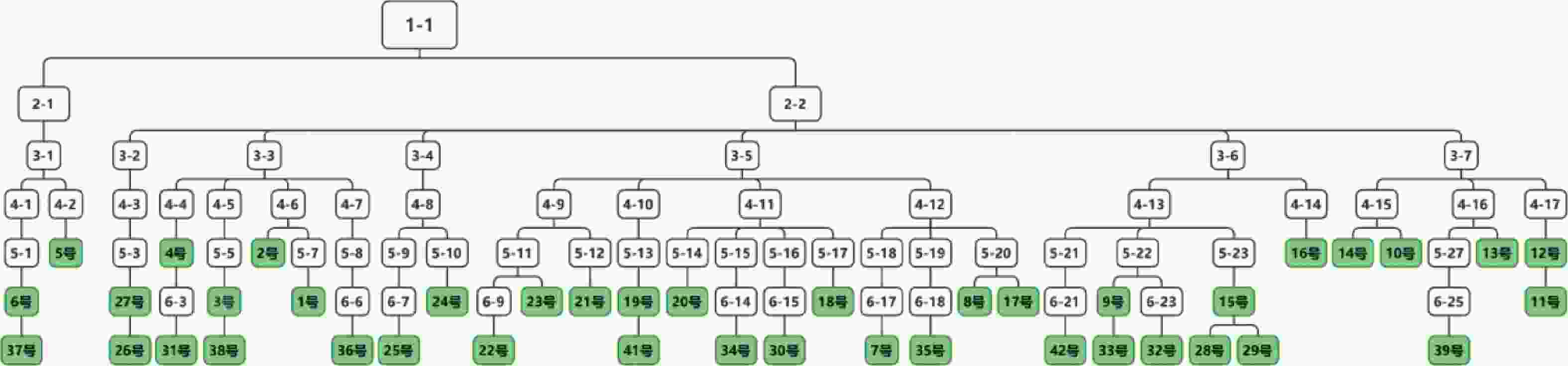
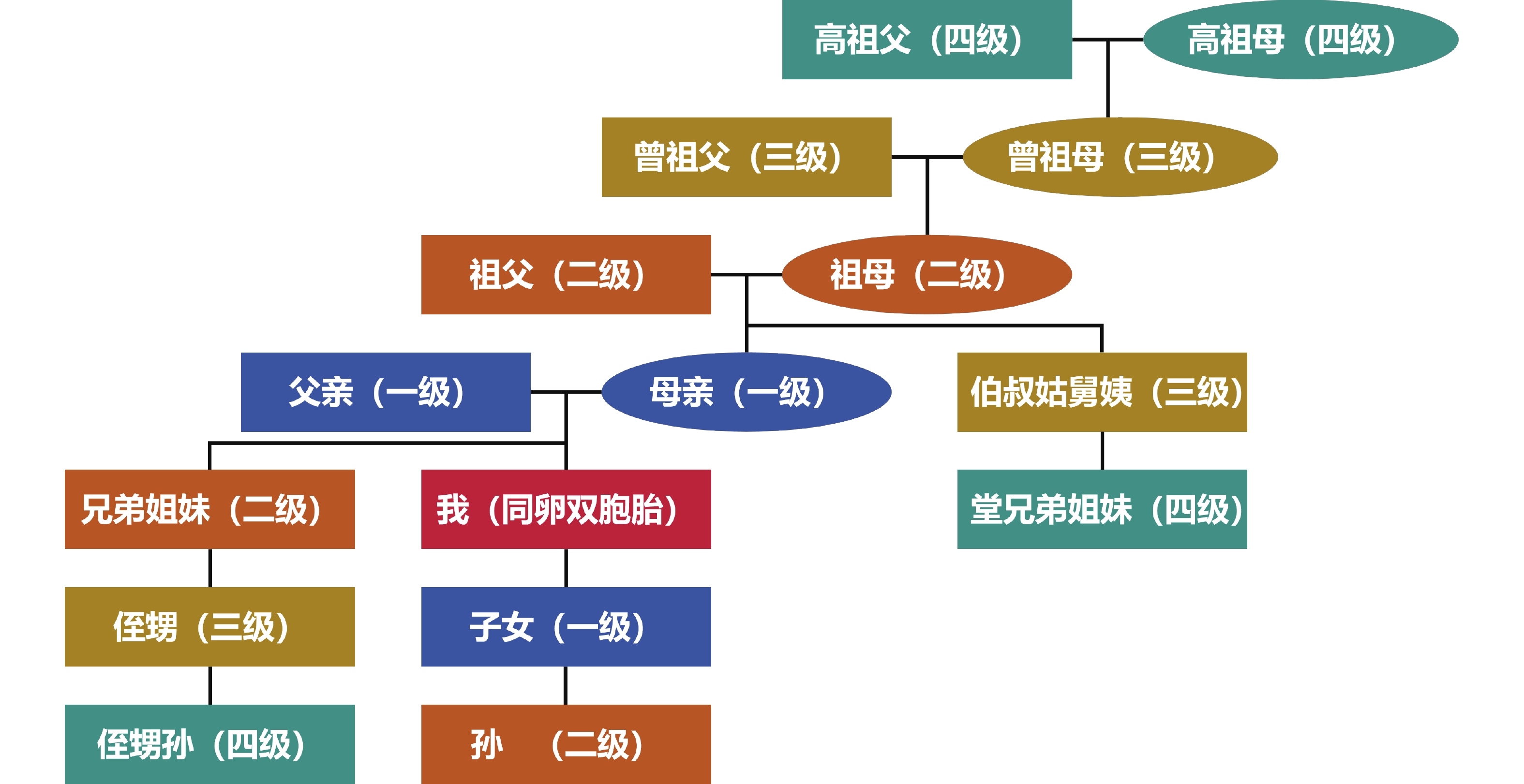
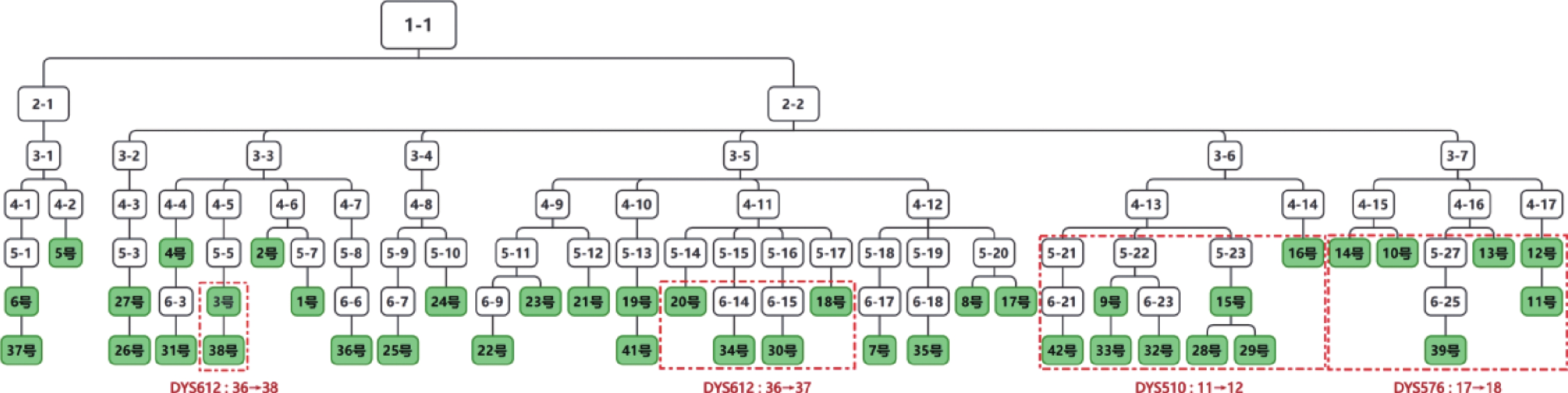
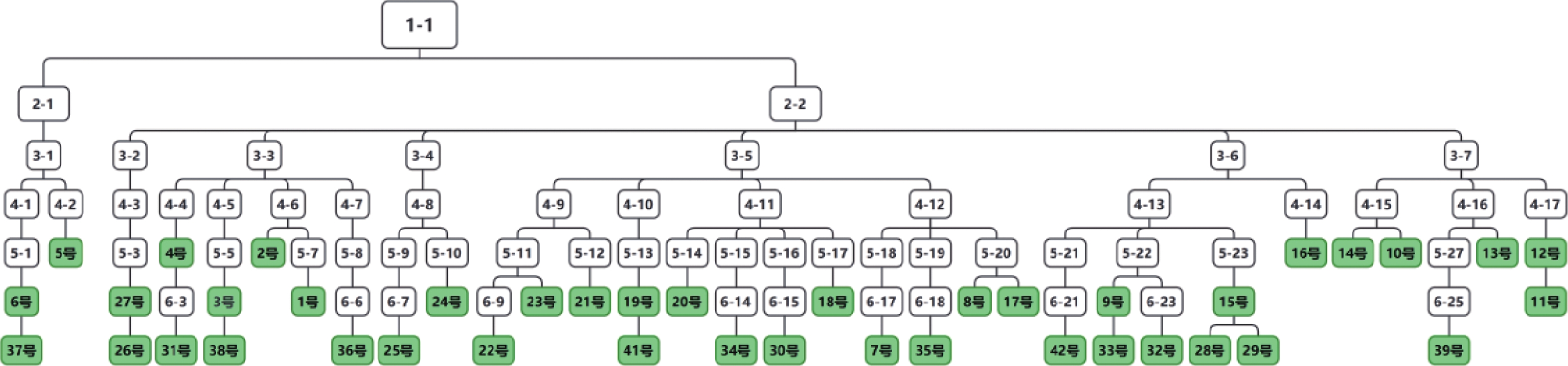
图 1 样本家系情况
注:绿色标记编号(1~39、41、42)表示本次研究实际采集外周血样本的41名男性家系成员。
Figure 1. Pedigree structure of the sampled family
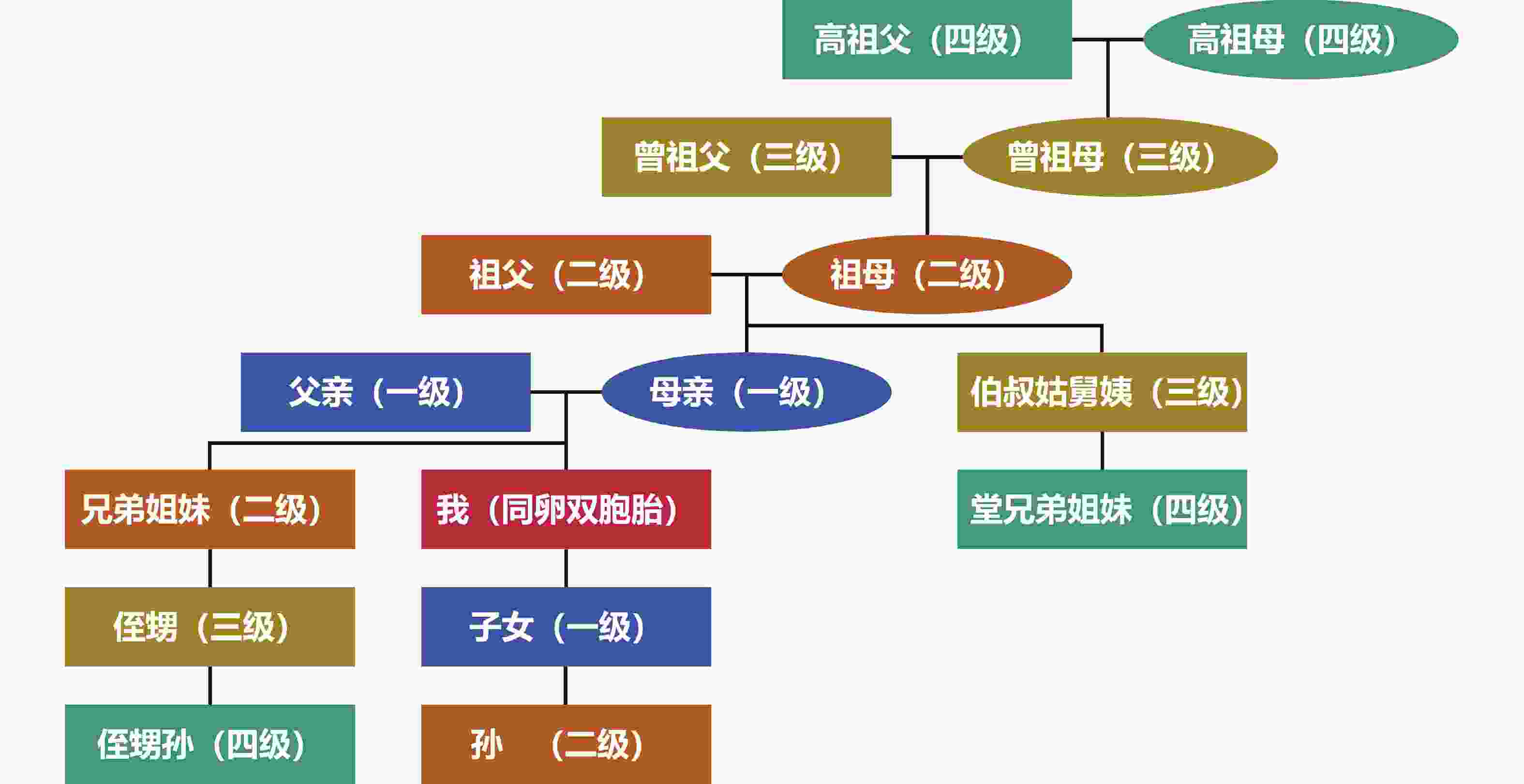
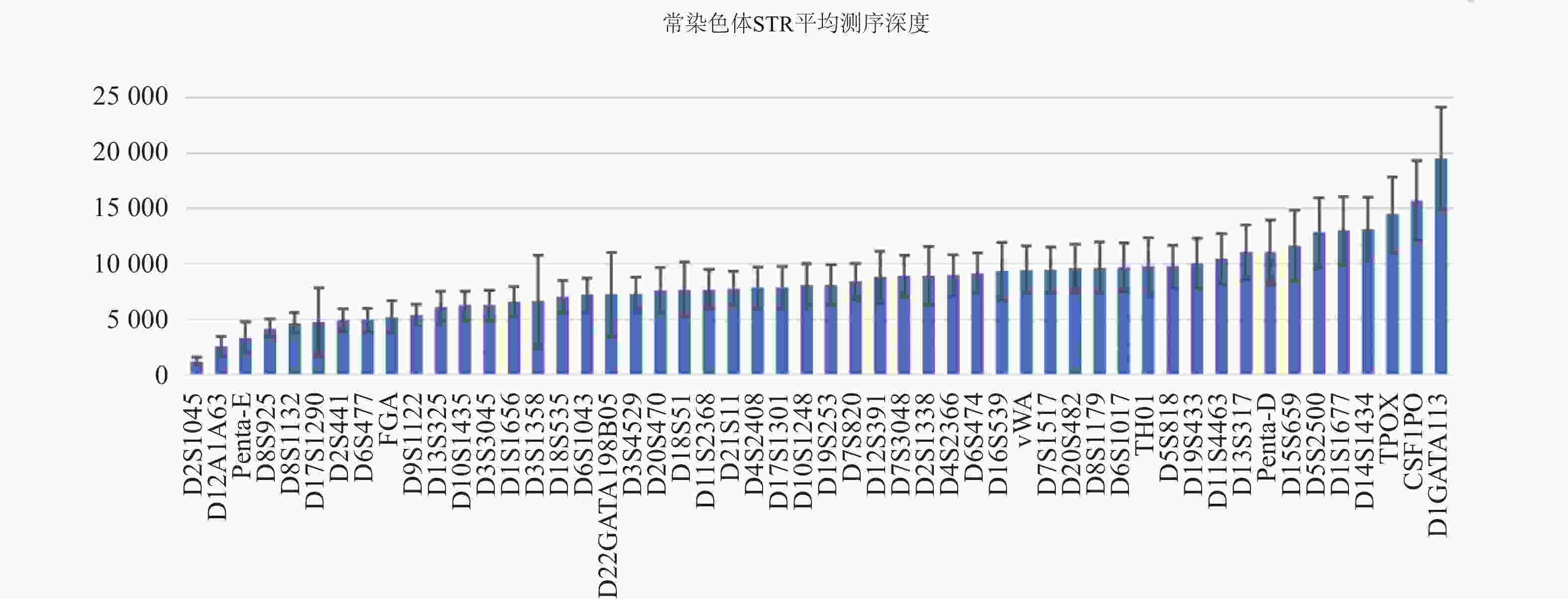
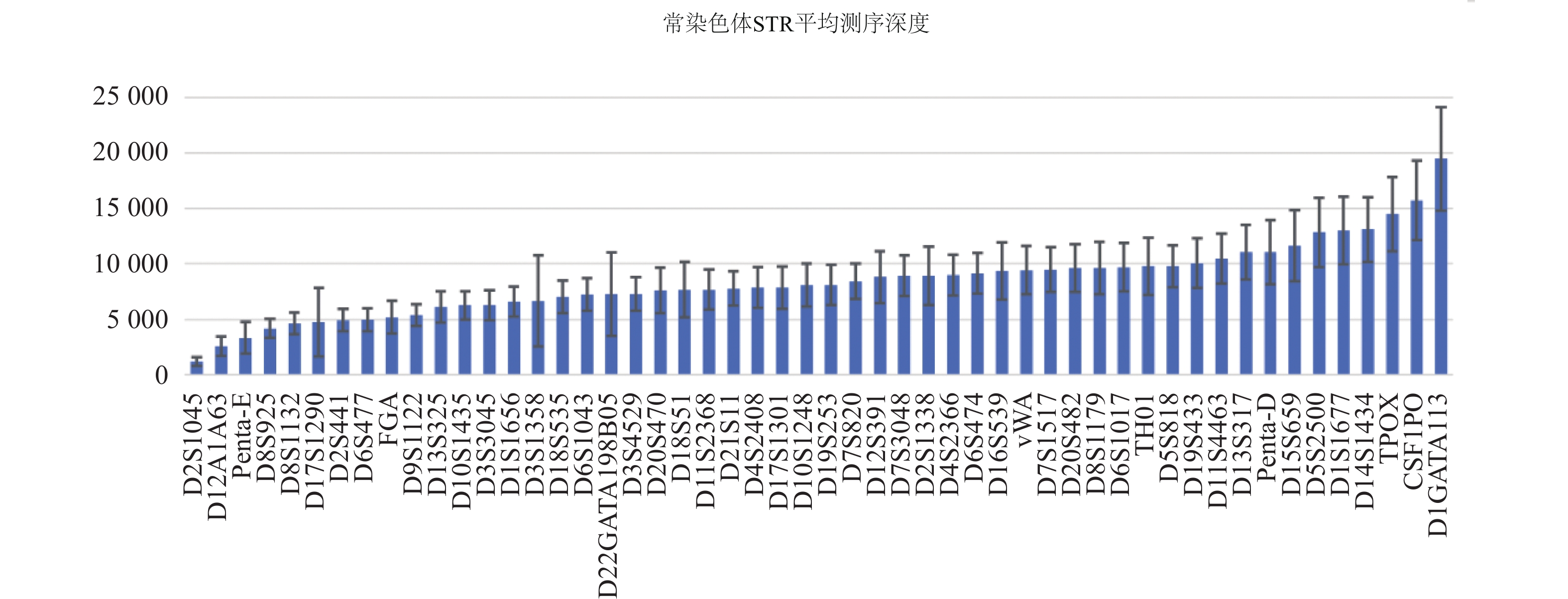
图 3 常染色体STR基因座平均测序深度及其标准差
Figure 3. Mean sequencing depth and standard deviation of autosomal STR loci
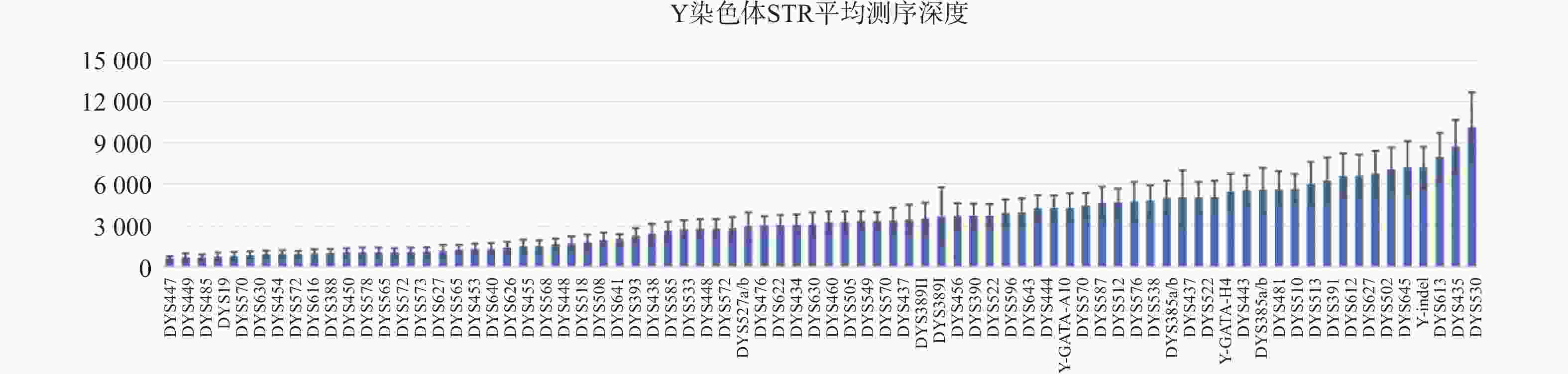
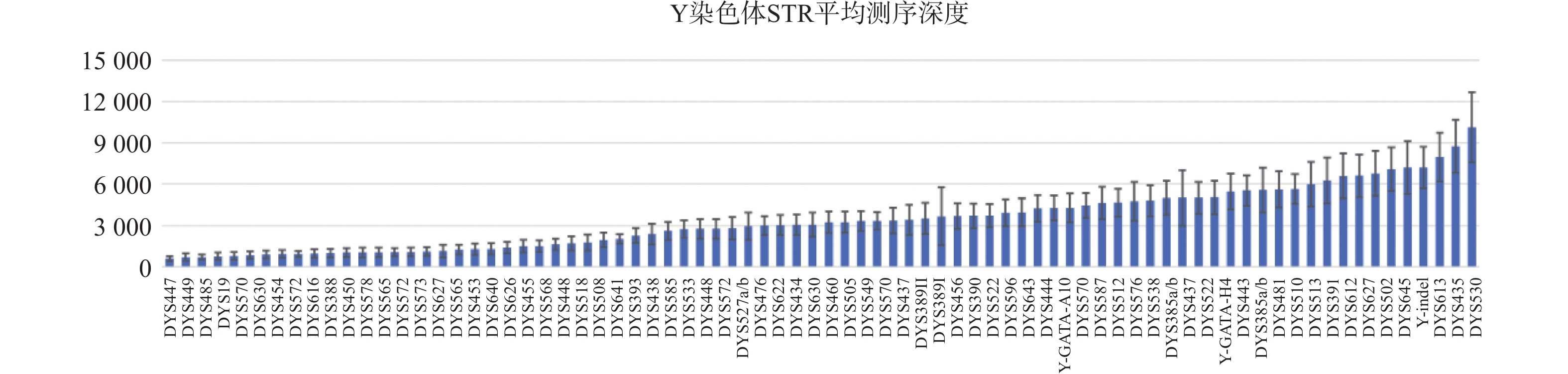
图 4 Y染色体STR基因座平均测序深度及其标准差
Figure 4. Mean sequencing depth and standard deviation of Y-chromosomal STR loci
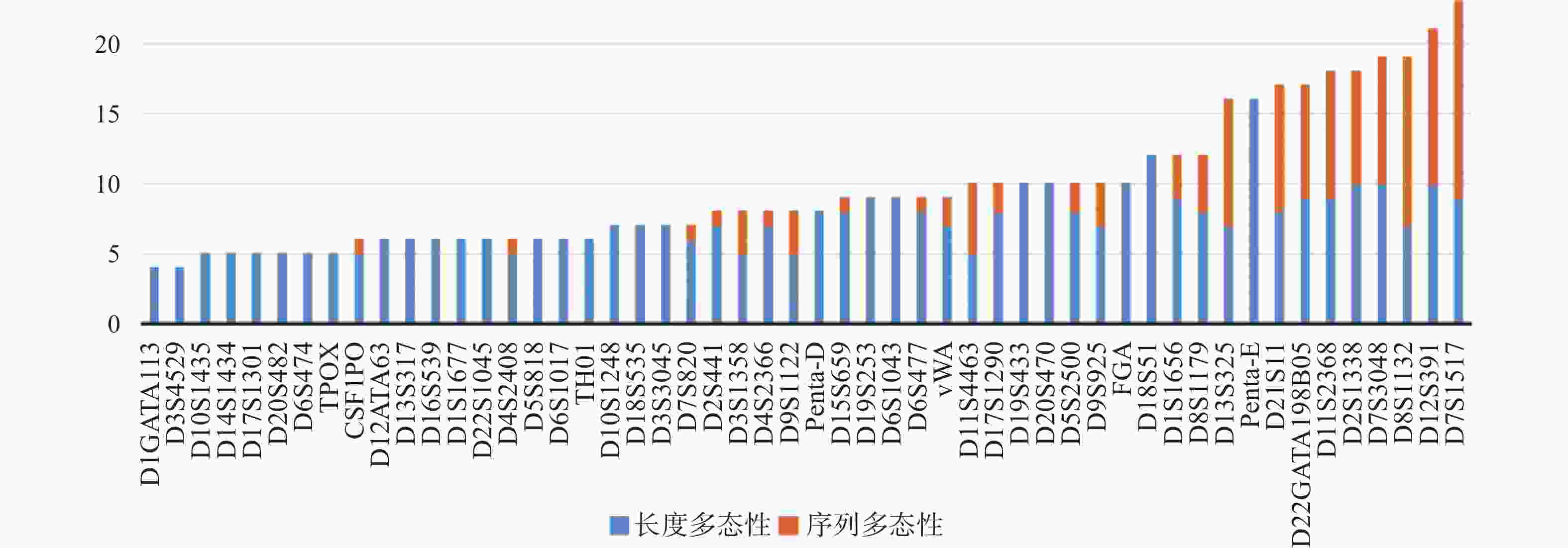
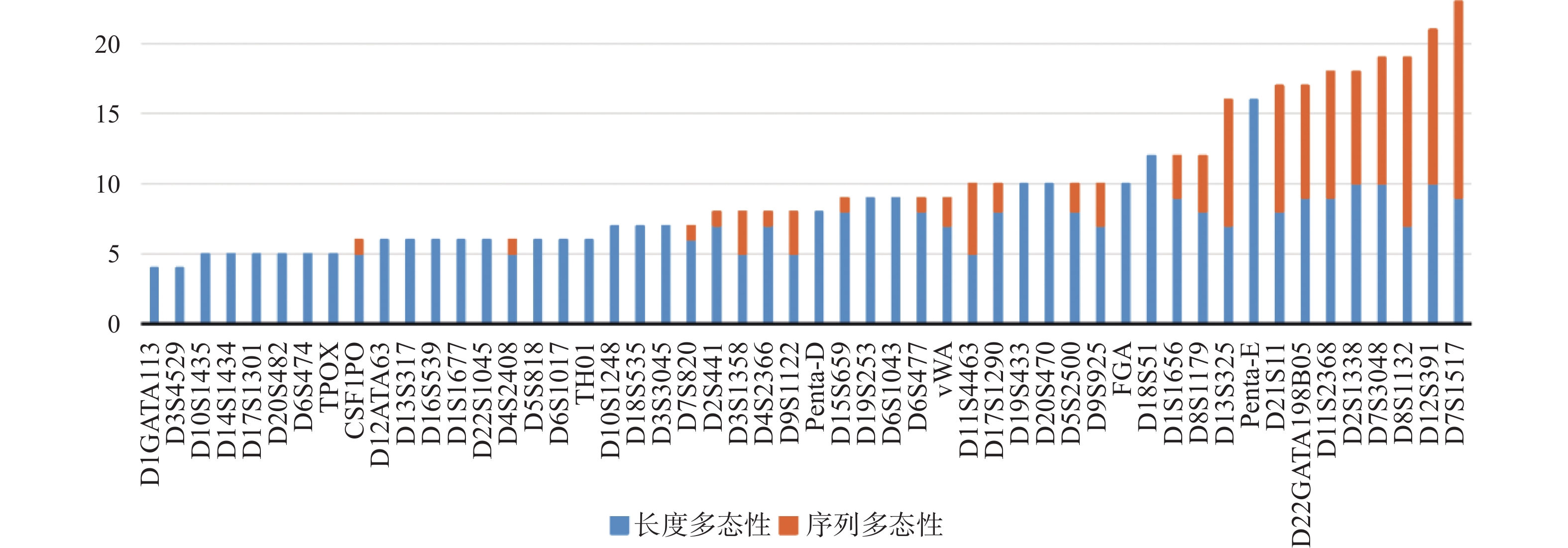
图 5 各基因座基于长度和序列多态性的等位基因数量
Figure 5. Number of alleles per locus based on length and sequence polymorphisms
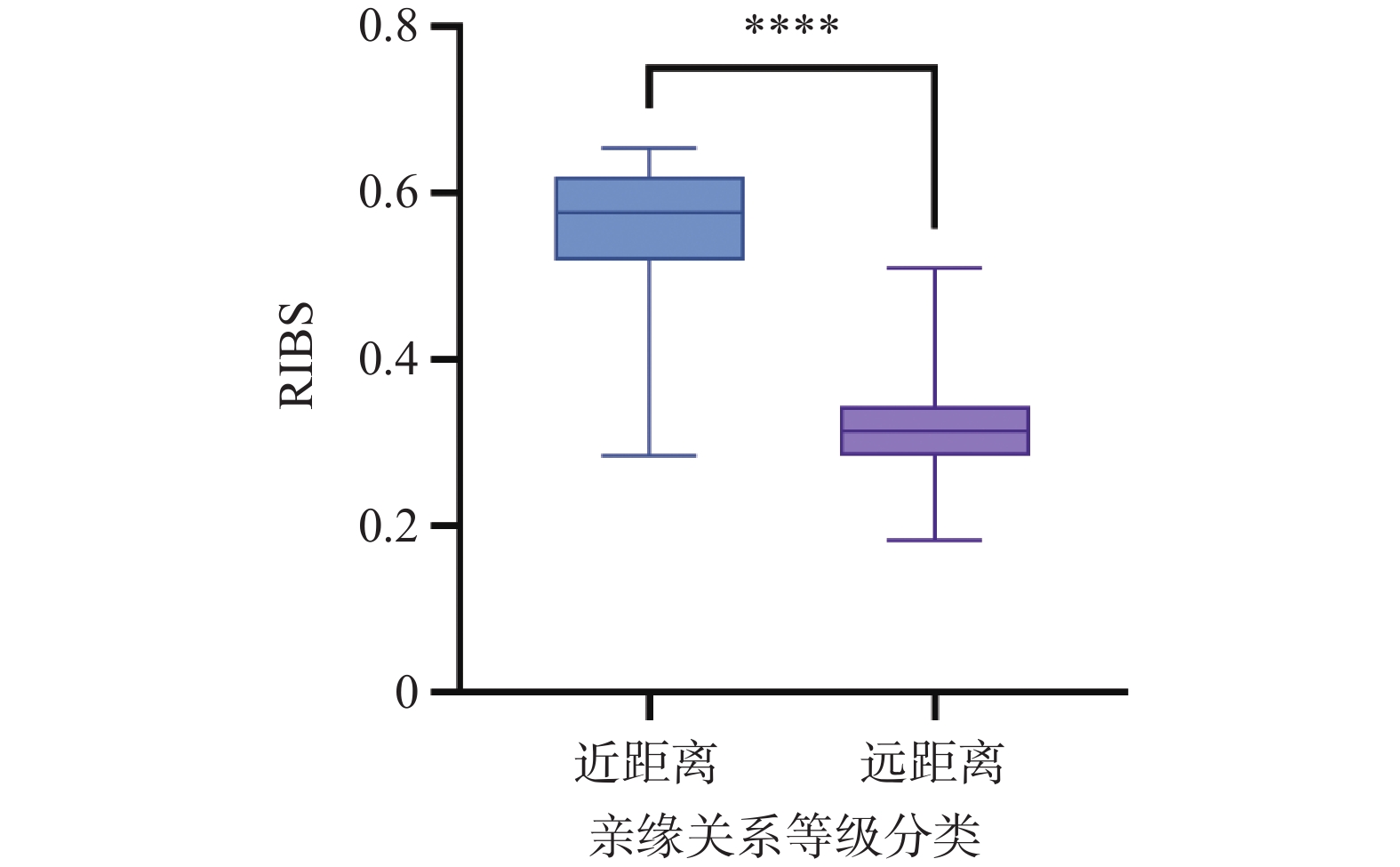
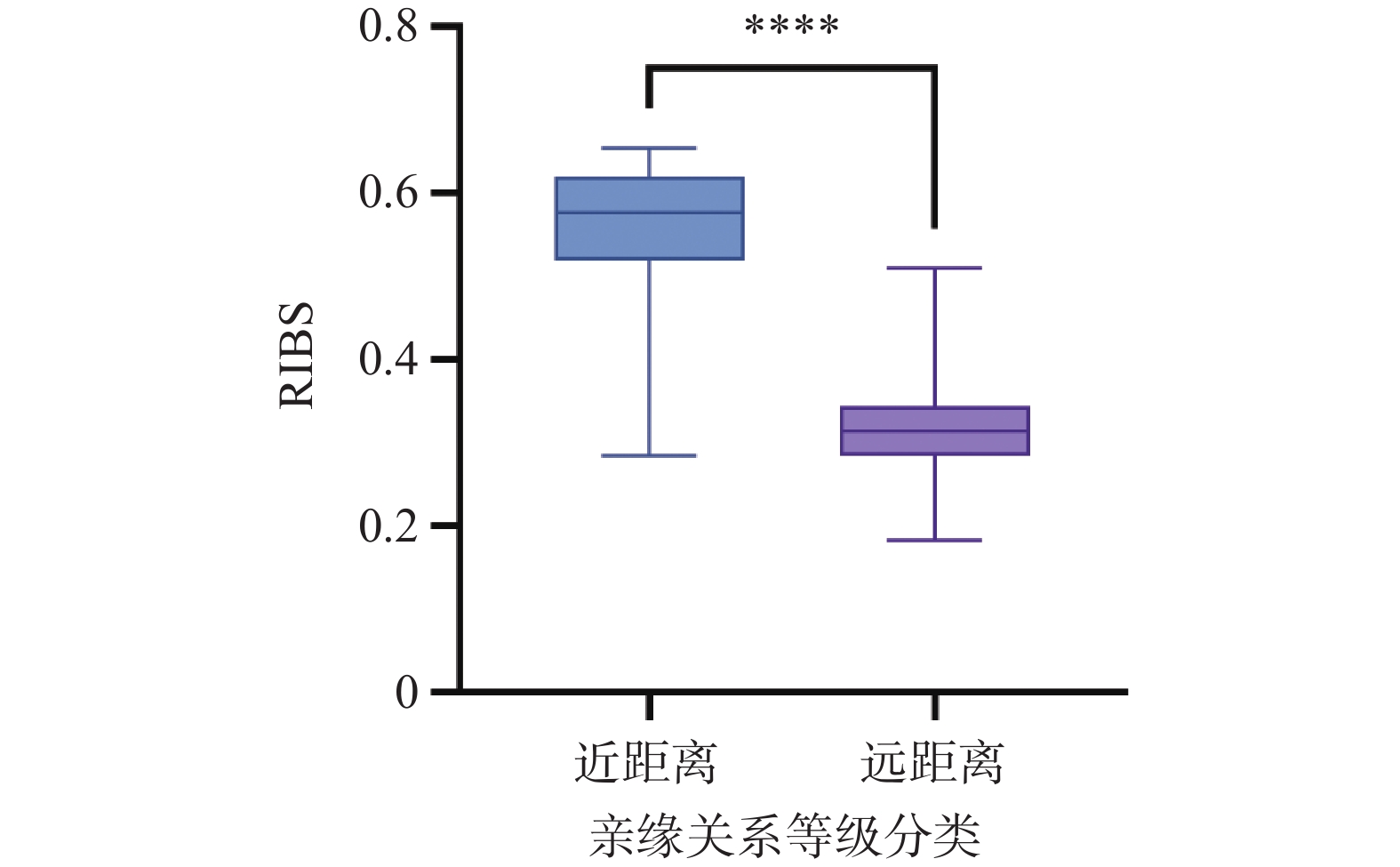
图 7 不同亲缘关系等级下RIBS的分布比较
注:近距离亲缘关系15对,远距离亲缘关系805对;两组RIBS比较采用独立样本t检验,****P<0.0001。
Figure 7. Comparison of RIBS distribution across different kinship levels
表 1 基因座D7S1517的长度和序列分型情况
Table 1. Length-based and sequence-based typing results of locus D7S1517
基因座名称 长度分型 序列分型 D7S1517 17 [CTTT]2 [GTTT]1 [CTTT]2 [GTTT]3 [CTTT]9 19 [CTTT]2 [GTTT]1 [CTTT]2 [GTTT]3 [CTTT]11 20 [CTTT]2 [GTTT]1 [CTTT]2 [GTTT]3 [CTTT]12 21 [CTTT]2 [GTTT]1 [CTTT]2 [GTTT]1 [CTTT]15 [CTTT]2 [GTTT]1 [CTTT]2 [GTTT]2 [CTTT]14 [CTTT]2 [GTTT]1 [CTTT]2 [GTTT]3 [CTTT]13 [CTTT]2 [GTTT]1 [CTTT]2 [GTTT]4 [CTTT]12 22 [CTTT]2 [GTTT]1 [CTTT]2 [GTTT]3 [CTTT]14 [CTTT]2 [GTTT]1 [CTTT]2 [GTTT]2 [CTTT]15 [CTTT]2 [GTTT]1 [CTTT]2 [GTTT]3 [CTTT]3 [GTTT]3 [CTTT]8 [CTTT]2 [GTTT]1 [CTTT]2 [GTTT]1 [CTTT]2 [GTTT]1 [CTTT]13 23 [CTTT]2 [GTTT]1 [CTTT]2 [GTTT]4 [CTTT]14 [CTTT]2 [GTTT]1 [CTTT]2 [GTTT]3 [CTTT]15 [CTTT]2 [GTTT]1 [CTTT]2 [GTTT]2 [CTTT]16 [CTTT]2 [GTTT]1 [CTTT]2 [GTTT]1 [CTTT]2 [GTTT]1 [CTTT]14 24 [CTTT]2 [GTTT]1 [CTTT]2 [GTTT]3 [CTTT]16 [CTTT]2 [GTTT]1 [CTTT]2 [GTTT]1 [CTTT]2 [GTTT]1 [CTTT]15 25 [CTTT]2 [GTTT]1 [CTTT]2 [GTTT]1 [CTTT]2 [GTTT]1 [CTTC]1 --
[CTTT]1 [GTTT]1 [CTTT]2 [GTTT]1 [CTTT]2 [GTTT]1 [CTTT]7[CTTT]2 [GTTT]1 [CTTT]2 [GTTT]1 [CTTT]2 [GTTT]1 [CTTT]16 [CTTT]2 [GTTT]1 [CTTT]2 [GTTT]3 [CTTT]17 [CTTT]2 [GTTT]1 [CTTT]2 [GTTT]6 [CTTT]14 26 [CTTT]2 [GTTT]1 [CTTT]2 [GTTT]6 [CTTT]15 [CTTT]2 [GTTT]1 [CTTT]2 [GTTT]1 [CTTT]2 [GTTT]1 [CTTT]17  下载: 导出CSV
表 2 部分样本比对信息与RIBS情况
Table 2. Comparison information and RIBS values for selected samples
比对样本 比对得分 参与比对的有效
基因座数量RIBS 1-2 29 51 0.2843 1-3 30 49 0.3061 1-4 25 51 0.2451 1-5 23 51 0.2255 1-6 35 51 0.3432 1-7 21 51 0.2059 1-8 26 51 0.2549 1-9 31 51 0.3039 1-10 26 46 0.2826
下载: 导出CSV
表 3 820对家系样本的回代分类结果
Table 3. Resubstitution classification results for 820 within-pedigree sample pairs
实际类别 预测类型(对) 总计(对) 近距离
亲缘关系远距离
亲缘关系近距离亲缘关系
(1~3级)13 2 15 远距离亲缘关系
(4级及以上)8 797 805
下载: 导出CSV
表 4 样本验证结果
Table 4. Validation results of samples
样本对
编号CIBS 参与比对的
有效基因座数量RIBS 亲缘关系
等级D 1 25 20 0.6250 1 6.63 2 24 20 0.6000 1 6.09 3 25 20 0.6250 1 6.63 4 24 20 0.6000 1 6.09 5 26 20 0.6500 1 7.17 6 26 20 0.6500 1 7.17 7 51 38 0.6711 1 7.63 8 26 25 0.5200 1 4.37 9 27 26 0.5192 1 4.35 10 27 25 0.5400 1 4.80 11 29 25 0.5800 1 5.66 12 33 26 0.6346 1 6.84 16 56 43 0.6512 2 7.20 13 98 73 0.6712 2 7.63 14 109 73 0.7466 2 9.26 15 98 73 0.6712 2 7.63 17 74 73 0.5068 3 4.08 18 74 73 0.5068 3 4.08 19 69 73 0.4726 3 3.34 20 36 38 0.4737 3 3.37 21 33 38 0.4342 3 2.51 22 66 75 0.4400 3 2.64 23 70 75 0.4667 3 3.21
下载: 导出CSV
-
[1] Carratto T M T, Moraes V M S, Recalde T S F, et al. Applications of massively parallel sequencing in forensic genetics[J]. Genet Mol Biol, 2022, 45(3 Suppl 1): e20220077. [2] Li H, Li B, Liu Y, et al. Characterization of sequence variations in the extended flanking regions using massively parallel sequencing in 21 A-STRs and 21 Y-STRs[J]. BMC Genomics, 2024, 25(1): 841. doi: 10.1186/s12864-024-10762-9 [3] Verbiest M, Maksimov M, Jin Y, et al. Mutation and selection processes regulating short tandem repeats give rise to genetic and phenotypic diversity across species[J]. J Evol Biol, 2023, 36(2): 321-336. doi: 10.1111/jeb.14106 [4] Rhie A, Nurk S, Cechova M, et al. The complete sequence of a human Y chromosome[J]. Nature, 2023, 621(7978): 344-354. doi: 10.1038/s41586-023-06457-y [5] de Knijff P. On the forensic use of Y-chromosome polymorphisms[J]. Genes, 2022, 13(5): 898. doi: 10.3390/genes13050898 [6] 丁光树, 孙辉, 孙敬, 等. 多拷贝Y-STR基因座判型标准及家系排查应用[J]. 刑事技术, 2022, 47(5): 523-529. doi: 10.16467/j.1008-3650.2021.0157 [7] 明天悦, 蒋礼蓉, 刘京, 等. Y染色体遗传标记的法医学应用及展望[J]. 刑事技术, 2022, 47(4): 411-418. doi: 10.16467/j.1008-3650.2022.0009 [8] 刘航. 用于男性家系精准识别的Y-STR复合扩增体系的构建及验证[D]. 北京: 中国人民公安大学, 2023. [9] 朱琳杰. 相同单倍型无关家系不同个体的Y-STR的多态性研究[D]. 昆明: 昆明医科大学, 2022. [10] Ralf A, Montiel González D, Zandstra D, et al. Large-scale pedigree analysis highlights rapidly mutating Y-chromosomal short tandem repeats for differentiating patrilineal relatives and predicting their degrees of consanguinity[J]. Hum Genet, 2023, 142(1): 145-160. doi: 10.1007/s00439-022-02493-2 [11] SF/T 0117—2021. 生物学全同胞关系鉴定技术规范[S]. [12] 马冠车, 李淑瑾. CIBS在不同亲缘关系中概率分布的计算及其应用[J]. 法医学杂志, 2021, 37(3): 372-377. doi: 10.12116/j.issn.1004-5619.2020.500311 [13] 陈安琪, 张素华. 高通量测序技术: 解决法医学疑难生物检材鉴定的关键工具[J]. 中国法医学杂志, 2024, 39(6): 730-740. doi: 10.13618/j.issn.1001-5728.2024.06.017 [14] Kayser M. Forensic genetics in the omics era[J]. Nat Rev Genet, 2026, 27(2): 170-186. doi: 10.1038/s41576-025-00896-1 [15] 缪磊, 康克莱, 张驰, 等. 法庭科学核心STR基因座的序列特征[J]. 遗传, 2025, 47(11): 1214-1230. doi: 10.16288/j.yczz.25-021 [16] 韦克全, 尚蕾, 袁丽萍, 等. 多重扩增靶向测序在法医遗传学中的生信分析应用[J]. 刑事技术, 2026, 51(1): 67-75. doi: 10.16467/j.1008-3650.2024.0093 [17] 刘京, 季安全, 李彩霞, 等. 法医系谱分析研究进展[J]. 刑事技术, 2019, 44(3): 189-194. doi: 10.16467/j.1008-3650.2019.03.001 [18] Tanudisastro H A, Deveson I W, Dashnow H, et al. Sequencing and characterizing short tandem repeats in the human genome[J]. Nat Rev Genet, 2024, 25(7): 460-475. doi: 10.1038/s41576-024-00692-3 [19] Dierig L, Kunz S N, Wiegand P. Comparison of massively parallel sequencing to capillary electrophoresis for short tandem repeat genotyping of trace DNA[J]. Electrophoresis, 2024, 45(5-6): 451-462. doi: 10.1002/elps.202300145 [20] Huang Y, Wang M, Liu C, et al. Comprehensive landscape of non-CODIS STRs in global populations provides new insights into challenging DNA profiles[J]. Forensic Sci Int Genet, 2024, 70: 103010. doi: 10.1016/j.fsigen.2024.103010 [21] Zhou Z, Zhou Y, Li Z, et al. Identification and assessment of a subset of Y-SNPs with recurrent mutation for forensic purpose[J]. Forensic Sci Int, 2022, 334: 111270. doi: 10.1016/j.forsciint.2022.111270 [22] 刘志勇, 孙辉, 王萌鸽, 等. 基于高通量测序的81个Y-STR法医学应用效能评估[J]. 中国法医学杂志, 2025, 40(5): 525-529. doi: 10.13618/j.issn.1001-5728.2025.05.001 [23] 李燃, 孙宏钰. 法医学亲缘关系鉴定方法和研究热点[J]. 法医学杂志, 2023, 39(3): 231-239. doi: 10.12116/j.issn.1004-5619.2023.530208 -

 点击查看大图
计量
- 文章访问数: 4
- HTML全文浏览量: 3
- PDF下载量: 0
- 被引次数: 0
