




Development and Preliminary Validation of A Risk Association Model for Dyslipidemia in Adults
-
摘要:
目的 构建血脂异常风险关联模型,为早期筛查及精准干预提供科学工具。 方法 基于2022年11月至2023年4月云南省慢性病及其危险因素监测项目在石林县的横断面调查,纳入 1577 例有效研究对象,通过问卷调查、体格检查及实验室检测收集,经预处理后纳入指标共46项,按7∶3划分训练集与测试集。对训练集数据先通过单因素分析筛选有统计学意义变量,后采用Lasso、Boruta、SWSFS及XGBoost四种机器学习算法进行特征筛选,选取四种算法共同识别的变量作为关键变量构建多因素Logistic回归模型并绘制列线图可视化。使用测试集数据通过混淆矩阵、ROC曲线下面积、决策曲线分析及校准曲线系统评估模型性能。结果 本研究血脂异常患病率为43.37%;最终筛选出6个重要变量:BMI、腰围、糖化血红蛋白、心率、血尿酸及步行或骑行;其中糖化血红蛋白呈显著非线性关联(非线性检验P = 0.003),BMI(P = 0.002)、血尿酸(P < 0.001)呈线性正相关,三者为血脂异常关键风险因素;步行或骑行为显著保护因素(P < 0.001);腰围(P = 0.384)与心率(P = 0.078)的关联未达统计学显著性。模型测试集AUC为0.663,灵敏度为67.1%、特异度为63.2%;DCA显示在0.25~0.65阈值概率区间具有显著临床净获益,校准曲线提示模型拟合良好。 结论 本研究构建的血脂异常风险因素关联模型具有中等的鉴别效能及临床实用性,可为血脂异常高危人群的早期识别及针对性干预提供参考。 Abstract:Objective To develop a risk association model for dyslipidemia providing a scientific tool to support early screening and precision interventions. Methods Based on a cross-sectional survey of the Yunnan Provincial Chronic Disease and Risk Factor Surveillance Project conducted in Shilin Yi Autonomous County from November 2022 to April 2023, a total of 1577 eligible participants were enrolled. Data were collected through questionnaires, physical examinations, and laboratory tests. After preprocessing, 46 variables were included, and the dataset was randomly split into training and test sets at a ratio of 7∶3. Univariate analysis was first performed on the training set to identify statistically significant variables. Subsequently, four machine learning algorithms—Lasso, Boruta, SWSFS, and XGBoost—were employed for feature selection. Variables commonly identified by all four algorithms were retained as key variables to construct a multivariable logistic regression model, which was visualized as a nomogram. Model performance was systematically assessed using the test set via the confusion matrix, area under the ROC curve (AUC), decision curve analysis (DCA), and calibration curves.Results The prevalence of dyslipidemia in this study was 43.37%. Six important variables were ultimately identified in the model: BMI, waist circumference, glycated hemoglobin, heart rate, serum uric acid, and walking or cycling. Among them, glycated hemoglobin exhibited a significant nonlinear association (P for nonlinearity=0.003), whereas BMI (P = 0.002) and serum uric acid (P < 0.001) showed linear positive correlations; establishing them as key risk factors for dyslipidemia. Walking or cycling was a significant protective factor (P < 0.001). The associations of waist circumference (P = 0.384) and heart rate (P = 0.078) with dyslipidemia did not reach statistical significance. The model achieved an AUC of 0.663 in the testing set; with a sensitivity of 67.1% and specificity of 63.2%. DCA showed a significant clinical net clinical benefit within the threshold probability range of 0.25~0.65, and the calibration curve indicated good model fit. Conclusion The proposed dyslipidemia risk association model demonstrates moderate discriminatory performance and clinical utility, offering a reference for the early identification of high-risk individuals with dyslipidemia and targeted interventions. -
Key words:
- Dyslipidemia /
- Machine learning /
- Risk factors /
- Risk association model /
- Nomogram
-
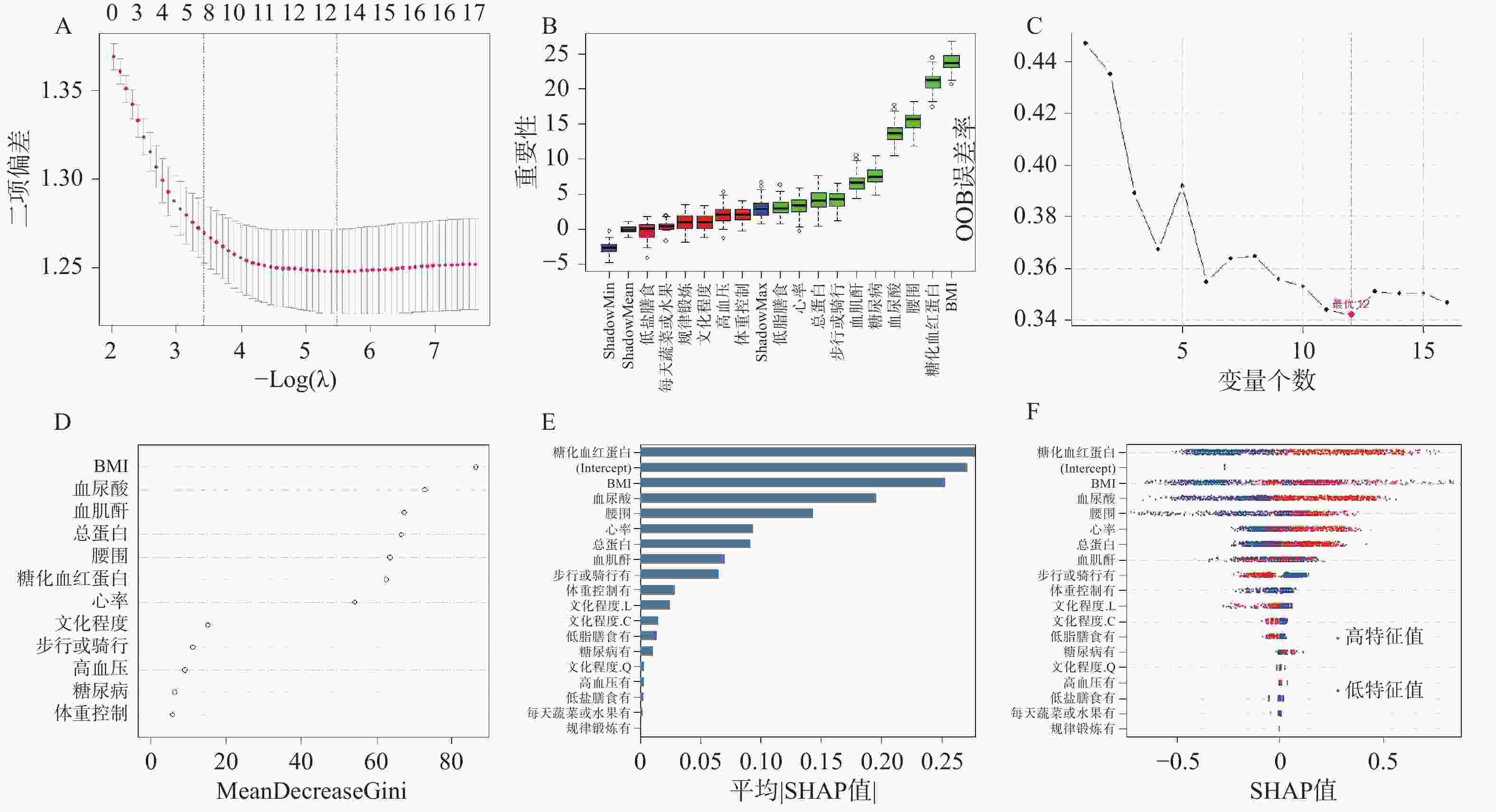
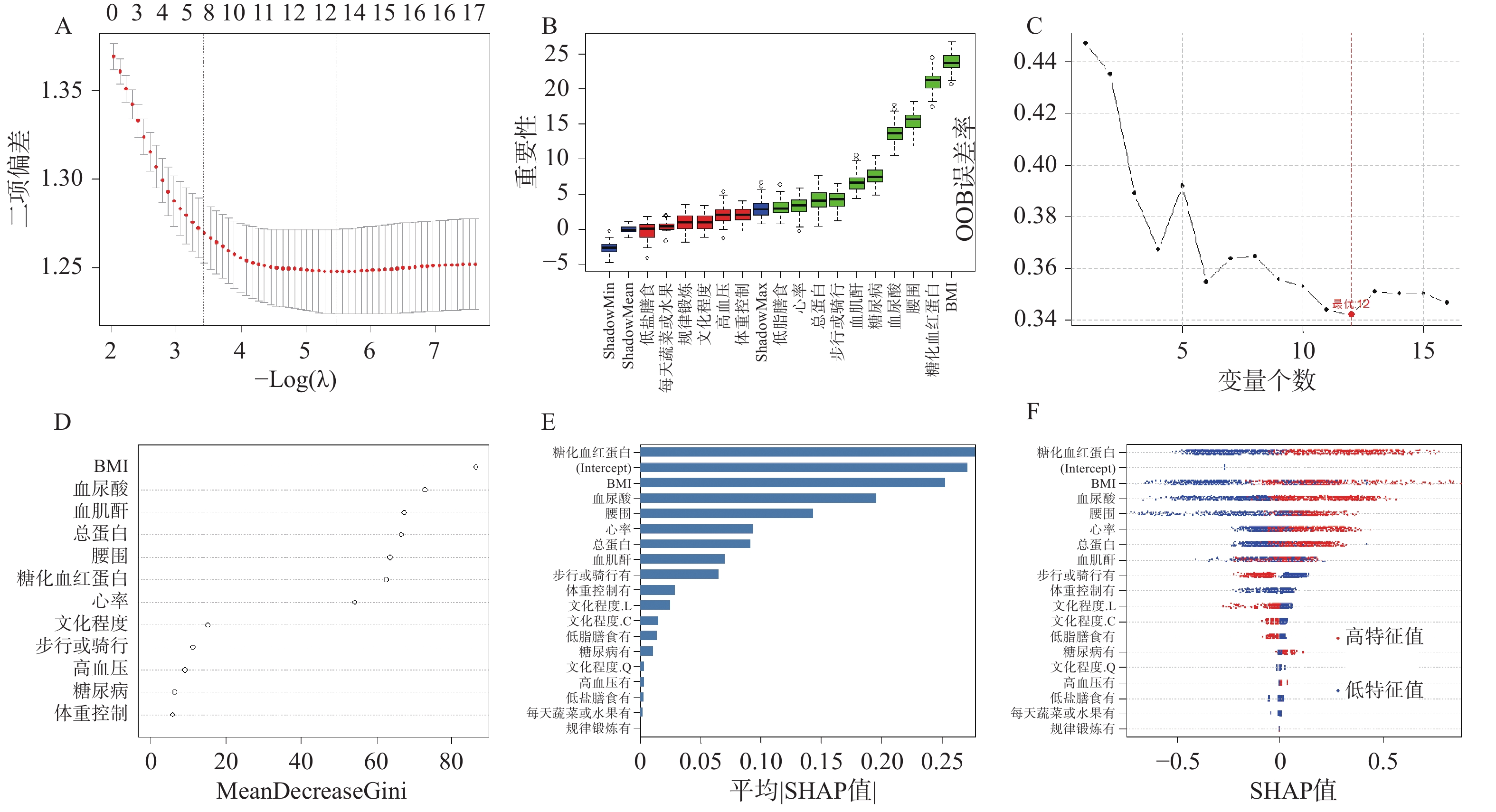
图 1 成人血脂异常四种算法特征筛选结果
A:LASSO交叉验证曲线;B:Boruta分析结果;C~D:SWSFS分析结果;E~F:XGBoost结合SHAP分析结果。
Figure 1. Feature selection results for dyslipidemia in adults using four algorithms
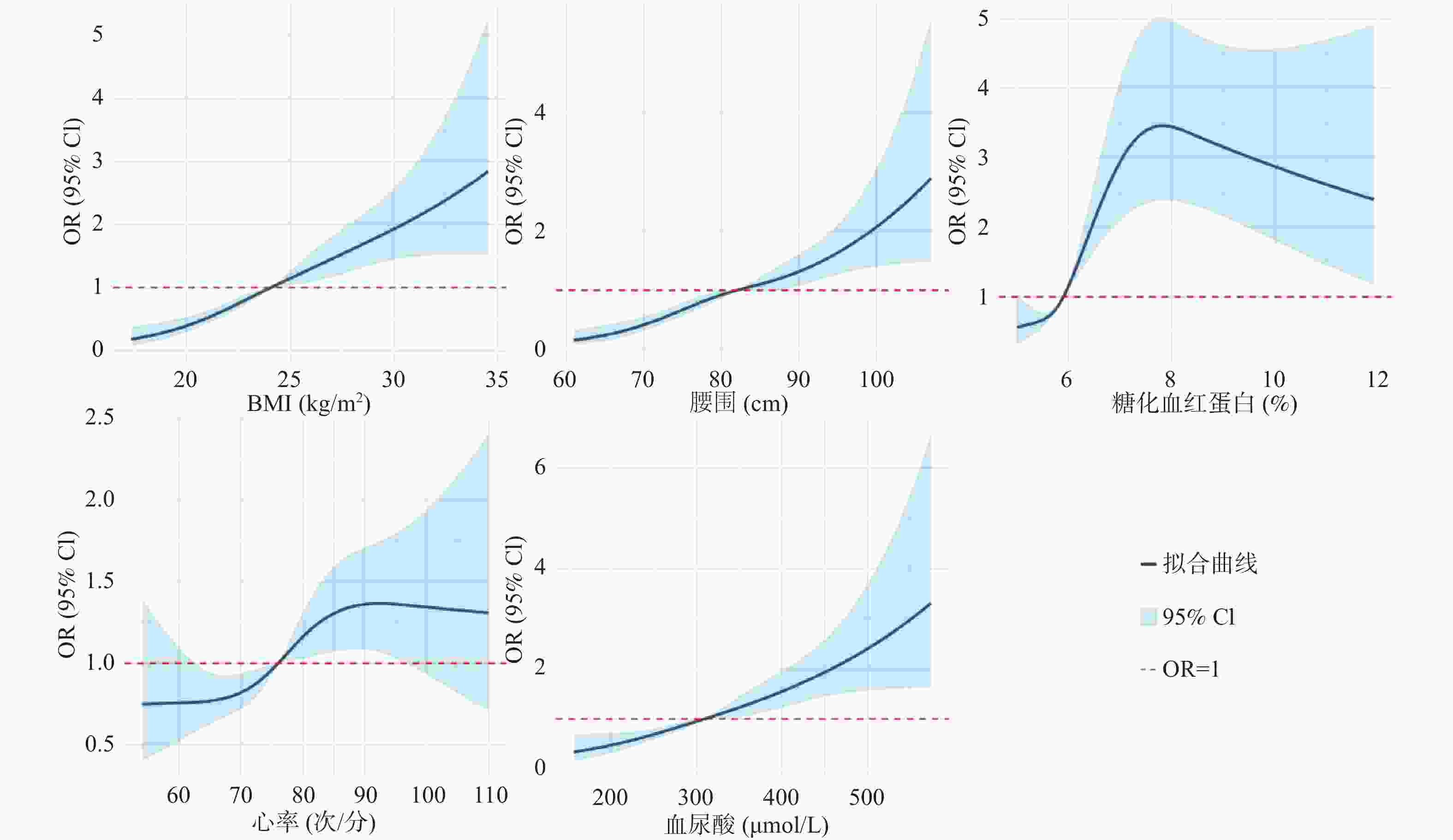
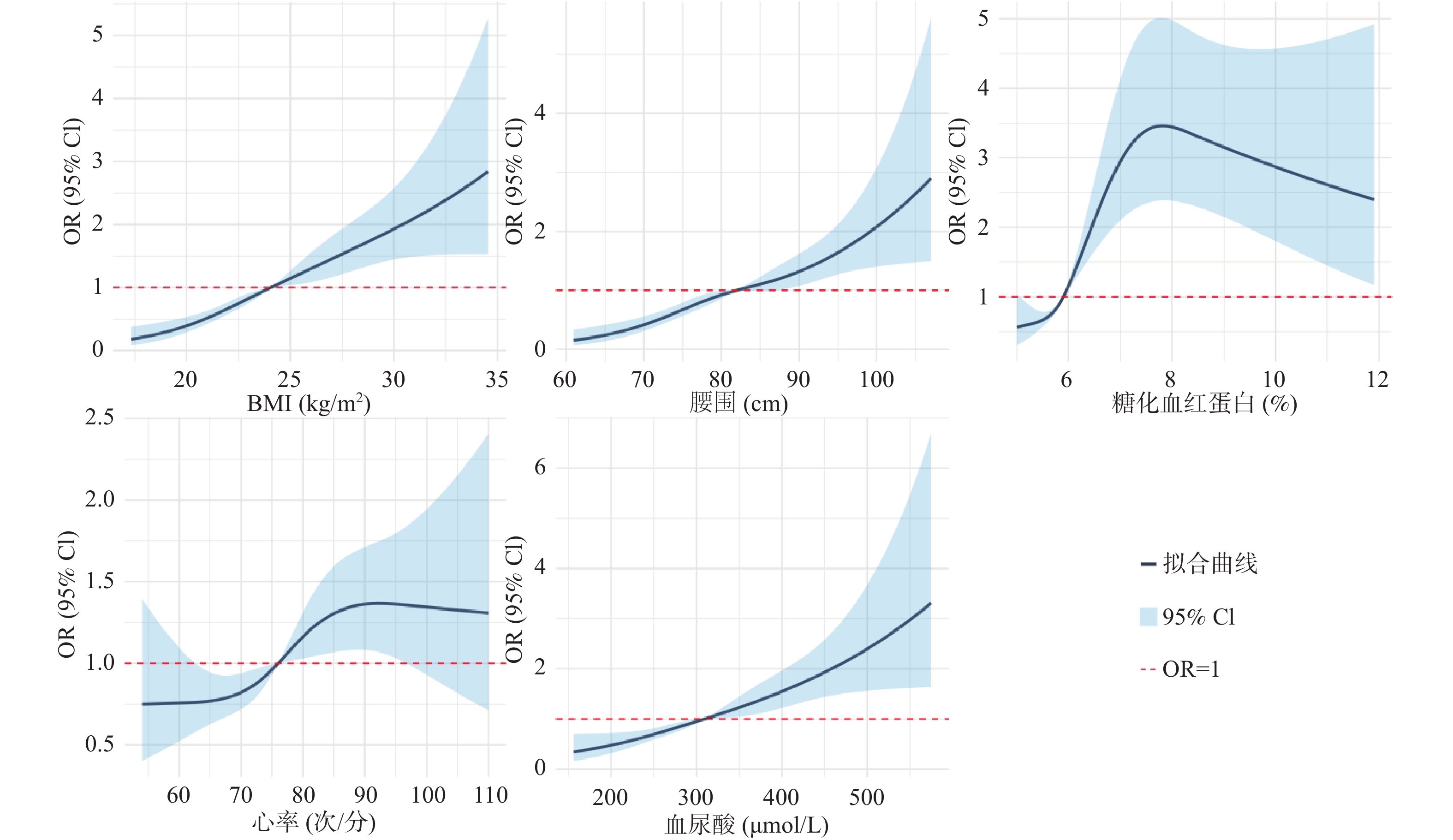
图 2 各连续变量与血脂异常发生风险的限制性立方样条拟合曲线
A:BMI的RCS拟合曲线;B:腰围的RCS拟合曲线;C:糖化血红蛋白的RCS拟合曲线;D:心率的RCS拟合曲线;E:血尿酸的RCS拟合曲线。
Figure 2. Restricted cubic spline plots of the association between each continuous variable and dyslipidemia risk in adults
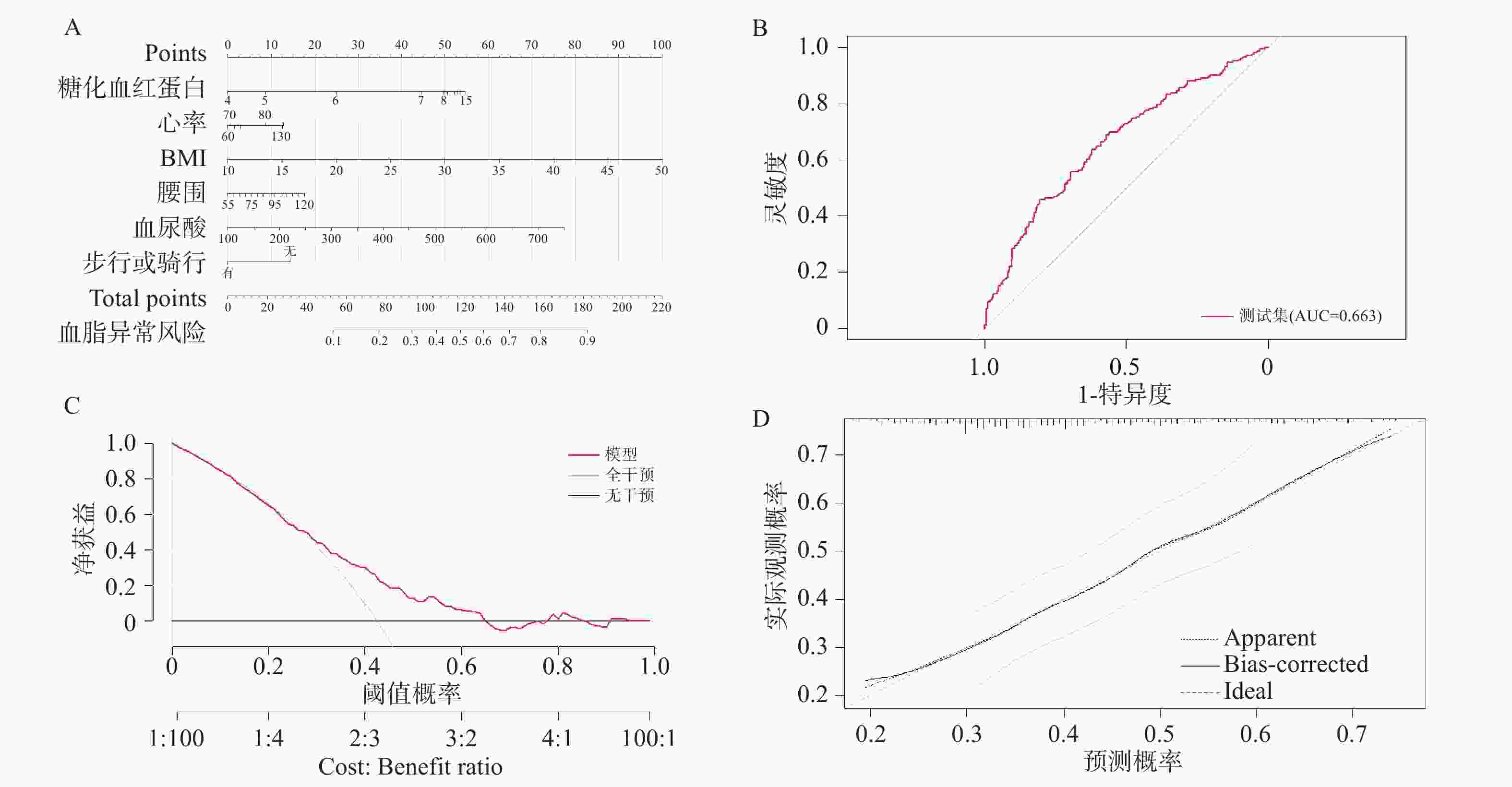
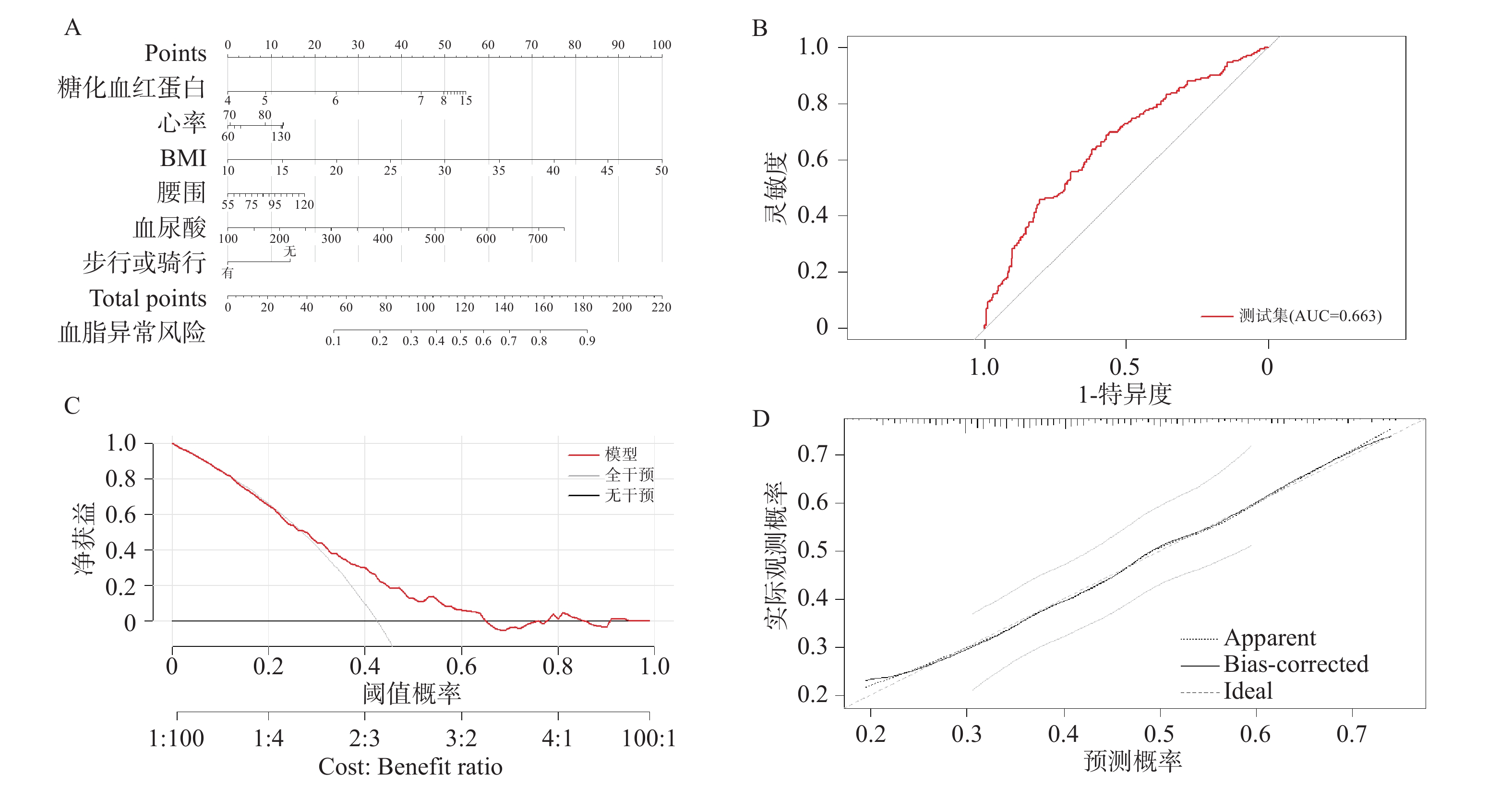
图 3 成人血脂异常风险因素关联模型列线图及性能评估结果
A:成人血脂异常风险因素关联模型列线图;B:成人血脂异常风险因素关联模型ROC曲线;C:成人血脂异常风险因素关联模型决策曲线分析;D:成人血脂异常风险因素关联模型校准曲线。
Figure 3. Nomogram of the risk factor association model for adult dyslipidemia and model performance evaluation results
表 1 血脂异常组与血脂正常组人口学特征比较[M(IQR)/n(%)]
Table 1. Comparison of demographic characteristics between dyslipidemia and normolipidemic groups[M(IQR)/n(%)]
变量 血脂异常组(n = 684) 血脂正常组(n = 893) Z/χ2 P 年龄(岁) 61.00(54.00~70.00) 59.00(50.00~70.00) 2.225 0.026* 性别 0.019 0.890 女 380(55.56) 493(55.21) 男 304(44.44) 400(44.79) 民族 1.553 0.460 汉族 584(85.38) 777(87.01) 彝族 95(13.89) 107(11.98) 其他少数民族 5(0.73) 9(1.01) 文化程度 2.474 0.013* 小学及以下 443(64.77) 556(62.26) 初中 191(27.92) 236(26.43) 高中/中专/技校 37(5.41) 56(6.27) 大专及以上 13(1.90) 45(5.04) 职业 3.984 0.890 生产与服务类 531(77.63) 705(78.95) 编制与专业技术类 10(1.46) 23(2.58) 其他从业类 22(3.22) 30(3.36) 非从业类 121(17.69) 135(15.12) 地区 0.018 0.891 城市 344(50.29) 446(49.94) 农村 340(49.71) 447(50.06) ∗P < 0.05。  下载: 导出CSV
表 2 成人血脂异常风险关联模型多因素logistic回归分析结果
Table 2. Multivariate logistic regression analysis of the risk association model of adult dyslipidemia
变量 β SE Z OR(95%CI) 整体P 非线性检验P 糖化血红蛋白(%) — — — — <0.001*** 0.003** 心率(次/min) — — — — 0.078 0.508 BMI(kg/m2) 0.086 0.028 3.090 1.089(1.032~1.150) 0.002** — 腰围(cm) 0.009 0.011 0.870 1.009(0.989~1.031) 0.384 — 血尿酸(µmol/L) 0.004 0.001 4.880 1.004(1.003~1.006) <0.001*** — 步行或骑行(以无为参照) 有 −0.491 0.138 −3.570 0.612(0.467~0.801) <0.001*** — “—”代表不适用;连续变量OR值的单位变化说明:BMI对应每增加1 kg/m2;腰围对应每增加1 cm;血尿酸对应每增加1 µmol/L;*P < 0.05;**P < 0.01;***P < 0.001。
下载: 导出CSV
-
[1] 李建军, 赵水平, 高润霖, 等. 中国血脂管理指南(2023年)[J]. 中华心血管病杂志, 2023, 51(3): 221-255. [2] Opoku S, Gan Y, Yobo E A, et al. Awareness, treatment, control, and determinants of dyslipidemia among adults in China[J]. Scientific Reports, 2021, 11: 10056. doi: 10.1038/s41598-021-89401-2 [3] 全面管理血脂相关心血管风险专家共识制订专家组, 苏州工业园区东方华夏心血管健康研究院. 全面管理血脂相关心血管风险专家共识(2025)[J]. 中华心血管病杂志(网络版), 2025, 8(1): 1-23. doi: 10.3760/cma.j.cn116031.2025.1000192 [4] 周慧敏, 冉利梅, 杨大刚, 等. 1838例健康体检人群血脂异常流行特征及影响因素分析[J]. 贵州医科大学学报, 2023, 48(10): 1186-1192. [5] Kalwick M, Roth M. A comprehensive review of the genetics of dyslipidemias and risk of atherosclerotic cardiovascular disease[J]. Nutrients, 2025, 17(4): 659. doi: 10.3390/nu17040659 [6] Bi L, Yi J, Wu C, et al. Atherosclerotic cardiovascular disease risk and lipid-lowering therapy requirement in China[J]. Frontiers in Cardiovascular Medicine, 2022, 9: 839571. doi: 10.3389/fcvm.2022.839571 [7] Liu H H, Guo Y L, Zhu C G, et al. Synergistic effect of the commonest residual risk factors, remnant cholesterol, lipoprotein(a), and inflammation, on prognosis of statin-treated patients with chronic coronary syndrome[J]. Journal of Translational Medicine, 2022, 20(1): 1-10. doi: 10.1186/s12967-022-03448-x [8] Xia Q, Chen Y, Yu Z, et al. Prevalence, awareness, treatment, and control of dyslipidemia in Chinese adults: A systematic review and meta-analysis[J]. Frontiers in Cardiovascular Medicine, 2023, 10: 1186330. doi: 10.3389/fcvm.2023.1186330 [9] Sadiq I Z, Abubakar F S, Saliu M A, et al. Machine learning algorithms for predictive modeling of dyslipidemia-associated cardiovascular disease risk in pregnancy: A comparison of boosting, random forest, and decision tree regression[J]. Bulletin of the National Research Centre, 2025, 49(1): 1-13. [10] 彭莲, 马璐, 徐玉艳, 等. 血脂异常风险评估方法研究进展[J]. 现代预防医学, 2022, 49(3): 385-389. [11] Zhang L X, Hou S B, Zhao F F, et al. Development and validation of a hyperlipidemia risk prediction model for middle-aged and older adult Chinese using 2015 CHARLS data[J]. Frontiers in Public Health, 2025, 13: 1420596. [12] Chew N W S, Mehta A, Goh R, et al. The global cardiovascular-liver-metabolic syndemic: epidemiology, trends and challenges[J]. Nature Reviews Cardiology, 2026, 23(4): 219-238. [13] Li J, Zhao L, Yu D, et al. Regional dietary pattern associated with the risk of hypertensive dyslipidemia multimorbidity in Chinese elderly: Results from China nutrition and health surveillance in 2015–2017[J]. Nutrients, 2025, 17(5): 852. doi: 10.3390/nu17050852 [14] 王俊, 王培承, 郭琼, 等. 基于机器学习的老年人高脂血症风险预测[J]. 现代预防医学, 2023, 50(18): 3408-3413. [15] 杜文雯, 周玮玮, 关方旭, 等. 基于肠道菌群特征的中国四省(自治区)成年人血脂异常发生风险预测模型构建及评价[J]. 卫生研究, 2025, 54(5): 738-743. doi: 10.19813/j.cnki.weishengyanjiu.2025.05.005 [16] Hong S F, Ahmad W M A W, Adnan M N, et al. Advanced health assessment of HbA1c through nonparametric regression: Investigating TG, FBS, BMI, TC, and LDL interactions[J]. JP Journal of Biostatistics, 2025, 25(1): 215-221. doi: 10.17654/0973514325010 [17] 甄云蕾, 张贺芳, 王一冰. 血浆致动脉硬化指数联合血尿酸/高密度脂蛋白胆固醇比值预测2型糖尿病发生早期DPN的价值分析[J]. 河北医科大学学报, 2025, 46(8): 953-958. [18] Grassi G, Drager L F. Sympathetic overactivity, hypertension and cardiovascular disease: state of the art[J]. Current Medical Research and Opinion, 2024, 40(sup1): 5-13. doi: 10.1080/03007995.2024.2305248 [19] Zafrir B. Resting heart rate in patients with diabetes: A risk marker or direct mediator of increased cardiovascular risk?[J]. Kardiologia Polska, 2025, 83(11): 1247-1249. doi: 10.33963/v.phj.108739 [20] Shahraz J, Joukar F, Sheida F, et al. Associations between body mass index (BMI) and dyslipidemia: results from the PERSIAN guilan cohort study (PGCS)[J]. Obesity Science and Practice, 2025, 11(1): e70055. doi: 10.1002/osp4.70055 [21] 蒋莉华, 陈颖, 徐新茂, 等. 四川省三县(市)成年居民肥胖与血脂异常关联研究[J]. 四川大学学报(医学版), 2026, 57(1): 192-201. [22] 蒋蓉, 陈思彤, 吴玉霞, 等. 潮州市潮安区居民BMI、腰围与血脂异常患病的剂量-反应关系[J]. 华南预防医学, 2026, 52(1): 18-24. [23] Zhang X, Guan F, Gou W, et al. Multi-trajectories of BMI, waist circumference, gut microbiota, and incident dyslipidemia: A 27-year prospective study[J]. mSystems, 2025, 10(5): e0024325. doi: 10.1128/msystems.00243-25 [24] 沈亚洁, 杨亚丽, 余志清, 等. 云南省贡山县少数民族高尿酸血症患病率调查[J]. 昆明医科大学学报, 2025, 46(3): 39-43. [25] Mohammadi H, Mirjalili S R, Marques-Vidal P M, et al. The association between serum uric acid levels and the 10-year prospective risk of dyslipidemia: A cohort study from healthy heart project (YHHP)[J]. Health Science Reports, 2025, 8(5): e70857. doi: 10.1002/hsr2.70857 [26] 袁空军, 赵创艺, 杨媛, 等. 基于限制性立方样条模型分析体检人群血清尿酸和血脂异常关联性研究[J]. 中国卫生统计, 2023, 40(5): 664-669. [27] Deji-Oloruntoba O O, Balogun J O, Elufioye T O, et al. Hyperuricemia and insulin resistance: interplay and potential for targeted therapies[J]. Journal of Translational Medicine, 2025, 5(3): 1-30. doi: 10.3390/ijtm5030030 [28] Wan K, Wang R W, Yan H M, et al. Physical activity dose-response and long-term effects on dyslipidemia in Chinese adults: A CHARLS study[J]. BMC Public Health, 2025, 25(1): 1-14. doi: 10.21203/rs.3.rs-6932333/v1 [29] Smart N A, Downes D, van der Touw T, et al. The effect of exercise training on blood lipids: A systematic review and meta-analysis[J]. Sports Medicine, 2025, 55(1): 67-78. doi: 10.1007/s40279-024-02115-z -

 点击查看大图
计量
- 文章访问数: 91
- HTML全文浏览量: 66
- PDF下载量: 68
- 被引次数: 0
