




Role and Research Progress of Hyperhomocysteinemia in the Pathogenesis of Recurrent Spontaneous Abortion
-
摘要: 复发性自然流产(recurrent spontaneous abortion,RSA)是影响2%~5%育龄女性的常见生殖系统疾病。近年来研究表明,同型半胱氨酸(homocysteine,Hcy)代谢异常,尤其是高同型半胱氨酸血症(hyperhomocysteinemia,HHcy),可能在RSA的发生发展中发挥重要作用。通过系统梳理国内外相关研究,综述了Hcy的代谢调控特点及其在妊娠期的动态变化,重点总结HHcy通过血管内皮损伤、氧化应激、免疫-凝血异常、滋养细胞功能障碍以及表观遗传等多途径参与RSA发病机制的研究进展。同时,分析了Hcy代谢相关基因多态性(如MTHFR、MTRR、CBS)以及营养和生活方式因素在HHcy形成中的作用,并讨论叶酸及维生素B12补充在降低Hcy水平和改善妊娠结局中的潜在意义。综上,HHcy可能是RSA的重要但常被忽视的代谢危险因素,针对高风险人群开展早期筛查和个体化营养干预有望改善妊娠结局。Abstract: Recurrent spontaneous abortion (RSA) is a common reproductive disorder affecting approximately 2%~5% of women of childbearing age. Recent studies have indicated that abnormalities in homocysteine (Hcy) metabolism, particularly hyperhomocysteinemia (HHcy), may play an important role in the onset and progression of RSA. By systematically reviewing relevant studies from both domestic and international sources, this article summarizes the metabolic regulation of Hcy and its dynamic changes during pregnancy, with a focus on recent advances in understanding the involvement of HHcy in the pathogenesis of RSA through multiple pathways, including vascular endothelial dysfunction, oxidative stress, immunothrombotic dysregulation, trophoblast dysfunction, and epigenetic modifications. In addition, the roles of Hcy metabolism-related genetic polymorphisms (such as MTHFR, MTRR, and CBS), as well as nutritional and lifestyle factors, in the development of HHcy are analyzed. The potential significance of folic acid and vitamin B12 supplementation in lowering Hcy levels and improving pregnancy outcomes is also discussed. In conclusion, HHcy may represent an important but often overlooked metabolic risk factor for RSA. In summary, early screening and individualized nutritional interventions in high-risk populations may help improve pregnancy outcomes.
-
Key words:
- Recurrent spontaneous abortion /
- Homocysteine /
- Hyperhomocysteinemia /
- Folic acid /
- Vitamin B12
-
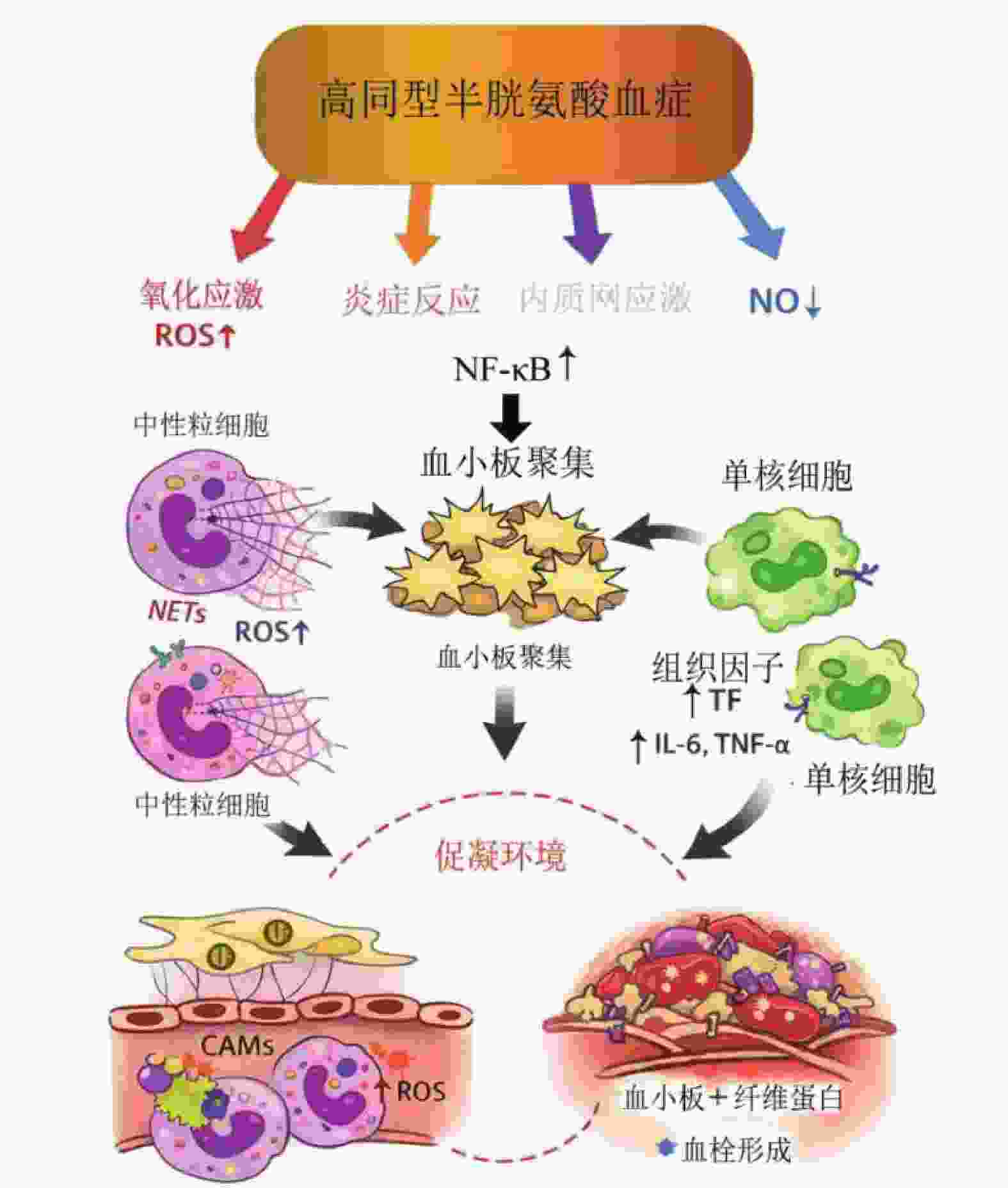
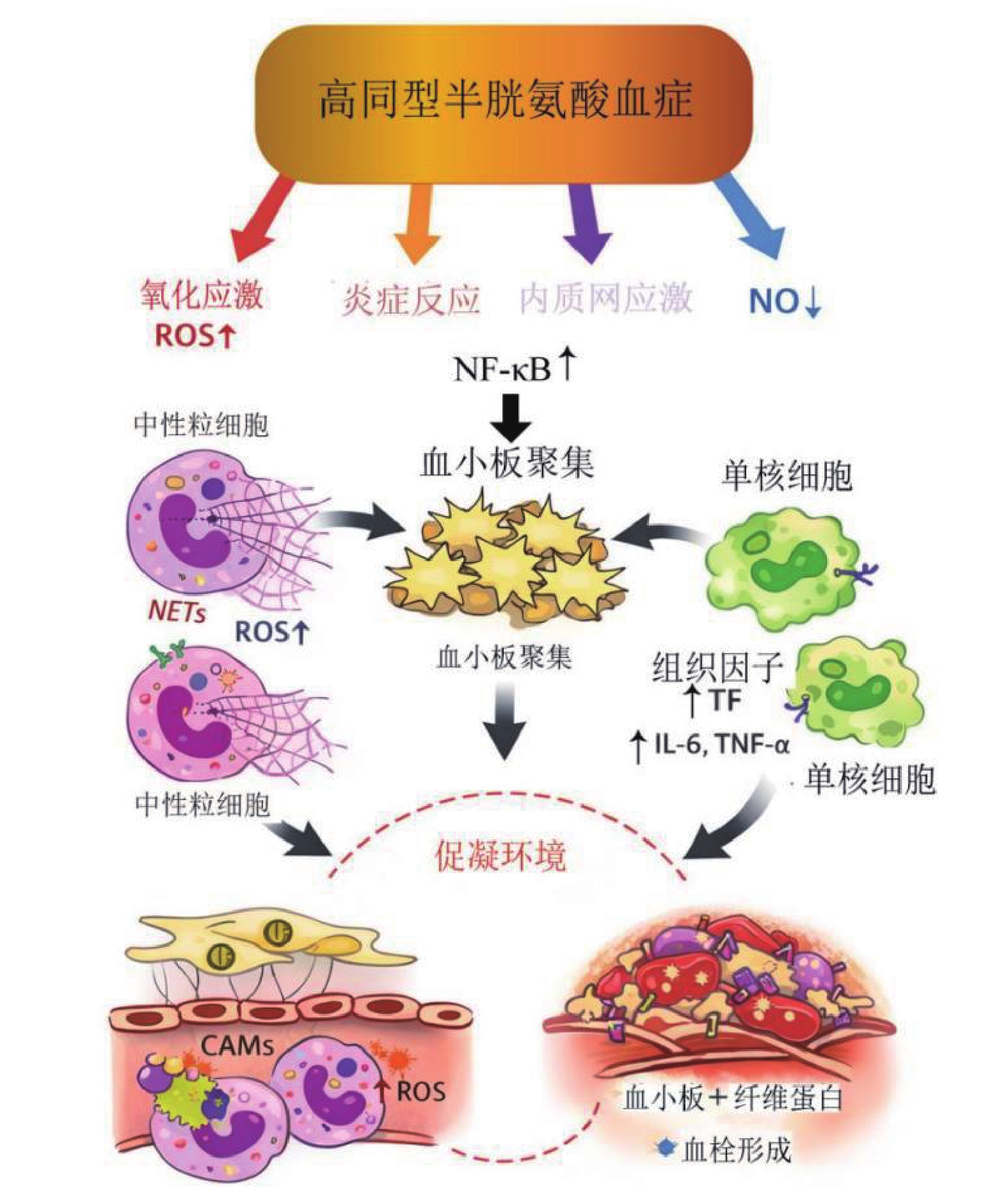
图 2 高同型半胱氨酸血症诱导免疫-凝血异常的机制
Figure 2. Mechanisms of immunothrombotic abnormalities induced by hyperhomocysteinemia
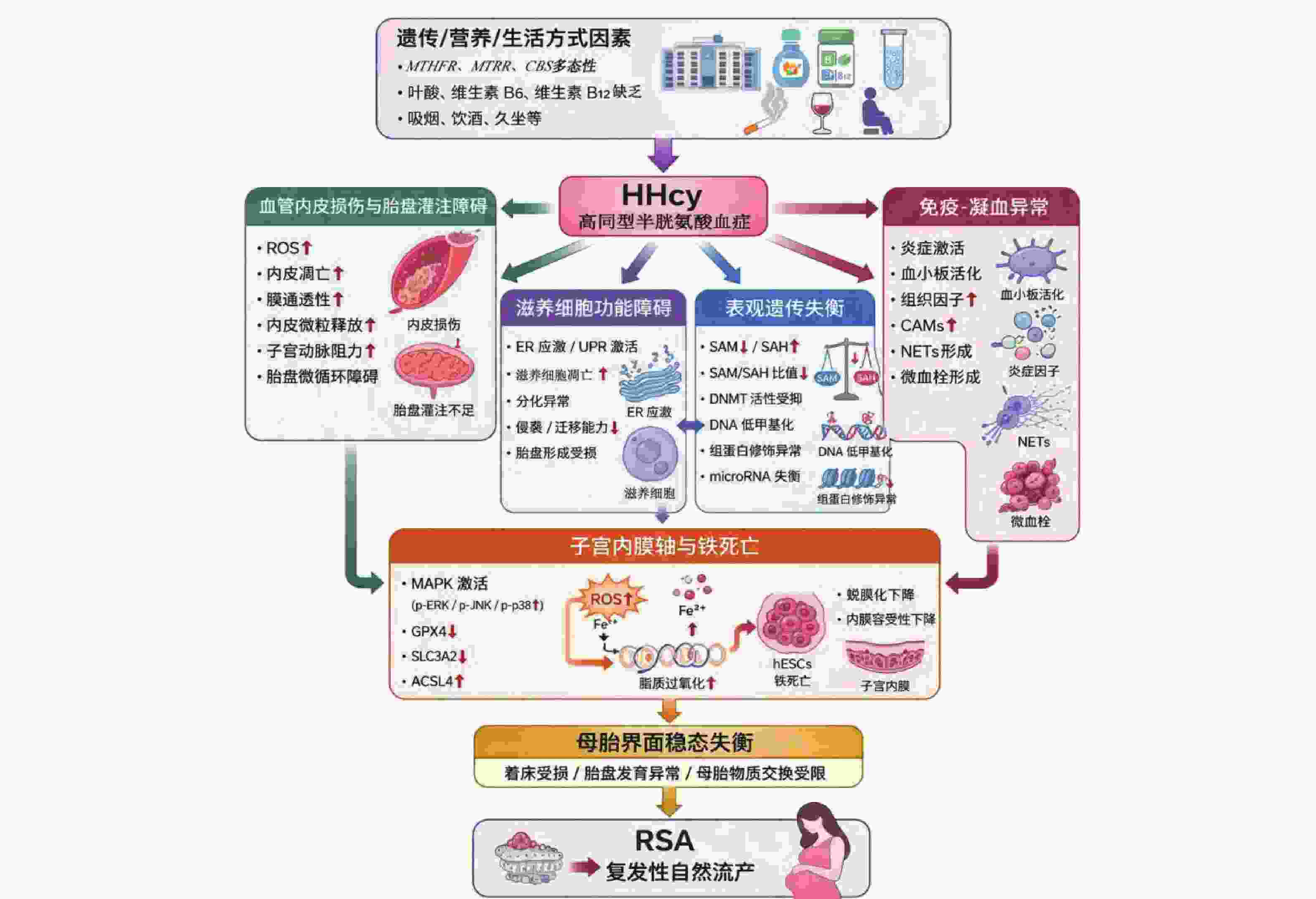
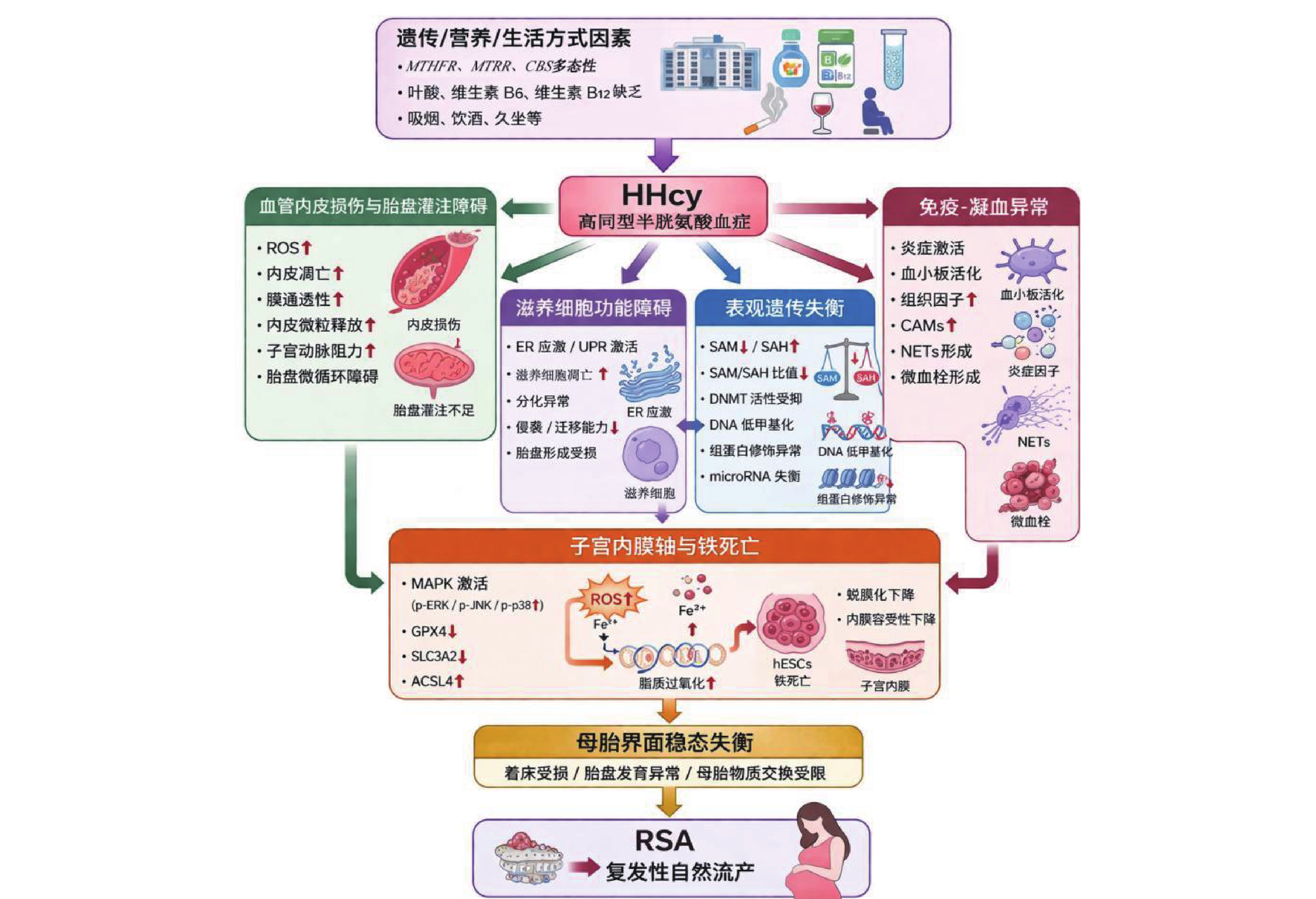
图 4 高同型半胱氨酸致复发性自然流产的多通路整合机制图
Figure 4. Integrated multi-pathway mechanistic diagram of recurrent spontaneous abortion induced by hyperhomocysteinemia
表 1 复发性自然流产(RSA)与同型半胱氨酸(Hcy)相关性的病例对照研究
Table 1. Case-control studies on the correlation between RSA and Hcy
作者 实验组 对照组 结果 结论 Nelen,et al[52] 123例RSA患者 104名正常女性 空腹Hcy (≥18.3 μmol/L) 和后负荷Hcy (≥61.5 μmol/L)与RSA相关 升高的Hcy是RSA的危险因素 Raziel,et al[6] 36例非妊娠RSA患者 40名经产妇 31% RSA患者发现HHcy RSA患者更可能出现HHcy Zammiti,et al[50] 350例RSA患者 200名正常女性 两组Hcy水平相似 RSA风险与Hcy水平无关 Creus,et al[51] 60例RSA患者 30名正常女性 两组Hcy水平无显著差异 RSA与HHcy无关 Chakraborty,et al[53] 126例合并PCOS的RSA患者 117名无PCOS的正常女性 实验组Hcy表达显著升高 (70.63% vs. 57.26%; P<0.05) HHcy可能增加RSA风险 Zarfeshan Fard,
et al[54]50例RSA患者 50名至少两次正常妊娠女性 实验组Hcy表达更高 (P=0.002),T等位基因更常见 677CT基因型可能为流产风险标志 Lin,et al[36] 403例RSA患者 342名正常女性 实验组Hcy表达高于对照组 MTHFR 677CT和MTRR 66AG基因突变增加Hcy表达 注:RSA = 复发性流产;Hcy = 同型半胱氨酸;HHcy = 高同型半胱氨酸血症。  下载: 导出CSV
-
[1] Practice Committee of the American Society for Reproductive Medicine. Definitions of infertility and recurrent pregnancy loss: a committee opinion[J]. Fertil Steril, 2020, 113(3): 533-535. doi: 10.1016/j.fertnstert.2019.11.025 [2] The ESHRE Guideline Group on RPL, Bender Atik R, Christiansen O B, et al. ESHRE guideline: Recurrent pregnancy loss: An update in 2022[J]. Hum Reprod Open, 2023, 2023(1): hoad002. doi: 10.1093/hropen/hoad002 [3] The ESHRE Guideline Group on RPL, Bender Atik R, Christiansen OB, et al. ESHRE guideline: Recurrent pregnancy loss[J]. Hum Reprod Open, 2018, 2018(2): hoy004. [4] 自然流产诊治中国专家共识编写组. 自然流产诊治中国专家共识(2020年版)[J]. 中国实用妇科与产科杂志, 2020, 36(11): 1082-1090. [5] Steegers-Theunissen R P M, Boers G H J, Blom H J, et al. Hyperhomocysteinaemia and recurrent spontaneous abortion or abruptio placentae[J]. Lancet, 1992, 339(8801): 1122-1123. [6] Raziel A, Kornberg Y, Friedler S, et al. Hypercoagulable thrombophilic defects and hyperhomocysteinemia in patients with recurrent pregnancy loss[J]. Am J Reprod Immunol, 2001, 45(2): 65-71. [7] 何健, 罗玲, 陈智林, 等. 血清同型半胱氨酸水平与反复性自然流产关系的探讨[J]. 中国卫生检验杂志, 2013, 23(15): 3095-3097. [8] Finkelstein J D, Martin J J. Homocysteine[J]. Int J Biochem Cell Biol, 2000, 32(4): 385-389. [9] Huang X, Bao H, Ding C, et al. Optimal folic acid dosage in lowering homocysteine: Precision Folic Acid Trial to lower homocysteine (PFAT-Hcy)[J]. Eur J Nutr, 2024, 63(5): 1513-1528. [10] Froese D S, Fowler B, Baumgartner M R. Vitamin B12, folate, and the methionine remethylation cycle-biochemistry, pathways, and regulation[J]. J Inherit Metab Dis, 2019, 42(4): 673-685. [11] Refsum H. Folate, vitamin B12 and homocysteine in relation to birth defects and pregnancy outcome[J]. Br J Nutr, 2001, 85(S2): S109-S113. [12] Tinelli C, Di Pino A, Ficulle E, et al. Hyperhomocysteinemia as a risk factor and potential nutraceutical target for certain pathologies[J]. Front Nutr, 2019, 6: 49. [13] Kim J, Kim H, Roh H, et al. Causes of hyperhomocysteinemia and its pathological significance[J]. Arch Pharm Res, 2018, 41(4): 372-383. [14] Tsikouras P, Niesigk B, von Tempelhoff G F, et al. Blood rheology during normal pregnancy[J]. Clin Hemorheol Microcirc, 2018, 69(1-2): 101-114. [15] D’Souza S W, Glazier J D. Homocysteine metabolism in pregnancy and developmental impacts[J]. Front Cell Dev Biol, 2022, 10: 802285. [16] Sharma V, Shukla N. A study of homocysteine level at the III trimester of pregnancy[J]. Int J Reprod Contracept Obstet Gynecol, 2019, 8(10): 3841. [17] Guo Z, Li H, Ma Y, et al. Homocysteine levels and determinants among Chinese women at mid-pregnancy, late pregnancy, and postpartum[J]. Biomed Environ Sci, 2025, 38(4): 459-468. [18] Walker M C, Smith G N, Perkins S L, et al. Changes in homocysteine levels during normal pregnancy[J]. Am J Obstet Gynecol, 1999, 180(3): 660-664. [19] Bošković A, Ćuk A, Mandrapa V, et al. Association of MTHFR polymorphism, folic acid and vitamin B12 with serum homocysteine levels in pregnant women[J]. Biomol Biomed, 2024, 24(1): 138-143. [20] Reynolds L J, Twiddy H M, Mlynarczyk M, et al. The association of physical activity on homocysteine in pregnant women[J]. J Matern Fetal Neonatal Med, 2022, 35(25): 7073-7080. [21] Ramírez-Vélez R, Lobelo F, Aguilar-de Plata A C, et al. Exercise during pregnancy on maternal lipids: A secondary analysis of randomized controlled trial[J]. BMC Pregnancy Childbirth, 2017, 17(1): 396. [22] Jadidi J P, Jadidi R P, Seifi-Skishahr F, et al. Effect of eight weeks of upper body, lower body, and concurrent resistance training on the levels of homocysteine, adiponectin, and insulin resistance in healthy untrained females[J]. J Rehab Med, 2020, 9(3): 83-92. [23] Zhu X, Fu S, Ma Y, et al. Long-term exercise improves metabolism during pregnancy in high-fat fed mice[J]. Int J Clin Exp Med, 2019, 12(6): 6828-6840. [24] Tuenter A, Bautista Nino P K, Vitezova A, et al. Folate, vitamin B12, and homocysteine in smoking-exposed pregnant women: A systematic review[J]. Matern Child Nutr, 2019, 15(1): e12675. [25] Yang Y, Zeng Y, Yuan S, et al. Prevalence and risk factors for hyperhomocysteinemia: A population-based cross-sectional study from Hunan, China[J]. BMJ Open, 2021, 11(12): e048575. [26] Azzini E, Ruggeri S, Polito A. Homocysteine: Its possible emerging role in at-risk population groups[J]. Int J Mol Sci, 2020, 21(4): 1421. [27] Abd Al-Badri H J, Abdul-Hassan M. Serum total homocysteine level in Iraqi woman with unexplained recurrent Miscarriage[J]. J Pak Med Assoc, 2019, 69(8 Suppl 3): S26-S30. [28] Abd-Ellatef D M, Beteha G A, Hasan M M. The relation between serum homocystiene level and recurrent abortion in Egyptian women[J]. Egypt J Hosp Med, 2018, 70(5): 731-738. [29] Sultana M N, Rahman S, Nira J A, et al. Comparison of blood homocysteine levels between women with recurrent pregnancy loss and women with normal fertility[J]. J Enam Med Col, 2023, 11(1): 10-17. [30] Cavallé-Busquets P, Inglès-Puig M, Fernandez-Ballart J D, et al. Moderately elevated first trimester fasting plasma total homocysteine is associated with increased probability of miscarriage. The Reus-Tarragona Birth Cohort Study[J]. Biochimie, 2020, 173: 62-67. [31] Yang X, Tian X, Liu H, et al. Homocysteine increases uterine artery blood flow resistance in women with pregnancy loss[J]. J Gynecol Obstet Hum Reprod, 2023, 52(2): 102533. [32] Yuan D, Chu J, Lin H, et al. Mechanism of homocysteine-mediated endothelial injury and its consequences for atherosclerosis[J]. Front Cardiovasc Med, 2023, 9: 1109445. [33] Sekuła M, Janawa G, Stankiewicz E, et al. Endothelial microparticle formation in moderate concentrations of homocysteine and methionine in vitro[J]. Cell Mol Biol Lett, 2011, 16(1): 69-78. [34] Lei F, Zhang L, Wang L, et al. Association between early spontaneous abortion and homocysteine metabolism[J]. Front Med, 2024, 11: 1310112. [35] Kwon B N, Lee N R, Kim H J, et al. Folate metabolizing gene polymorphisms and genetic vulnerability to preterm birth in Korean women[J]. Genes Genom, 2021, 43(8): 937-945. [36] Lin Z, Li Q, Sun Y, et al. Interactions between genetic variants involved in the folate metabolic pathway and serum lipid, homocysteine levels on the risk of recurrent spontaneous abortion[J]. Lipids Health Dis, 2019, 18(1): 143. [37] Capatina N, Burton G J, Yung H W. Elevated homocysteine activates unfolded protein responses and causes aberrant trophoblast differentiation and mouse blastocyst development[J]. Physiol Rep, 2022, 10(18): e15467. [38] 牛玉红, 康晓敏. URSA患者蜕膜PMN-MDSCs细胞基因表达特征及功能预测[J]. 昆明医科大学学报, 2025, 46(6): 9-19. [39] Nair A S, Tauro L, Joshi H B, et al. Influence of homocysteine on regulating immunothrombosis: Mechanisms and therapeutic potential in management of infections[J]. Inflamm Res, 2025, 74(1): 86. [40] Wang R, Han Z J, Song G, et al. Homocysteine-induced neural tube defects in chick embryos via oxidative stress and DNA methylation associated transcriptional down-regulation of miR-124[J]. Toxicol Res, 2021, 10(3): 425-435. [41] Arutjunyan A V, Milyutina Y P, Shcherbitskaia A D, et al. Epigenetic mechanisms involved in the effects of maternal hyperhomocysteinemia on the functional state of placenta and nervous system plasticity in the offspring[J]. Biochem Mosc, 2023, 88(4): 435-456. [42] Yang X, Wang L, Wang R, et al. Homocysteine induces endometrial ferroptosis via MAPK pathway in recurrent pregnancy loss[J]. Placenta, 2025, 165: 148-161. [43] Nguyen Ngoc N, Tran Ngoc Thao M, Trieu Tien S, et al. Evaluating the association between genetic polymorphisms related to homocysteine metabolism and unexplained recurrent pregnancy loss in women[J]. Appl Clin Genet, 2022, 15: 55-62. [44] Talwar S, Prasad S, Kaur L, et al. MTR MTRR and CBS gene polymorphisms in recurrent miscarriages: A case control study from north India[J]. J Hum Reprod Sci, 2022, 15(2): 191-196. [45] Diao J, Luo L, Li J, et al. Maternal homocysteine and folate levels and risk of recurrent spontaneous abortion: A meta-analysis of observational studies[J]. J Obstet Gynaecol Res, 2020, 46(12): 2461-2473. [46] Zhang L, Fu H, Wei T. MTHFR gene polymorphism and homocysteine levels in spontaneous abortion of pregnant women[J]. Am J Transl Res, 2021, 13(6): 7083-7088. [47] Mtiraoui N, Zammiti W, Ghazouani L, et al. Methylenetetrahydrofolate reductase C677T and A1298C polymorphism and changes in homocysteine concentrations in women with idiopathic recurrent pregnancy losses[J]. Reproduction, 2006, 131(2): 395-401. [48] Budzyńska E, Olszak-Wąsik K, Borowiec M, et al. MTHFR gene polymorphisms and serum homocysteine concentration in women with recurrent miscarriages[J]. J Pre Clin Clin Res, 2024, 18(2): 109-113. [49] Kostovska I, Cekovska S, Tosheska Trajkovska K, et al. Association between serum homocysteine levels and methylenetetrahydrofolate reductase C677T and A1298C gene polymorphisms in women with recurrent miscarriage[J]. J Morphol Sci, 2024, 7(1): 1-5. [50] Zammiti W, Mtiraoui N, Mahjoub T. Lack of consistent association between endothelial nitric oxide synthase gene polymorphisms, homocysteine levels and recurrent pregnancy loss in Tunisian women[J]. Am J Reprod Immunol, 2008, 59(2): 139-145. [51] Creus M, Deulofeu R, Peñarrubia J, et al. Plasma homocysteine and vitamin B12 serum levels, red blood cell folate concentrations, C677T methylenetetrahydrofolate reductase gene mutation and risk of recurrent miscarriage: A case-control study in Spain[J]. Clin Chem Lab Med, 2013, 51(3): 693-699. [52] Nelen W L D M, Blom H J, Steegers E A P, et al. Homocysteine and folate levels as risk factors for recurrent early pregnancy loss[J]. Obstet Gynecol, 2000, 95(4): 519-524. [53] Chakraborty P, Goswami S K, Rajani S, et al. Recurrent pregnancy loss in polycystic ovary syndrome: Role of hyperhomocysteinemia and insulin resistance[J]. PLoS One, 2013, 8(5): e64446. [54] Zarfeshan Fard Y, Kooshkaki O, Kordi Tammandani D, et al. Investigation of the association between C677T polymorphism of the MTHFR gene and plasma homocysteine level in recurrent fetal miscarriage[J]. J Obstet Gynaecol Res, 2019, 45(8): 1442-1447. [55] Ogawa S, Ota K, Takahashi T, et al. Impact of homocysteine as a preconceptional screening factor for in vitro fertilization and prevention of miscarriage with folic acid supplementation following frozen-thawed embryo transfer: A hospital-based retrospective cohort study[J]. Nutrients, 2023, 15(17): 3730. [56] Imbard A, Toumazi A, Magréault S, et al. Efficacy and pharmacokinetics of betaine in CBS and cblC deficiencies: A cross-over randomized controlled trial[J]. Orphanet J Rare Dis, 2022, 17(1): 417. [57] Dobrijević D, Pastor K, Nastić N, et al. Betaine as a functional ingredient: Metabolism, health-promoting attributes, food sources, applications and analysis methods[J]. Molecules, 2023, 28(12): 4824. [58] Kjaergaard A D, Wu Y, Ming W K, et al. Homocysteine and female fertility, pregnancy loss and offspring birthweight: A two-sample Mendelian randomization study[J]. Eur J Clin Nutr, 2022, 76(1): 40-47. -

 点击查看大图
图(4) / 表(1)
计量
- 文章访问数: 118
- HTML全文浏览量: 54
- PDF下载量: 63
- 被引次数: 0
