




Relationship Between Serum Apelin-13,Gal-3,sLOX-1 and Early Neurological Deterioration in Elderly Patients with Acute Ischemic Stroke and Their Predictive Significance
-
摘要:
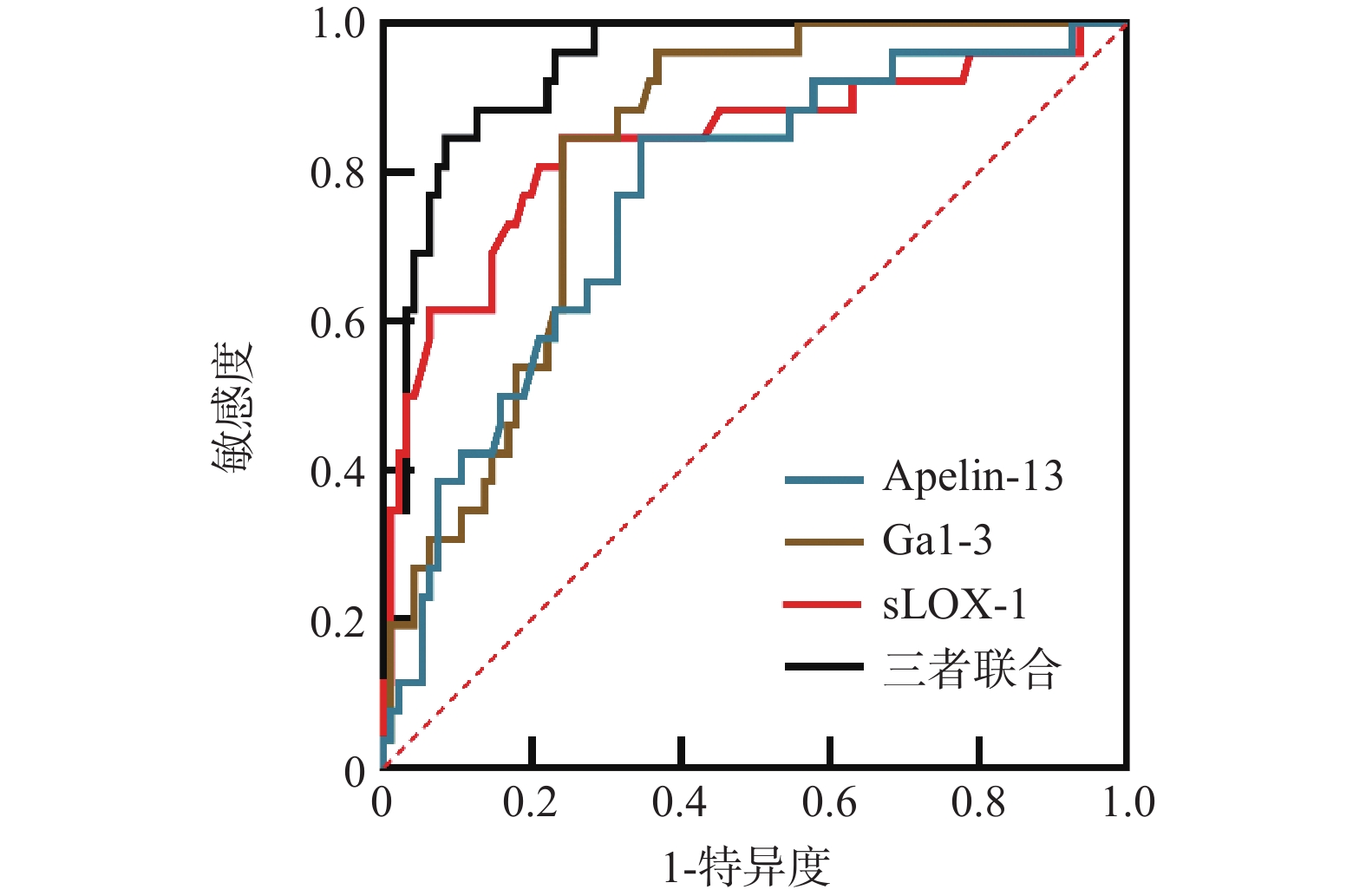
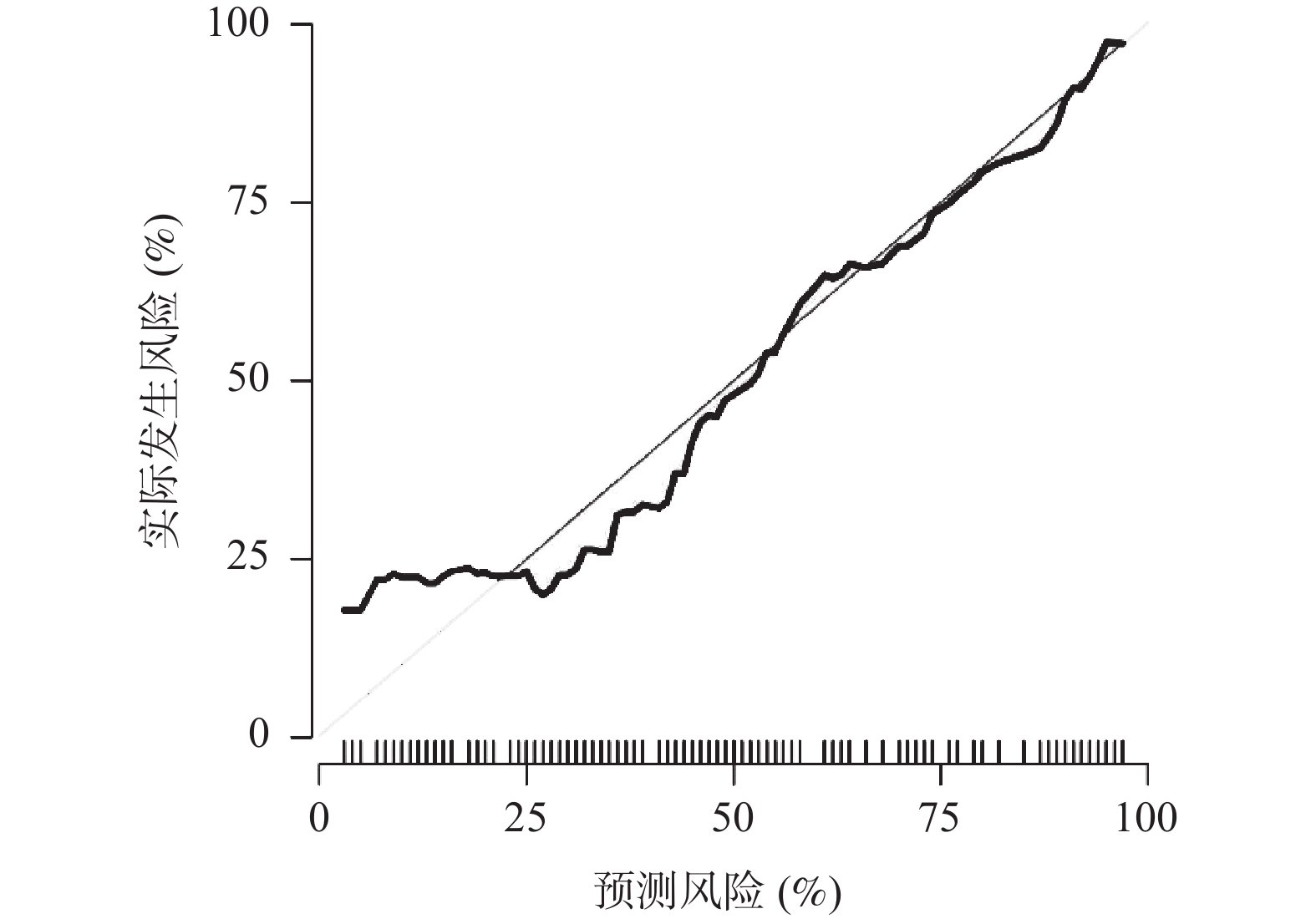
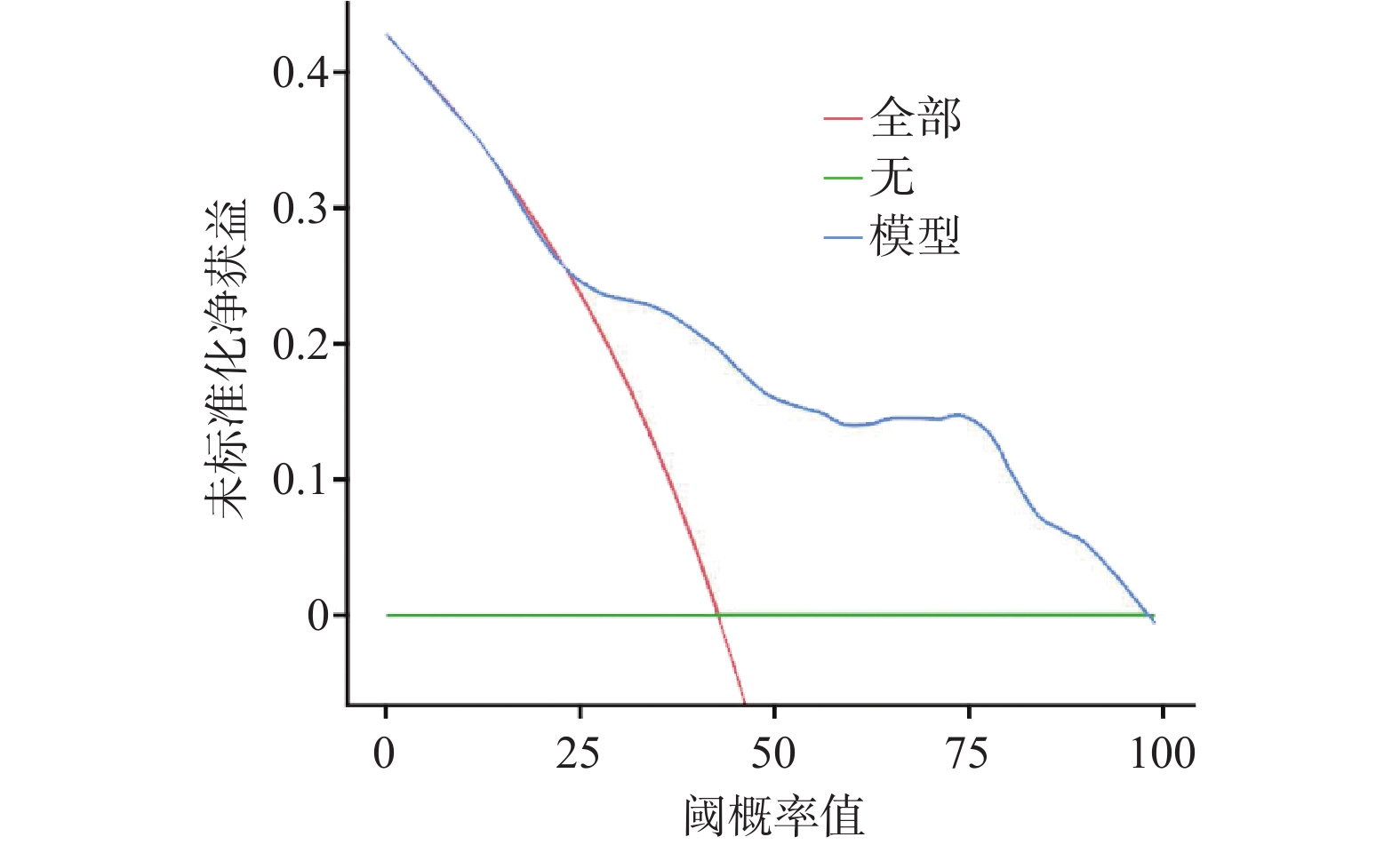
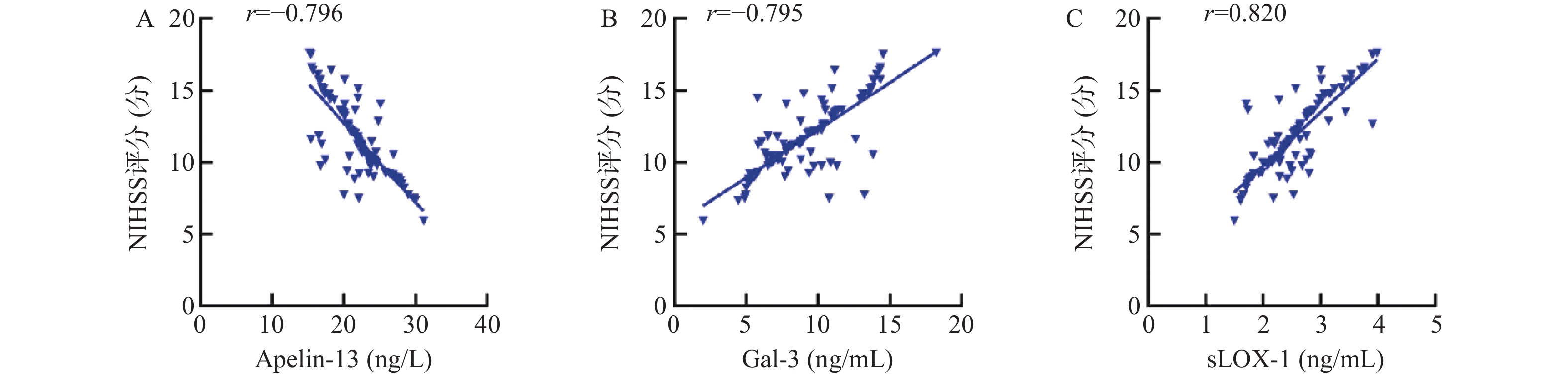
目的 探讨血清孤独G蛋白偶联受体配体-13(Apelin-13)、半乳糖凝集素-3(galectin-3,Gal-3)、可溶性凝集素样氧化型低密度脂蛋白受体-1(soluble lectin-like oxidized low-density lipoprotein receptor-1,sLOX-1)与老年急性缺血性脑梗死(acute ischemic stroke,AIS)患者早期神经功能恶化(early neurological deterioration,END)的关系及预测意义。 方法 选取2022年1月至2024年5月广元市精神卫生中心/广元市第三人民医院和广元市利州区中医院老年AIS患者196例,均根据病情给予针对性治疗,入院第7 天评估是否发生END,分为非END组(n = 152)与END组(n = 44)。比较两组基线资料、血清Apelin-13、Gal-3、sLOX-1水平,分析血清Apelin-13、Gal-3、sLOX-1与神经功能缺损程度(national institutes of health stroke scale,NIHSS)评分的关系,分析血清Apelin-13、Gal-3、sLOX-1对END的影响,评价血清Apelin-13、Gal-3、sLOX-1对END的预测价值。 结果 END组脑梗死体积大于非END组,NIHSS评分高于非END组(P < 0.05);END组血清Apelin-13水平低于非END组,血清Gal-3、sLOX-1水平高于非END组(P < 0.05);血清Apelin-13水平与NIHSS评分呈负相关,血清Gal-3、sLOX-1水平与NIHSS评分呈正相关(P < 0.05);Logistic回归分析显示,控制脑梗死体积、NIHSS评分后,血清Apelin-13、Gal-3、sLOX-1是AIS患者END的独立影响因素(P < 0.05);血清Apelin-13、Gal-3、sLOX-1预测AIS患者END的AUC分别为0.763(95%CI:0.677~0.835)、0.823(95%CI:0.743~0.886)、0.838(95%CI:0.760~0.899),敏感度分别为84.09%、84.09%、86.36%,特异度分别为65.79%、76.32%、75.66%;三者联合预测AIS患者END的AUC为0.944(95%CI:0.887~0.978),明显大于各指标单独预测(P < 0.05),敏感度为86.36%,特异度为91.45%;10折交叉验证显示,血清Apelin-13、Gal-3、sLOX-1联合预测的平均AUC为0.936(95%CI:0.875~0.969),与原始模型结果接近,表示模型稳定性良好;校准曲线显示,该预测模型预测AIS患者END与临床实际观察到的概率高度吻合(Hosmer-Lemeshow检验χ2 = 5.712,P = 0.493);DCA曲线显示,该模型在30%~80%的广泛阈概率范围内具有显著且稳定的临床净获益。 结论 血清Apelin-13、Gal-3、sLOX-1与老年AIS患者END显著相关,可作为独立预测因子,联合预测价值可靠。 -
关键词:
- 老年 /
- 急性缺血性脑梗死 /
- 早期神经功能恶化 /
- 孤独G蛋白偶联受体配体-13 /
- 半乳糖凝集素-3 /
- 可溶性凝集素样氧化型低密度脂蛋白受体-1 /
- 预测价值
Abstract:Objective To investigate the relationship between serum apelin-13 (a lonely G protein-coupled receptor ligand-13), galectin-3 (Gal-3), soluble lectin-like oxidized low-density lipoprotein receptor-1 (sLOX-1) and early neurological deterioration (END) in elderly patients with acute ischemic stroke (AIS) and to evaluate their predictive significance. Methods A total of 196 elderly AIS patients admitted to Guangyuan Mental Health Center / Guangyuan Third People's Hospital and Guangyuan Lizhou District Traditional Chinese Medicine Hospital from January 2022 to May 2024 were enrolled. All patients received targeted treatment based on their condition. On the 7 th day of admission, the occurrence of END was evaluated, and patients were divided into non-END group (n = 152) and END group (n = 44). Baseline data and serum levels of Apelin-13, Gal-3 and sLOX-1 were compared between the two groups. The relationship between serum Apelin-13, Gal-3, sLOX-1 and the National Institute of Health Stroke Scale (NIHSS) score was analyzed. The effects of serum Apelin-13, Gal-3 and sLOX-1 on END were analyzed, and their predictive value for END was evaluated. Results The volume of cerebral infarction and NIHSS score in the END group were significantly higher than those in the non-END group (P < 0.05). Serum Apelin-13 level in the END group was significantly lower, while serum Gal-3 and sLOX-1 levels were significantly higher than those in the non-END group (P < 0.05). Serum Apelin-13 level was negatively correlated with NIHSS score, while serum Gal-3 and sLOX-1 levels were positively correlated with NIHSS score (P < 0.05). Logistic regression analysis showed that serum Apelin-13, Gal-3 and sLOX-1 were independent influencing factors for END in AIS patients after adjusting for cerebral infarction volume and NIHSS score (P < 0.05). The AUC for predicting END in AIS patients were 0.763 (95%CI: 0.677~0.835) for apelin-13, 0.823 (95%CI: 0.743~0.886)for Gal-3, and 0.838 (95%CI: 0.760~0.899) for sLOX-1, with sensitivities of 84.09%, 84.09% and 86.36%, and the specificities of 65.79%, 76.32% and 75.66%, respectively. The AUC of the combined prediction of the three markers was 0.944 (95%CI: 0.887~0.978), which was significantly higher than that of each individual marker (P < 0.05), with a sensitivity of 86.36% and a specificity of 91.45%. Ten-fold cross validation showed that the average AUC of the combined prediction of serum apelin-13, Gal-3 and sLOX-1 was 0.936 (95%CI: 0.875~0.969), which was close to the original model result, indicating that the model was stable; The calibration curve showed that the prediction model of END in AIS patients was highly consistent with the probability of clinical observation (Hosmer lemeshow test χ2 = 5.712, P = 0.493); The DCA curve showed that the model had a significant and stable clinical net benefit across a wide range of threshold probabilities of 30% -80%. Conclusion Serum Apelin-13, Gal-3 and sLOX-1 are significantly correlated with END in elderly AIS patients, which can be used as independent predictors, and the combined predictive value is reliable. -
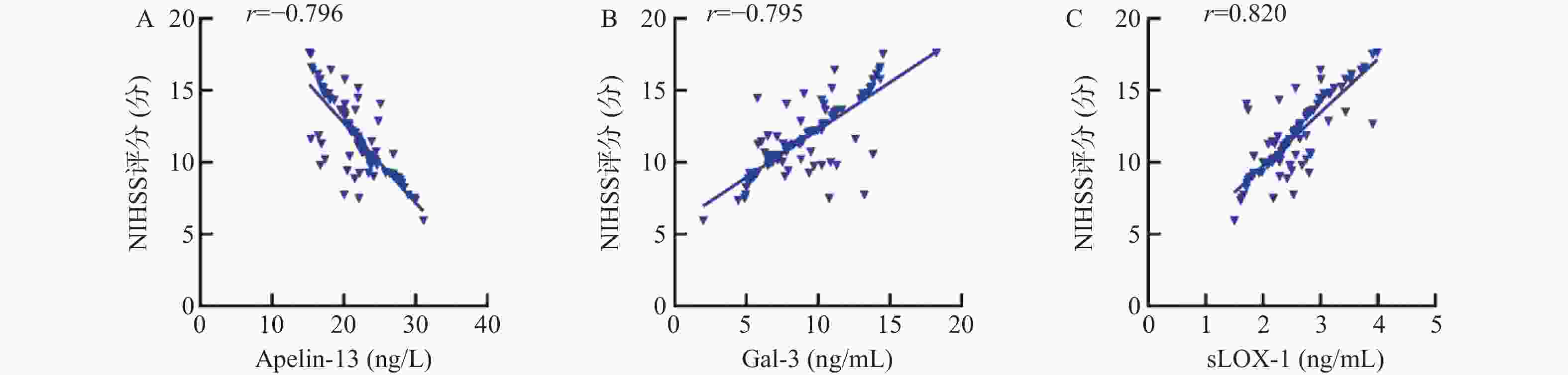
图 1 血清Apelin-13、Gal-3、sLOX-1与NIHSS评分的关系
A:血清Apelin-13与NIHSS评分的相关性;B:血清Gal-3与NIHSS评分的相关性;C:血清sLOX-1与NIHSS评分的相关性。
Figure 1. Correlation between serum Apelin-13,Gal-3,sLOX-1 levels and NIHSS score
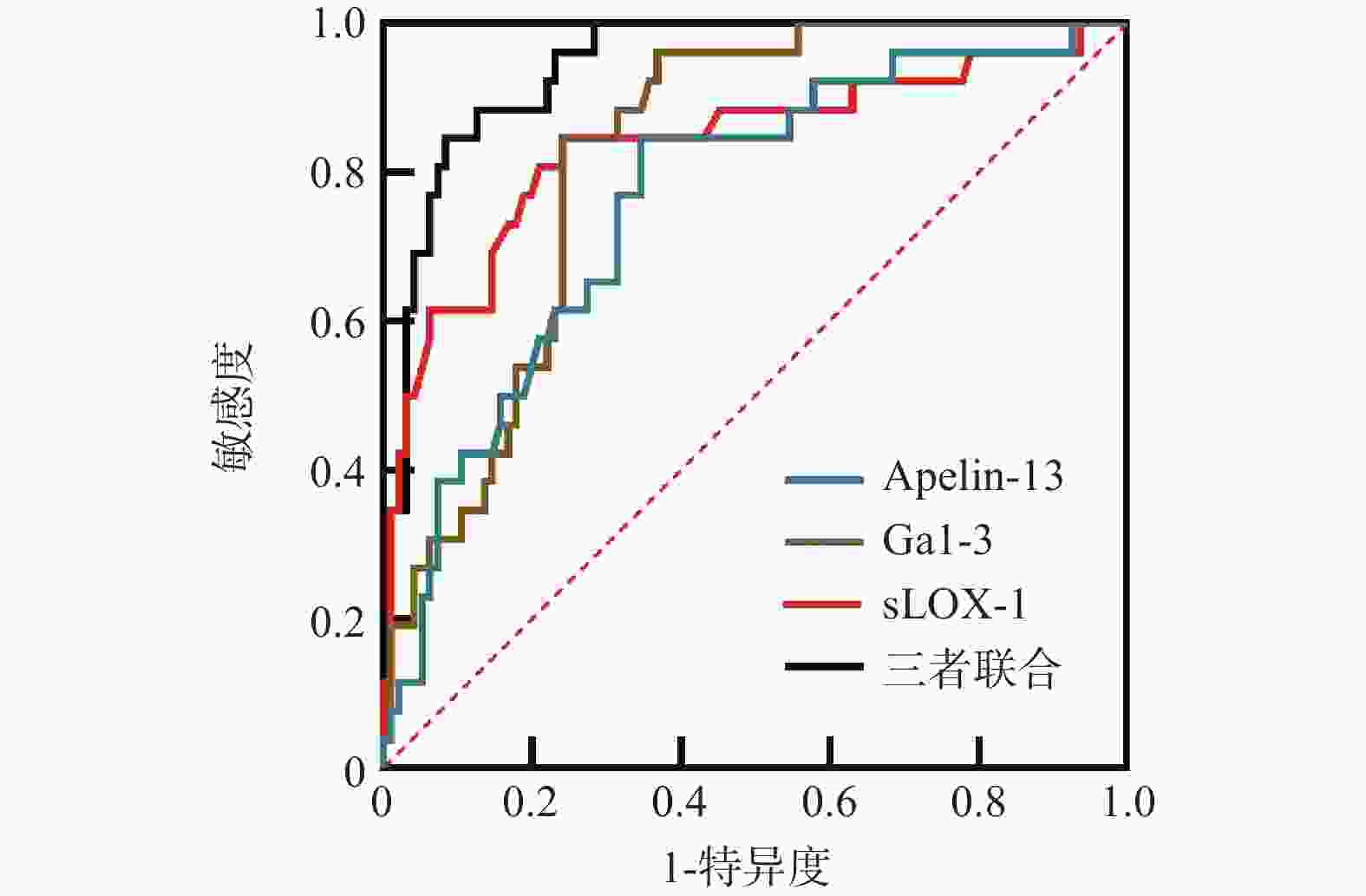
图 2 血清Apelin-13、Gal-3、sLOX-1预测END的ROC曲线
Figure 2. ROC curves of serum Apelin-13,Gal-3,and sLOX-1 for predicting END
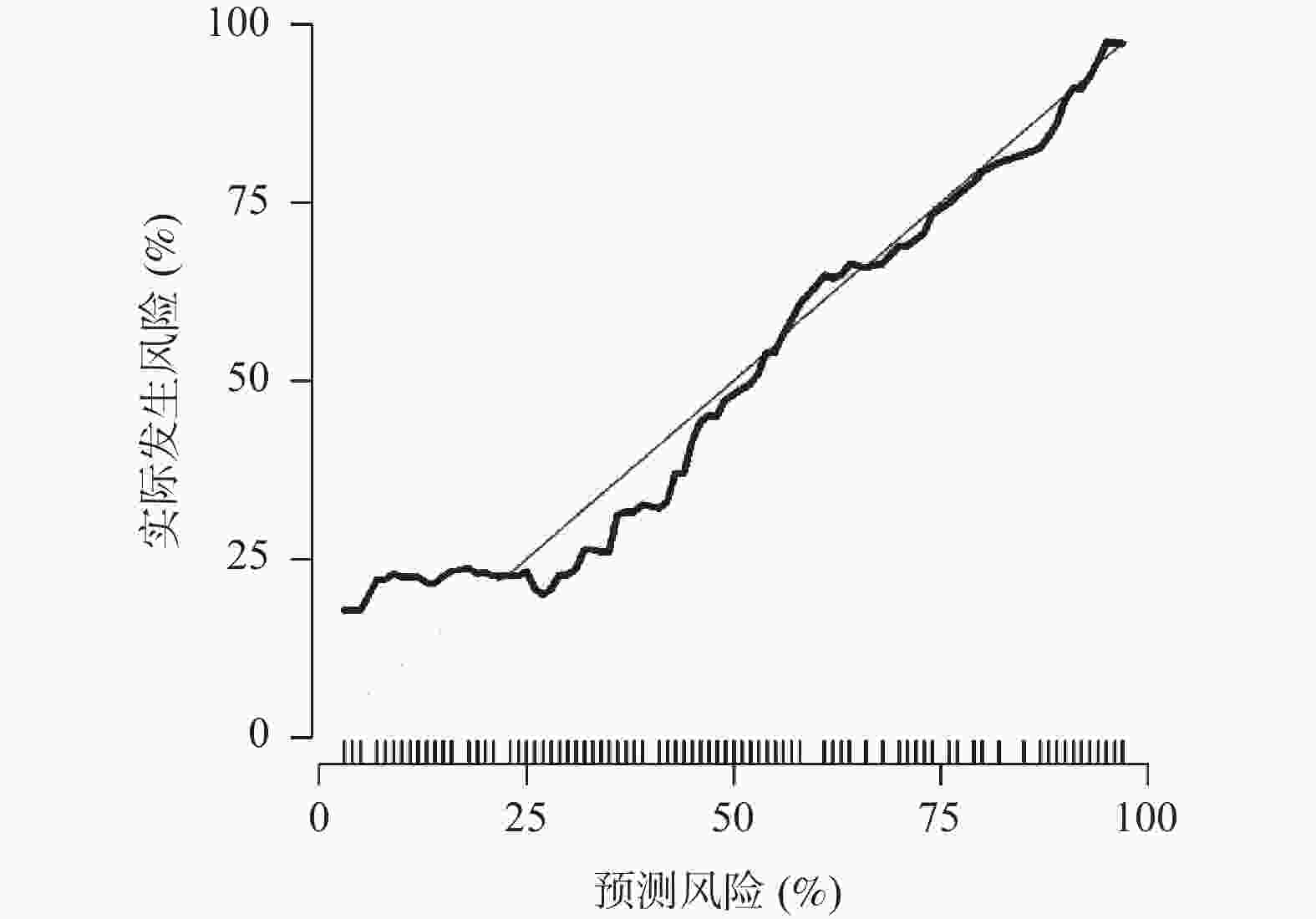
图 3 血清Apelin-13、Gal-3、sLOX-1联合预测的校准曲线
Figure 3. Calibration curve of the combined prediction model of serum Apelin-13,Gal-3,and sLOX-1 for END
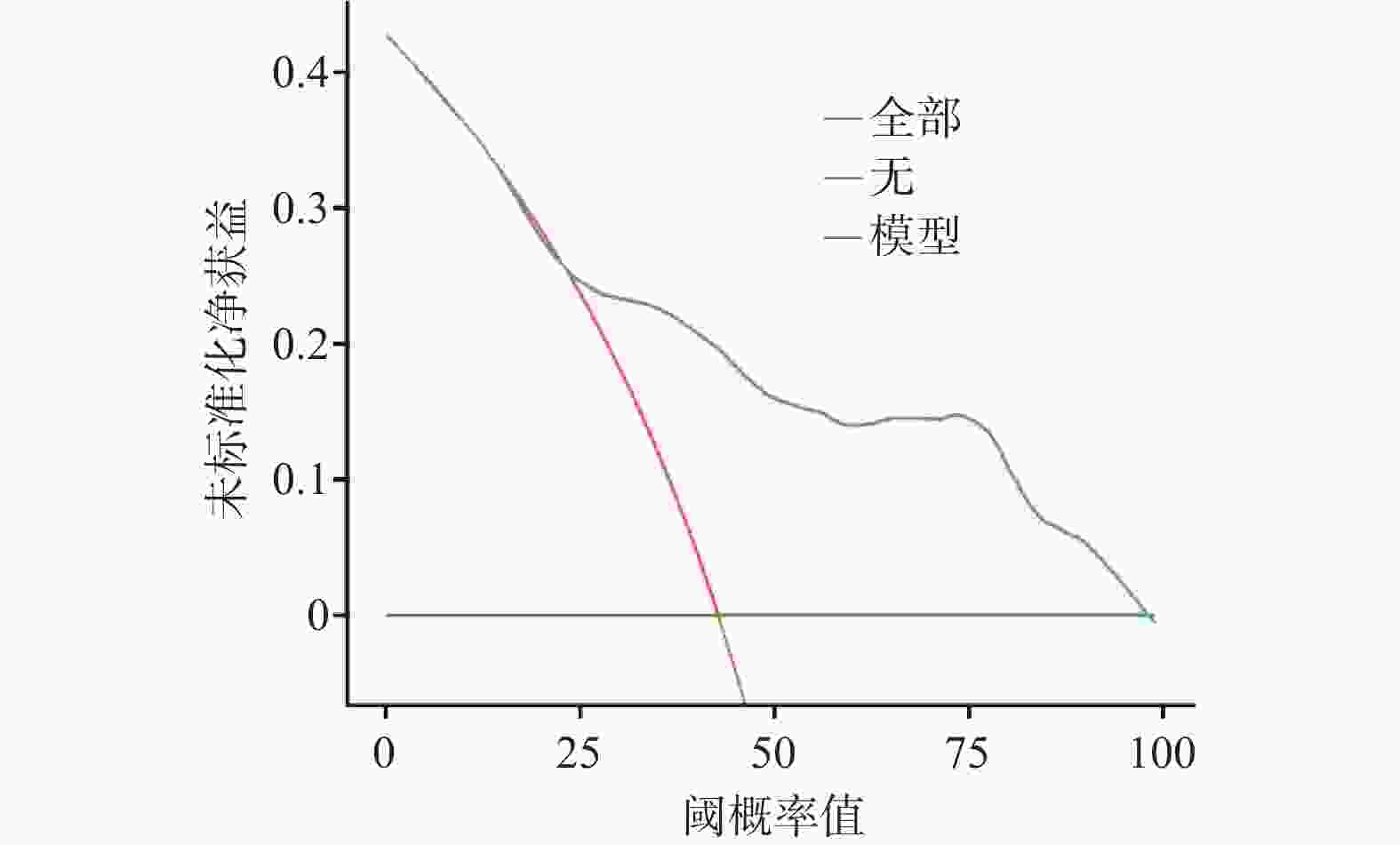
图 4 血清Apelin-13、Gal-3、sLOX-1联合预测的DCA曲线
Figure 4. Decision curve analysis (DCA) of the combined prediction model of serum Apelin-13,Gal-3,and sLOX-1 for END
表 1 两组基线资料比较[n(%)/($ \bar x \pm s $)]
Table 1. Comparison of baseline characteristics between the two groups[n(%)/($ \bar x \pm s $)]
资料 END组(n = 44) 非END组(n = 152) t/χ2 P 性别 0.195 0.659 男 25(56.82) 92(60.53) 女 19(43.18) 60(39.47) 年龄(岁) 68.42 ± 4.31 68.66 ± 4.08 0.339 0.735 BMI(kg/m2) 22.27 ± 1.44 22.18 ± 1.32 0.390 0.697 发病至入院时间(h) 3.61 ± 0.80 3.57 ± 0.79 0.295 0.768 吸烟史 29(65.91) 103(67.76) 0.053 0.817 饮酒史 25(56.82) 83(54.61) 0.068 0.795 高血压 18(40.91) 42(27.63) 2.832 0.092 糖尿病 13(29.55) 40(26.32) 0.180 0.671 高血脂症 12(27.27) 38(25.00) 0.093 0.761 脑梗死体积(cm3) 7.38 ± 1.02 5.60 ± 0.85 11.677 <0.001* NIHSS评分(分) 14.89 ± 2.63 11.12 ± 2.15 9.722 <0.001* 脑梗死部位 0.630 0.529 基底节区 19(43.18) 75(49.34) 脑叶 11(25.00) 31(20.39) 丘脑 5(11.36) 18(11.84) 脑干 7(15.91) 25(16.45) 小脑 2(4.55) 3(1.97) 治疗方式 0.057 0.811 静脉溶栓 24(54.55) 86(56.58) 血管内取栓 20(45.45) 66(43.42) *P < 0.05。  下载: 导出CSV
表 2 两组血清Apelin-13、Gal-3、sLOX-1水平比较($ \bar x \pm s $)
Table 2. Comparison of serum levels of Apelin-13,Gal-3,and sLOX-1 between the two groups($ \bar x \pm s $)
组别 n Apelin-13(ng/L) Gal-3(ng/mL) sLOX-1(ng/mL) END组 44 16.08 ± 3.74 11.44 ± 3.82 2.97 ± 0.73 非END组 152 21.85 ± 5.19 7.61 ± 2.20 2.28 ± 0.55 t 6.871 8.455 6.779 P <0.001* <0.001* <0.001* *P < 0.05。
下载: 导出CSV
表 3 血清Apelin-13、Gal-3、sLOX-1对END的影响
Table 3. Impact of serum Apelin-13,Gal-3,and sLOX-1 on END
变量 β S.E. Waldχ2 P OR 95%CI 校正前 脑梗死体积 0.657 0.181 13.193 <0.001* 1.930 1.422~2.619 NIHSS评分 0.816 0.194 17.671 <0.001* 2.260 1.674~3.052 Apelin-13 −0.188 0.052 13.120 <0.001* 0.828 0.711~0.965 Gal-3 0.545 0.144 14.343 <0.001* 1.725 1.258~2.366 sLOX-1 0.477 0.138 11.956 <0.001* 1.612 1.194~2.175 常数项 −0.302 0.094 13.406 <0.001* − − 校正后 Apelin-13 −0.216 0.065 11.056 <0.001* 0.806 0.689~0.942 Gal-3 0.439 0.140 9.852 <0.001* 1.552 1.144~2.105 sLOX-1 0.397 0.132 9.029 <0.001* 1.487 1.102~2.006 常数项 −0.275 0.081 11.749 <0.001* − − *P < 0.05。
下载: 导出CSV
-
[1] Wassélius J, Arnberg F, von Euler M, et al. Endovascular thrombectomy for acute ischemic stroke[J]. J Intern Med, 2022, 291(3): 303-316. doi: 10.1111/joim.13425 [2] Sheth S A. Mechanical thrombectomy for acute ischemic stroke[J]. Continuum, 2023, 29(2): 443-461. doi: 10.1212/CON.0000000000001243 [3] 陈宇, 徐依成, 温宏峰, 等. 弥散加权成像-阿尔伯塔卒中项目早期CT评分对急性前循环脑梗死患者早期神经功能恶化的预测价值[J]. 中风与神经疾病杂志, 2021, 38(2): 109-112. [4] Zhang Y, Jiang W, Sun W, et al. Neuroprotective roles of apelin-13 in neurological diseases[J]. Neurochem Res, 2023, 48(6): 1648-1662. doi: 10.1007/s11064-023-03869-0 [5] Rhodenhiser E, Baccouche B M. Galectin-3 and HFpEF: Clarifying an emerging relationship[J]. Curr Cardiol Rev, 2023, 19(5): e200323214796. doi: 10.2174/1573403X19666230320165821 [6] Ali Sheikh M S. Circulatory soluble LOX-1 is a novel predictor for coronary artery disease patients[J]. Cardiovasc J Afr, 2023, 34(2): 104-108. doi: 10.5830/cvja-2022-038 [7] 国家卫生健康委员会急诊医学质控中心, 中国医师协会急诊医师分会, 世界中医药学会联合会急症专业委员会. 中国急性缺血性脑卒中急诊诊治专家共识[J]. 中国急救医学, 2018, 38(4): 281-287. doi: 10.3760/cma.j.issn.2095-4352.2018.03.001 [8] Yamal J M, Grotta J C. National institutes of health stroke scale as an outcome measure for acute stroke trials[J]. Stroke, 2021, 52(1): 142-143. doi: 10.1161/STROKEAHA.120.032994 [9] 中华医学会神经病学分会, 中华医学会神经病学分会脑血管病学组. 中国急性缺血性脑卒中诊治指南2018[J]. 中华神经科杂志, 2018, 51(9): 666-682. doi: 10.3760/cma.j.issn.1006-7876.2018.09.004 [10] Kwon H M, Lee Y S, Bae H J, et al. Homocysteine as a predictor of early neurological deterioration in acute ischemic stroke[J]. Stroke, 2014, 45(3): 871-873. doi: 10.1161/STROKEAHA.113.004099 [11] Geng H H, Wang Q, Li B, et al. Early neurological deterioration during the acute phase as a predictor of long-term outcome after first-ever ischemic stroke[J]. Medicine, 2017, 96(51): e9068. doi: 10.1097/MD.0000000000009068 [12] Gargalovic P, Wong P, Onorato J, et al. In vitro and in vivo evaluation of a small-molecule APJ (apelin receptor) agonist, BMS-986224, as a potential treatment for heart failure[J]. Circ Heart Fail, 2021, 14(3): e007351. doi: 10.1161/CIRCHEARTFAILURE.120.007351 [13] 谢易瑾, 朱玺西, 杜伟. 急性脑梗死患者血清Apelin-13水平与神经功能损害程度及预后的相关性分析[J]. 卒中与神经疾病, 2023, 30(1): 67-70+92. doi: 10.3969/j.issn.1007-0478.2023.01.012 [14] Wang X, Tian X, Pei L L, et al. The association between serum apelin-13 and the prognosis of acute ischemic stroke[J]. Transl Stroke Res, 2020, 11(4): 700-707. doi: 10.1007/s12975-019-00769-w [15] Tune J D, Baker H E, Berwick Z, et al. Distinct hemodynamic responses to (pyr)apelin-13 in large animal models[J]. Am J Physiol Heart Circ Physiol, 2020, 318(4): H747-H755. doi: 10.1152/ajpheart.00365.2019 [16] Duan J, Cui J, Yang Z, et al. Neuroprotective effect of Apelin 13 on ischemic stroke by activating AMPK/GSK-3β/Nrf2 signaling[J]. J Neuroinflammation, 2019, 16(1): 24. doi: 10.1186/s12974-019-1406-7 [17] Lin Q, Ye L, Dai J, et al. A prospective cohort study on decreased serum apelin-13 levels after human aneurysmal subarachnoid hemorrhage: Associations with severity and prognosis[J]. Neurosurg Rev, 2023, 46(1): 235. doi: 10.1007/s10143-023-02142-w [18] 孟丽霞, 郗海涛, 申红梅. FGF23、ANGPTL4、Apelin-13与急性缺血性脑卒中患者病情及溶栓治疗短期预后的相关性[J]. 分子诊断与治疗杂志, 2024, 16(2): 308-312. doi: 10.3969/j.issn.1674-6929.2024.02.026 [19] García-Revilla J, Boza-Serrano A, Espinosa-Oliva A M, et al. Galectin-3, a rising star in modulating microglia activation under conditions of neurodegeneration[J]. Cell Death Dis, 2022, 13: 628. doi: 10.1038/s41419-022-05058-3 [20] Zhang X, Yang L, Zhang J, et al. Association between galectin-3 and the prognosis of patients with stroke: A meta-analysis of observational studies[J]. Nutr Metab Cardiovasc Dis, 2024, 34(2): 270-280. doi: 10.1016/j.numecd.2023.10.014 [21] Hansen C, Sastre C, Wolcott Z, et al. Time-dependent, dynamic prediction of fatty acid-binding protein 4, Galectin-3, and soluble ST2 measurement with poor outcome after acute stroke[J]. Int J Stroke, 2021, 16(6): 660-668. doi: 10.1177/1747493020971166 [22] Han X, Geng B, Deng F, et al. Galectin-3 is associated with the functional outcome and mortality in stroke patients: A systematic review and meta-analysis[J]. Heliyon, 2023, 9(2): e13279. doi: 10.1016/j.heliyon.2023.e13279 [23] Zhuang J J, Zhou L, Zheng Y H, et al. The serum galectin-3 levels are associated with the severity and prognosis of ischemic stroke[J]. Aging, 2021, 13(5): 7454-7464. doi: 10.18632/aging.202610 [24] Manouchehrian O, Andersson E, Eriksson-Hallberg B, et al. Galectin-3 ablation does not affect infarct size or inflammatory cytokines after experimental stroke in 24-month-old female mice[J]. Neuroreport, 2022, 33(6): 266-271. doi: 10.1097/WNR.0000000000001778 [25] Wesley U V, Sutton I C, Cunningham K, et al. Galectin-3 protects against ischemic stroke by promoting neuro-angiogenesis via apoptosis inhibition and Akt/Caspase regulation[J]. J Cereb Blood Flow Metab, 2021, 41(4): 857-873. doi: 10.1177/0271678X20931137 [26] Huang J, Jiang W, Pan J, et al. Correlation of sLOX-1 and CSF1 with the pathological progression of hypoxic-ischemic encephalopathy in neonatal rats[J]. Cell Mol Biol (Noisy-le-grand), 2023, 69(10): 150-154. doi: 10.14715/cmb/2023.69.10.21 [27] 郝光, 仲婷婷, 曹启环, 等. 急性缺血性脑梗死患者血清YKL-40、sLOX-1水平变化及与患者预后关系分析[J]. 长春中医药大学学报, 2023, 39(1): 74-78. doi: 10.13463/j.cnki.cczyy.2023.01.017 [28] Ren K, Jiang H, Li T, et al. Correlation of sLOX-1 levels and MR characteristics of culprit plaques in intracranial arteries with stroke recurrence[J]. Diagnostics, 2023, 13(4): 804. doi: 10.3390/diagnostics13040804 [29] 周华勇, 杨旭, 张翼, 等. 血清YKL-40及sLOX-1水平与急性缺血性脑梗死患者短期预后的相关性研究[J]. 标记免疫分析与临床, 2021, 28(4): 612-616, 621. doi: 10.11748/bjmy.issn.1006-1703.2021.04.017 [30] Yan P, Cao J, Zhou YJ, et al. Serum levels of sLOX-1 and Lp-PLA2 can predict the prognosis of acute cerebral infarction with a high specificity[J]. Physiol Rep, 2022, 10(1): e15160. doi: 10.14814/phy2.15160 -

 点击查看大图
计量
- 文章访问数: 576
- HTML全文浏览量: 242
- PDF下载量: 102
- 被引次数: 0
