




Advances in the Diagnosis and Treatment of Postoperative Meningitis in Neurosurgery
-
摘要: 神经外科术后脑膜炎因机制复杂、临床表现不特异、病原谱多样且耐药性突出,诊治难度大。本文围绕其核心病理生理环节:解剖屏障破坏与脑脊液漏、植入物相关生物膜形成、宿主易感性及医院获得性感染,梳理病原学演变特征,重点总结以宏基因组二代测序、多重PCR等快速病原诊断技术进展,以及经验性抗感染、精准用药、脑室内给药等治疗策略的临床应用。同时强调外科源控制(移除感染材料、脑室外引流管理、脑脊液漏修补)与多学科协作在难治性病例中的关键作用,并结合预防体系建设及人工智能、纳米递药等未来方向,提出从经验式处理迈向精准个体化治疗转变的临床路径,为神经外科术后脑膜炎的综合治疗管理提供参考。Abstract: Postoperative meningitis in neurosurgery poses significant challenges in diagnosis and treatment owing to its complex pathogenesis, nonspecific clinical manifestations, a diverse pathogen spectrum, and marked antimicrobial resistance. This review centers on the core pathophysiological mechanisms, including disruption of anatomical barriers and cerebrospinal fluid leakage, implant-associated biofilm formation, host susceptibility, and nosocomial infections. It systematically delineates the evolving etiological characteristics, with particular emphasis on recent advances in rapid pathogen detection technologies—such as metagenomic next-generation sequencing (mNGS) and multiplex PCR—as well as the clinical application of empirical antimicrobial therapy, pathogen-targeted therapy, and intraventricular drug administration. Furthermore, the review highlights the pivotal role of surgical source control (e.g., removal of infected materials, management of external ventricular drains, and repair of cerebrospinal fluid leaks) and multidisciplinary collaboration in refractory cases. Finally, it discusses the development of preventive systems and future directions, including artificial intelligence and nano-based drug delivery, and proposes a clinical pathway transitioning from empirical management to precision individualized therapy, thereby providing a reference for the comprehensive management of postoperative meningitis in neurosurgery.
-
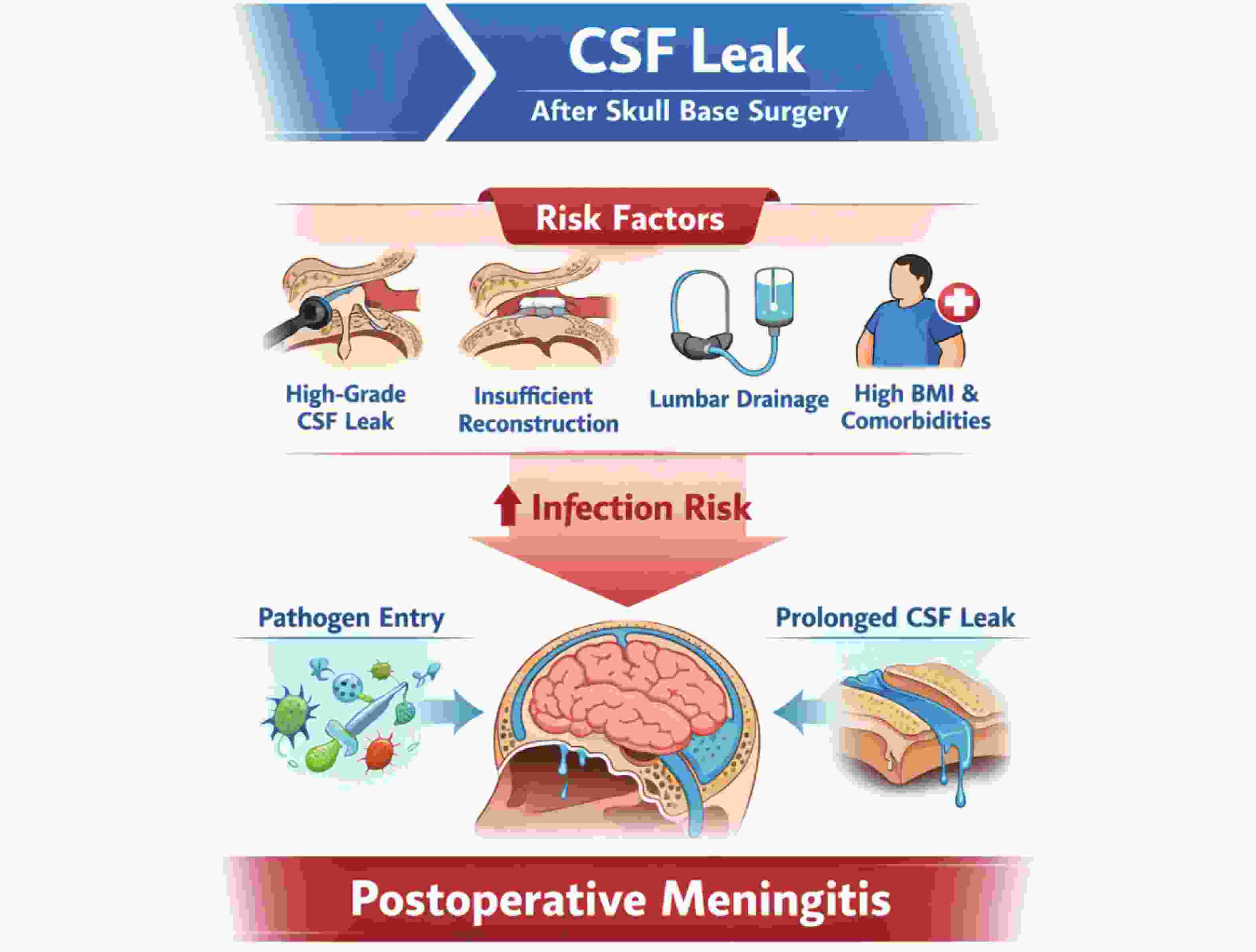
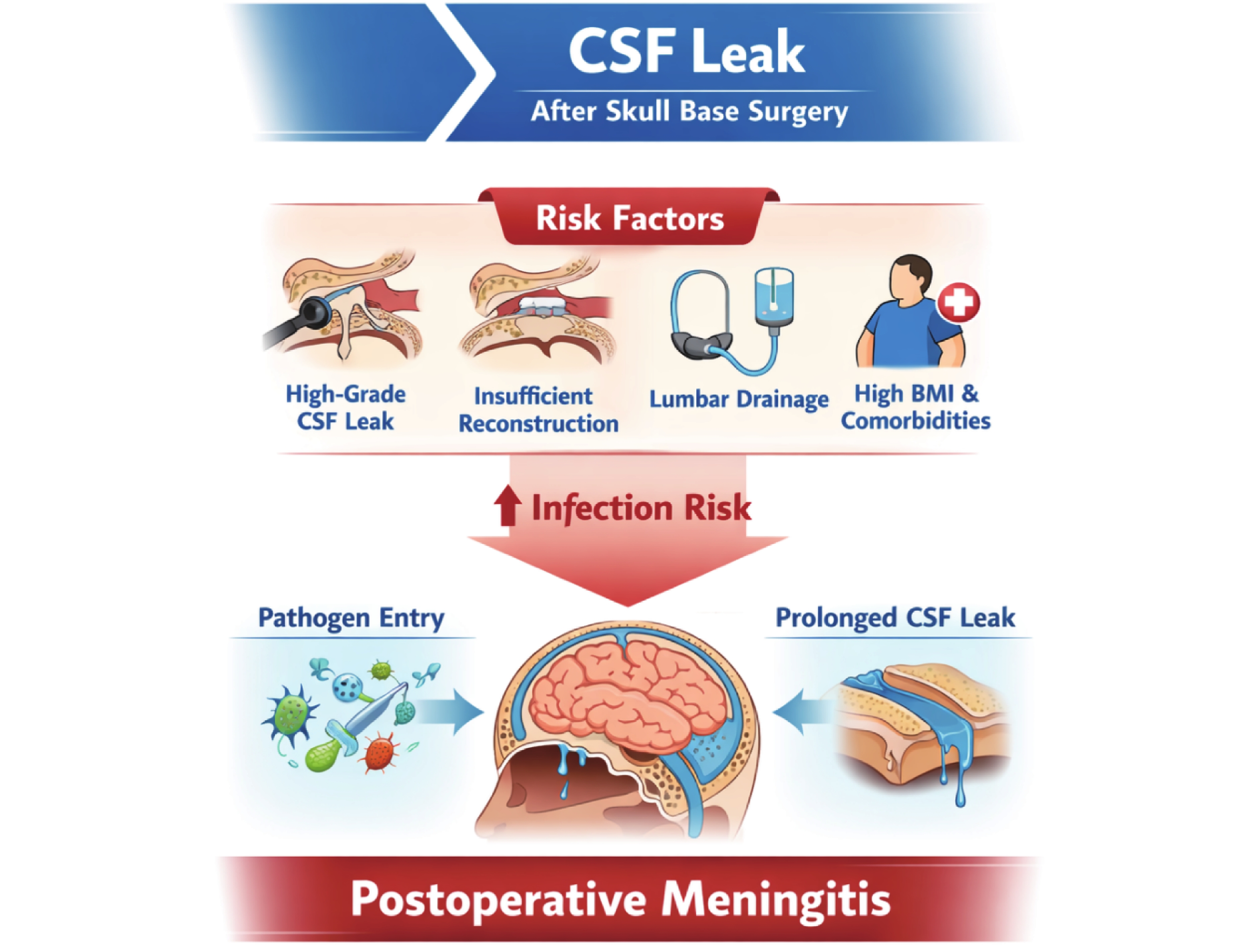
图 1 脑脊液漏与术后脑膜炎关系示意图
Figure 1. Schematic diagram of the relationship between cerebrospinal fluid leakage and postoperative meningitis
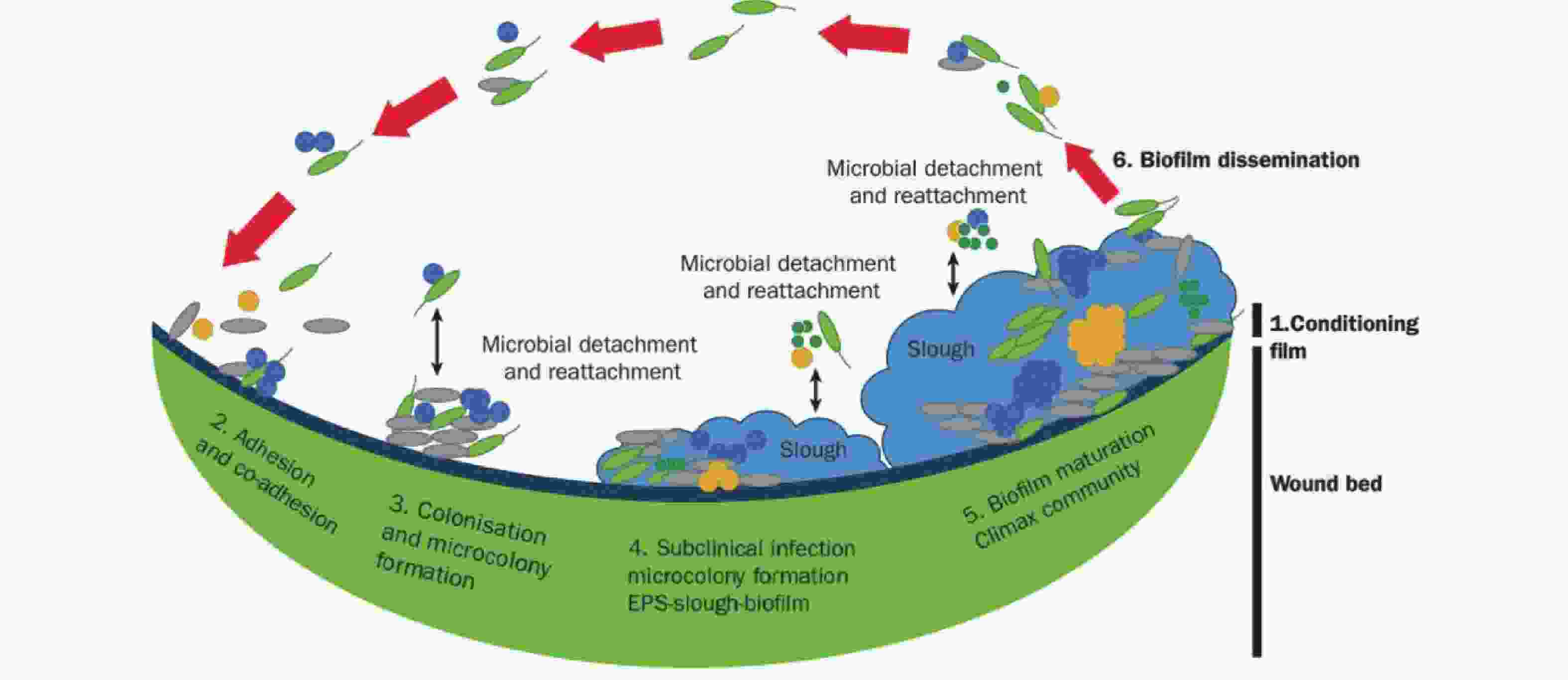
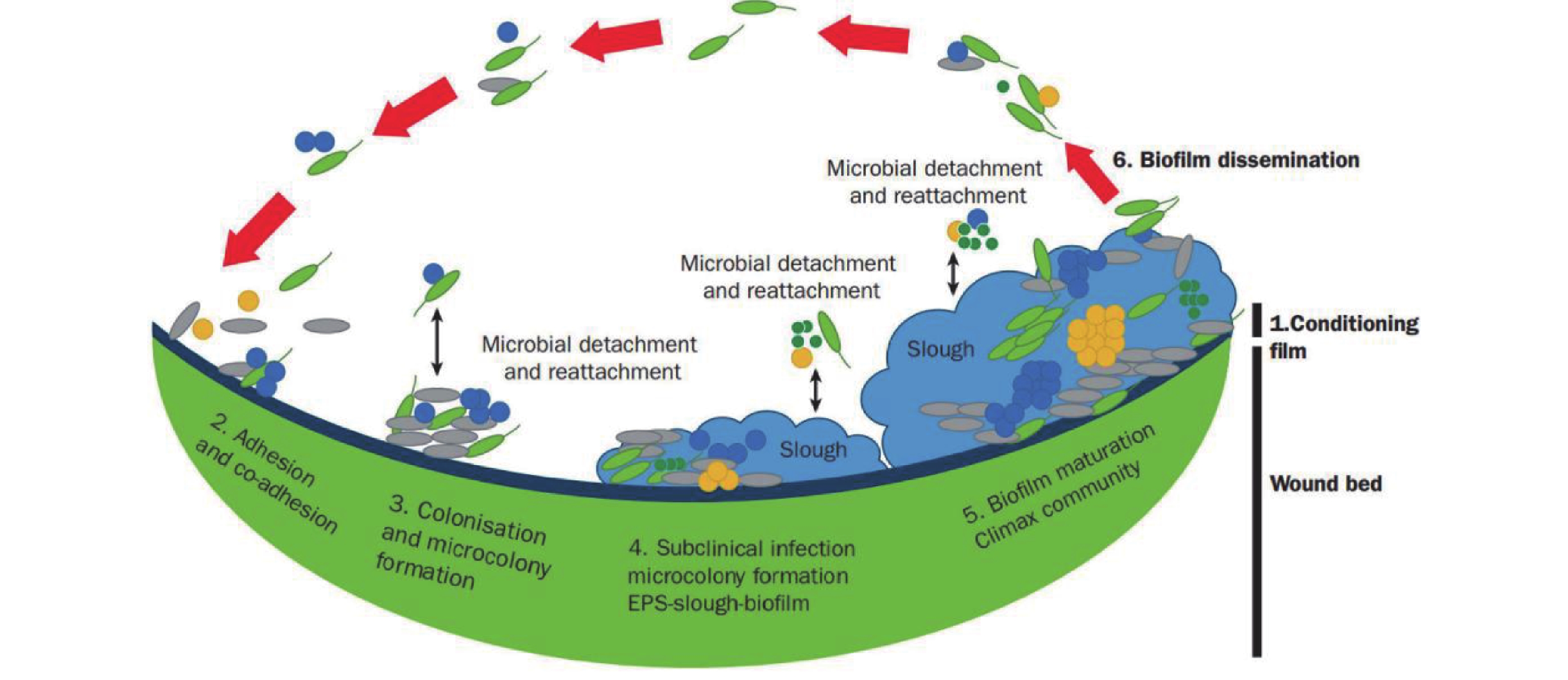
图 2 细菌生物膜形成、成熟及扩散过程示意图
Figure 2. Schematic diagram of bacterial biofilm formation,maturation,and dispersal process
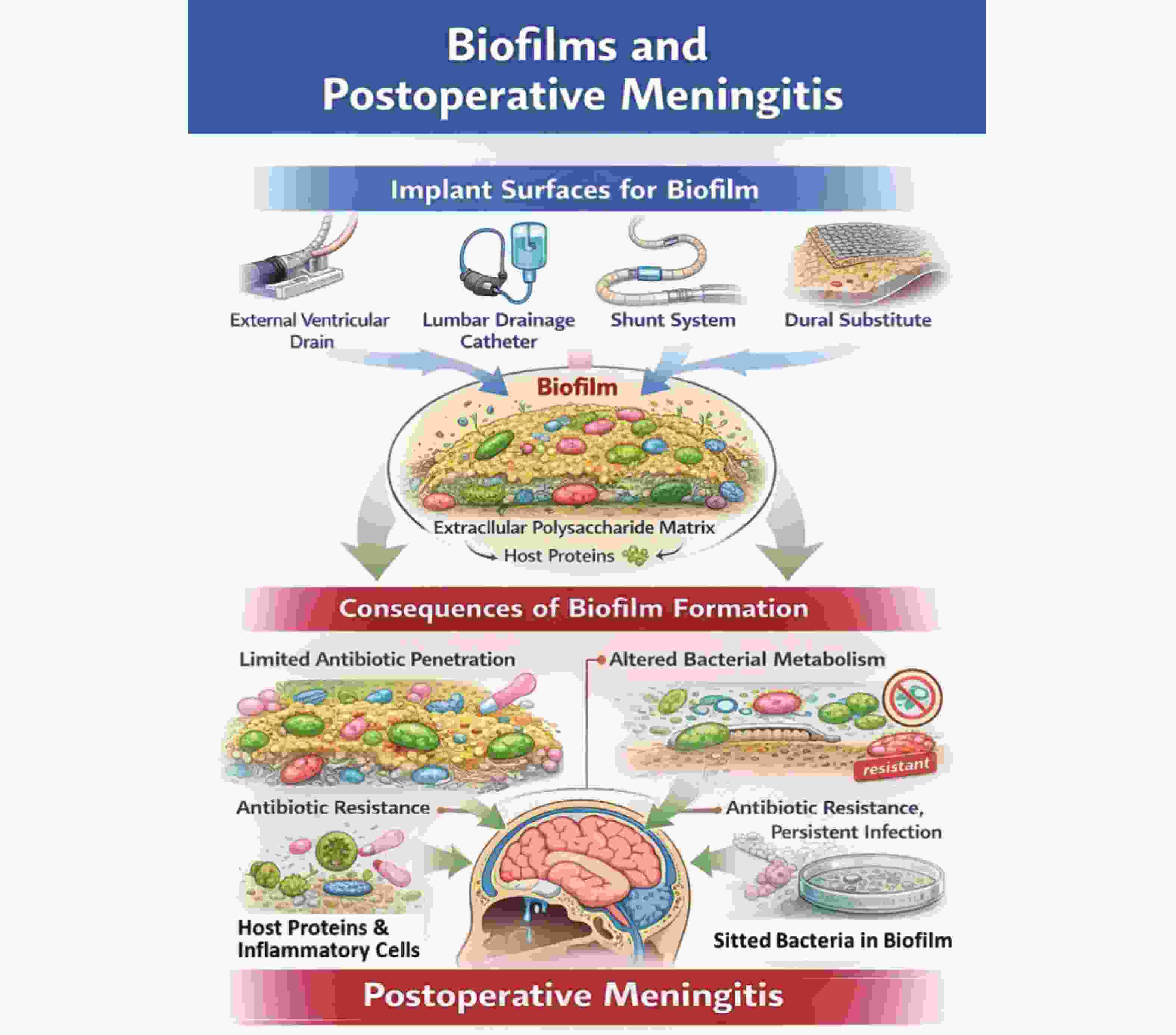
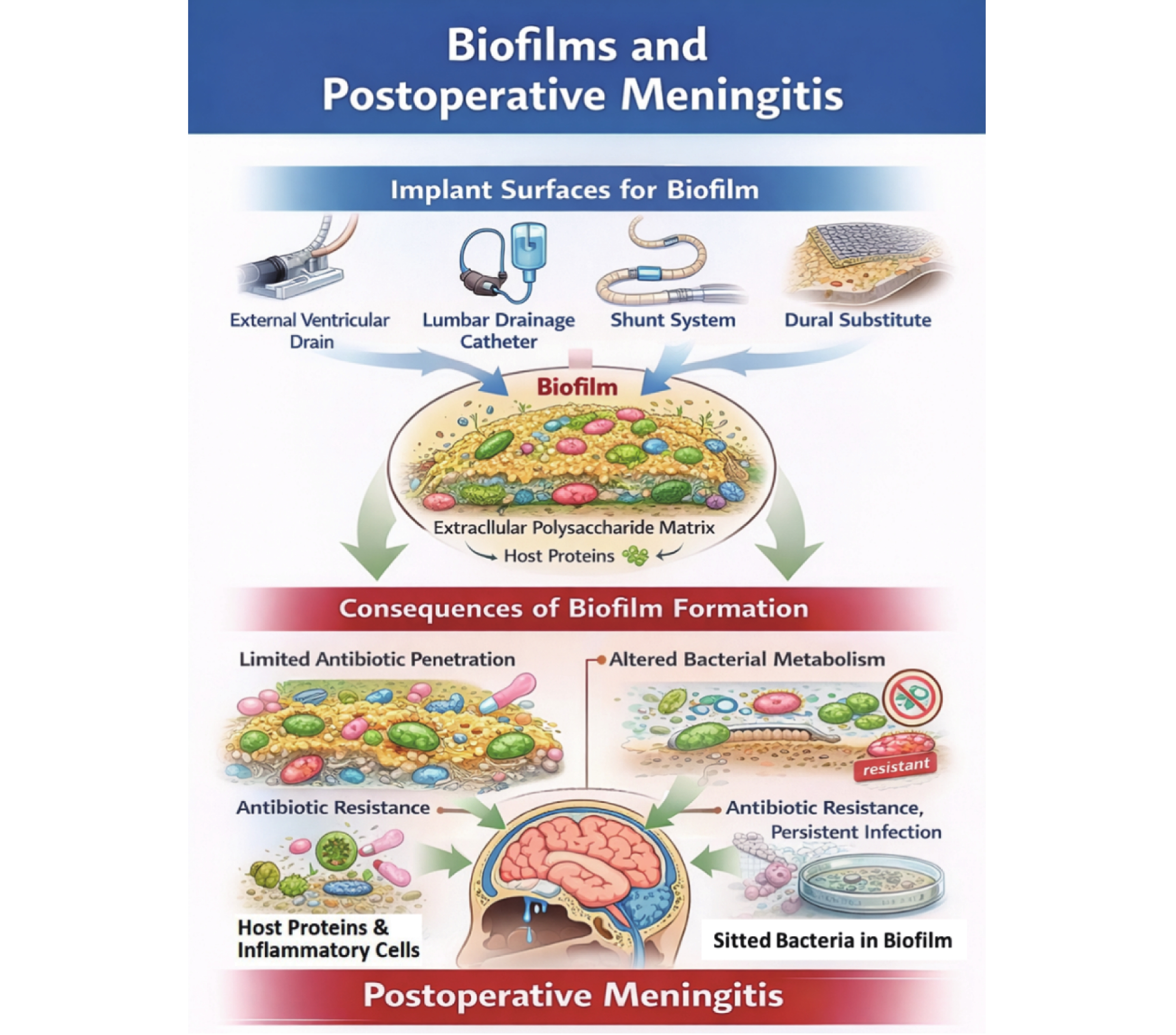
图 3 生物膜形成与术后脑膜炎机制示意图
Figure 3. Schematic diagram of biofilm formation and postoperative meningitis mechanism
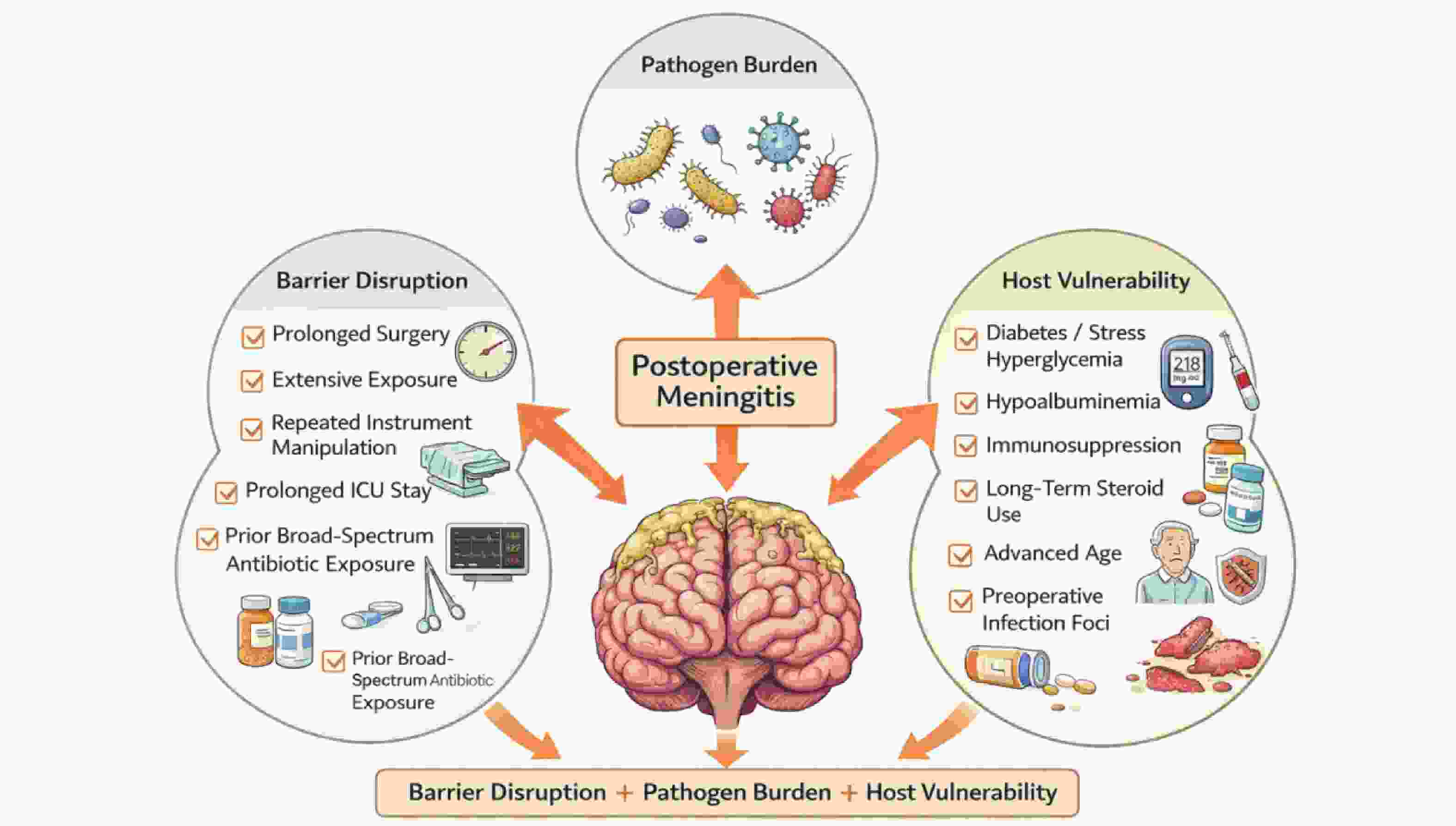
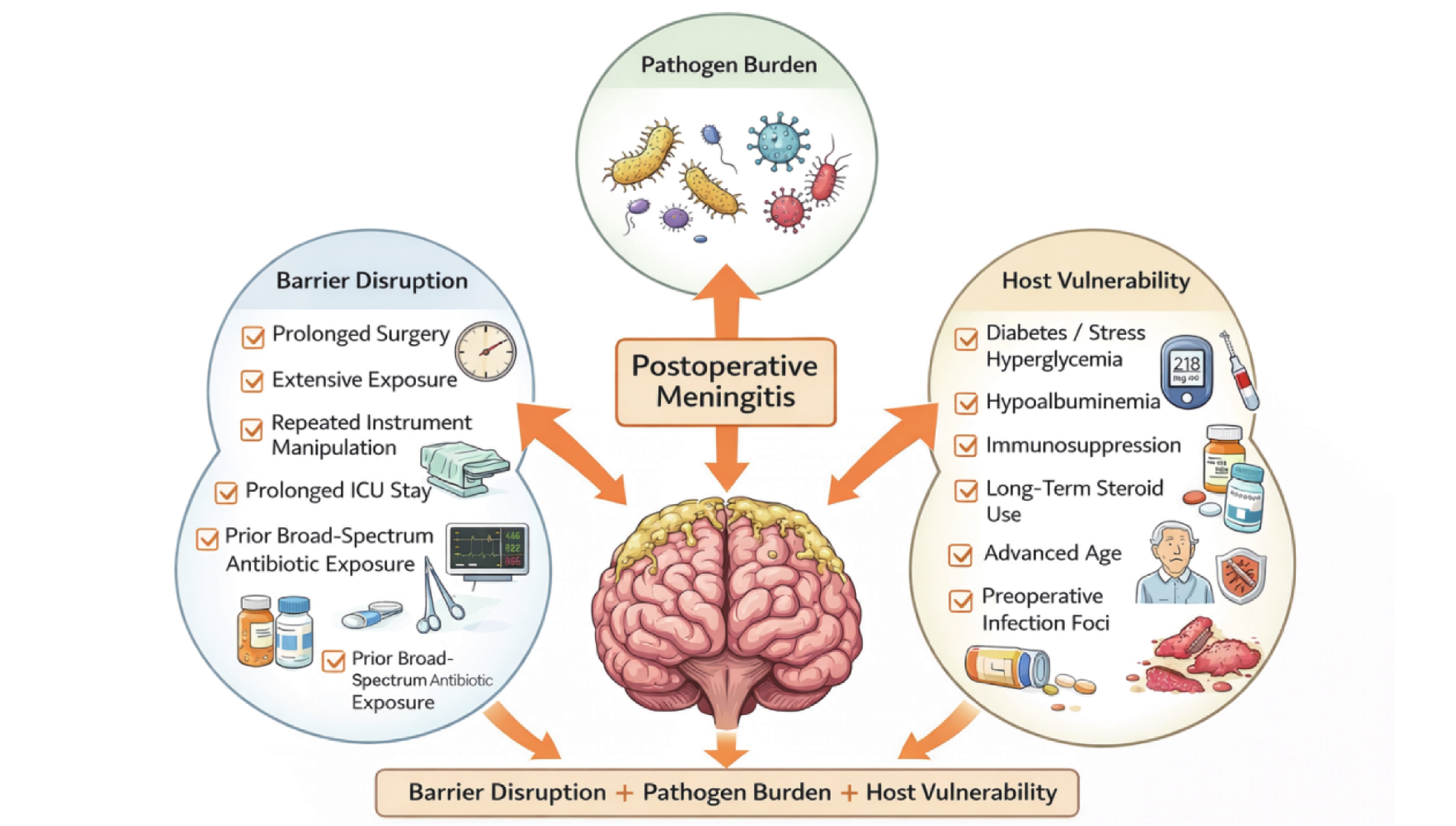
图 4 术后脑膜炎“屏障破坏+病原负荷+宿主脆弱性”机制示意图
Figure 4. Schematic diagram of the mechanism of "barrier disruption+pathogen burden+host vulnerability" in postoperative meningitis
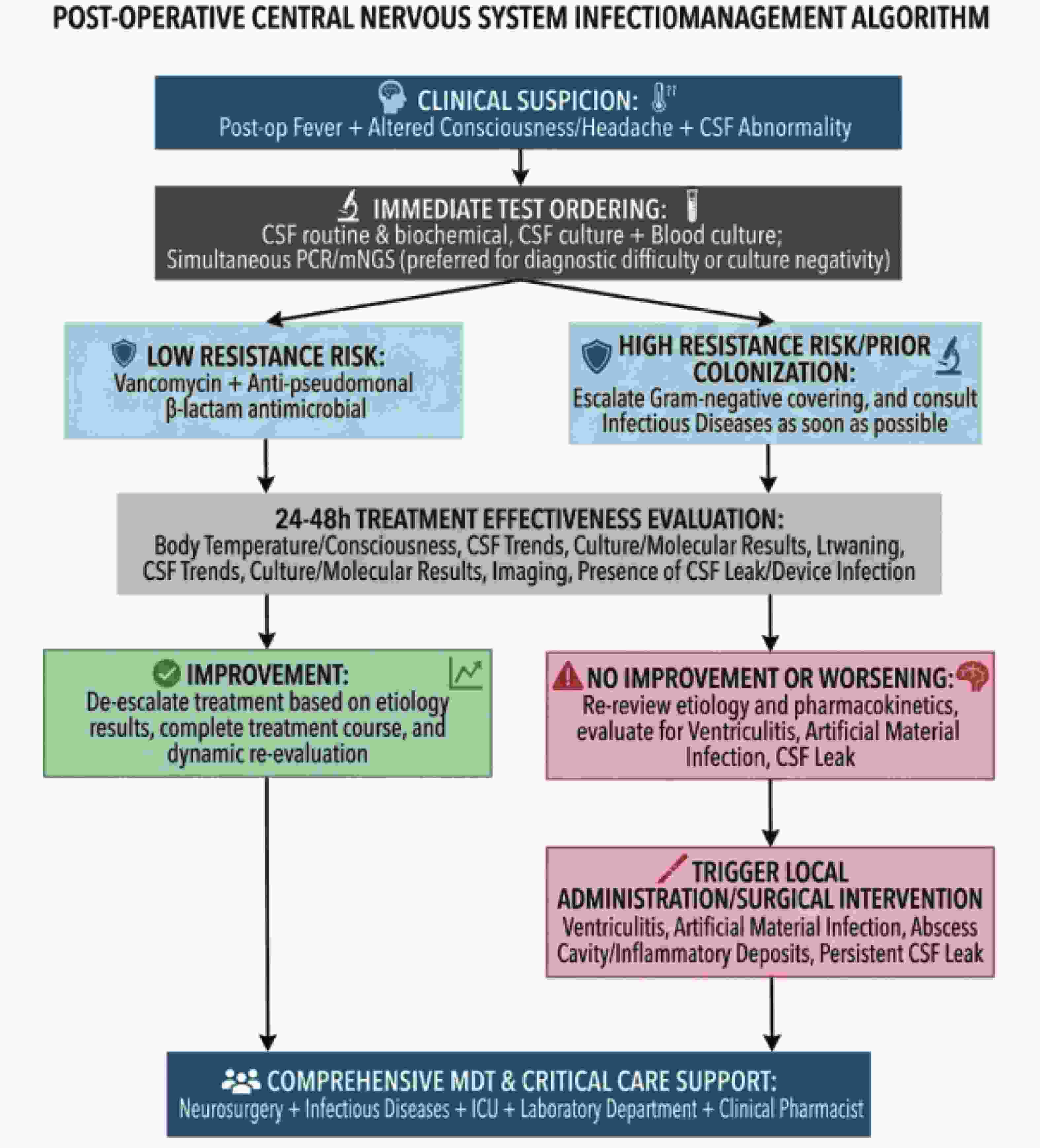
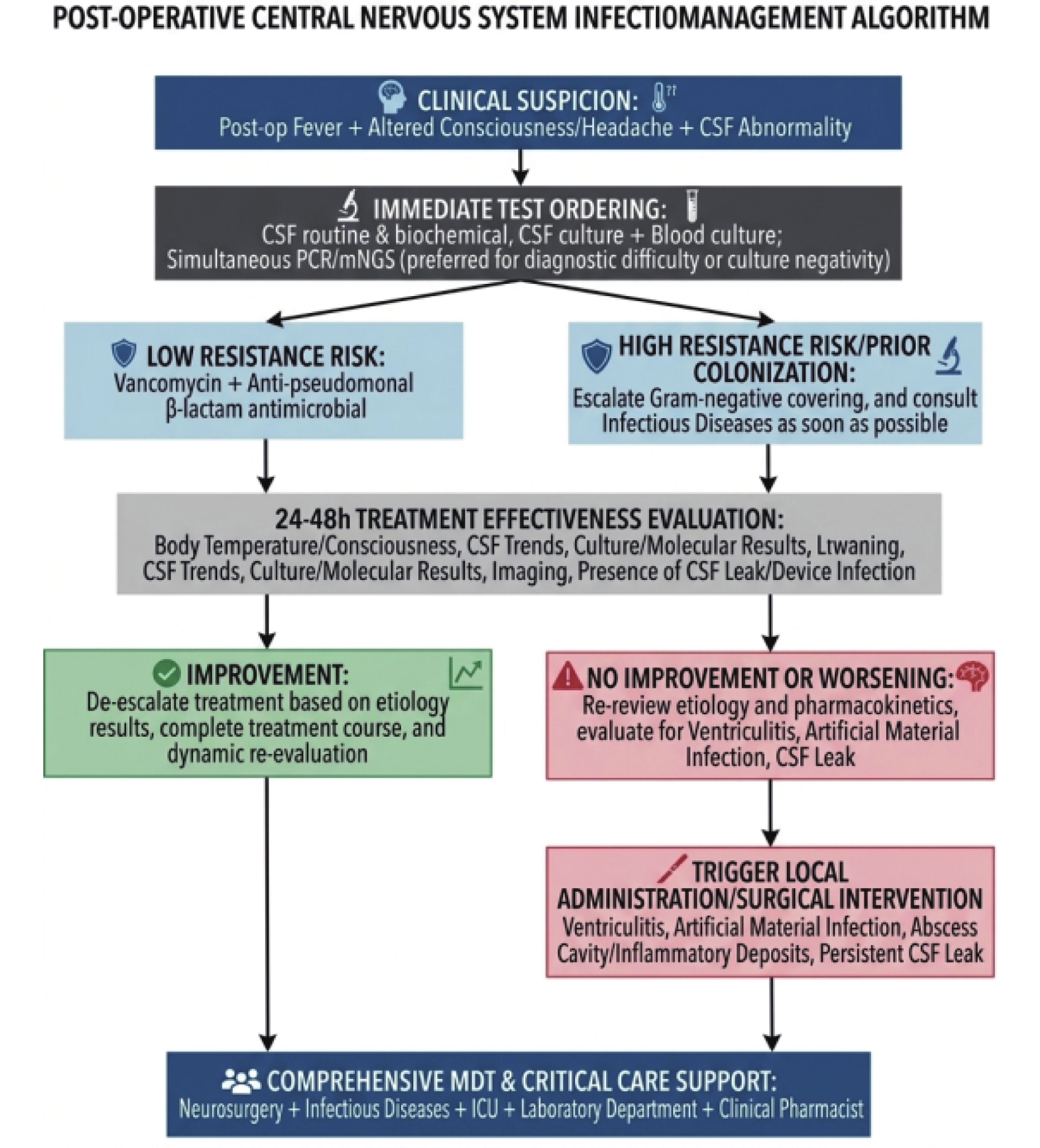
图 5 神经外科术后脑膜炎诊断与治疗决策流程图
Figure 5. Diagnostic and therapeutic decision-making flowchart for postoperative meningitis after neurosurgery
表 1 术后脑膜炎的鉴别诊断
Table 1. Differential diagnosis of postoperative meningitis
疾病 主要特点 鉴别要点 化学性脑膜炎 手术材料刺激、无感染征象 CSF糖正常、mNGS阴性 术后反应性改变 可见轻度脑膜强化 CSF多正常或轻度异常 无菌性CSF激惹 多见于蛛网膜下腔
手术对抗生素反应差 药物相关脑膜炎 多由NSAIDs等引起 停药后症状可
逆转注:影像结合mNGS可大幅提升鉴别准确率。  下载: 导出CSV
表 2 脑室内给药常用方案
Table 2. Common protocols for intraventricular drug administration
药物 剂量(脑室内) 适应证 万古霉素 5~20 mg/d G+球菌 庆大霉素 4~8 mg/d G−杆菌 粘菌素 10~12万U/d MDR / CRAB 关键管理要点:与EVD配合使用;注药后夹闭引流管1~2 h;注意药物相关神经毒性;必要时监测CSF药物浓度等。上述建议以1~2级证据为主。
下载: 导出CSV
-
[1] 中华医学会神经外科学分会, 中国医师协会神经外科医师分会. 神经外科中枢神经系统感染诊治中国专家共识(2021版)[J]. 中华神经外科杂志, 2021, 37(1): 2-15. [2] Passias N, Wormald N. Advancements in neurointervention: current techniques and future directions[J]. Neurology Letters, 2024, 3(2): 68-71. doi: 10.61186/nl.3.3.68 [3] Hu J, Yu W, Cui J, et al. Recent advances in diagnostic technologies for postoperative central nervous system infections: A review[J]. Neurol Sci, 2025, 46(9): 4279-4291. doi: 10.1007/s10072-025-08279-4 [4] Hu X, Ma Y, Jiang X, et al. Neurosurgical perioperative management of frail elderly patients[J]. BioScience Trends, 2023, 17(4): 271-282. doi: 10.5582/bst.2023.01208 [5] Ryu T. Fluid management in patients undergoing neurosurgery[J]. Anesthesia and Pain Medicine, 2021, 16(3): 215-224. doi: 10.17085/apm.21072 [6] Ostermann M, Auzinger G, Grocott M, et al. Perioperative fluid management: Evidence-based consensus recommendations from the international multidisciplinary PeriOperative Quality Initiative[J]. British Journal of Anaesthesia, 2024, 133(6): 1263-1275. doi: 10.1016/j.bja.2024.07.038 [7] 刘媛, 何莲芬, 江冬萍, 等. 开颅术后手术部位感染危险因素的Meta分析[J]. 中华医院感染学杂志, 2026, 36(2): 308-313. doi: 10.11816/cn.ni.2026-258520 [8] Kinaci A, Slot EMH, Kollen M, et al. Risk factors and management of incisional cerebrospinal fluid leakage after craniotomy: A retrospective international multicenter study[J]. Neurosurgery, 2023, 92(6): 1177-1182. doi: 10.4193/Rhin25.357 [9] Ciofu O, Moser C, Jensen P, et al. Tolerance and resistance of microbial biofilms[J]. Nat Rev Microbiol, 2022, 20(10): 621-635. [10] 薄世宁, 郑佳佳, 奚晶晶, 等. 神经外科术后患者拔除引流管后高热的危险因素分析[J]. 中华危重病急救医学, 2022, 34(10): 1072-1075. doi: 10.3760/cma.j.cn121430-20220426-00418 [11] Bucataru A, Balasoiu M, Ghenea A E, et al. Factors contributing to surgical site infections: A comprehensive systematic review of etiology and risk factors[J]. Clin Pract, 2023, 14(1): 52-68. doi: 10.3390/clinpract14010006 [12] 李涛, 杨同男, 刘宝, 等. 重症医学科特殊宿主——器官移植患者的医院感染预防[J]. 协和医学杂志, 2024, 15(3): 513-517. doi: 10.12290/xhyxzz.2024-0054 [13] Duclos G, Lakbar I, Boucekine M, et al. Association between multidrug-resistant bacteria and mortality in critically Ill patients[J]. Adv Ther, 2023, 40(4): 1736-1749. doi: 10.1007/s12325-023-02448-7 [14] Sung Y H, Ju Y K, Lee H J, et al. Clinical performance of real-time nanopore metagenomic sequencing for rapid identification of bacterial pathogens in cerebrospinal fluid: A pilot study[J]. Scientific Reports, 2025, 15(1): 3493. doi: 10.1038/s41598-025-87858-z [15] Maayan O, Tusa Lavieri M E, Babu C, et al. Additive risk of surgical site infection from more than one risk factor following craniotomy for tumor[J]. J Neuro-oncol, 2023, 162(2): 337-342. doi: 10.1007/s11060-023-04294-7 [16] 高晨琛, 黄荣, 常剑, 等. 神经外科术后颅内感染影响因素及脑脊液PCT和CXCL10水平及其诊断价值[J]. 中华医院感染学杂志, 2023, 33(3): 406-410. doi: 10.11816/cn.ni.2023-213202 [17] Akıllı F M, Ulukanlıgil M. Postoperative meningitis caused by multidrug-resistant pathogens: A case report[J]. New Microbiol, 2025, 48(1): 84-88. [18] 中华医学会呼吸病学分会. 侵袭性肺真菌病诊断与治疗指南(2025年版)[J]. 中华结核和呼吸杂志, 2025, 48(12): 1104-1126. [19] ]Chojak R, Koźba-Gosztyła M, Gaik M, et al. Meningitis after elective intracranial surgery: A systematic review and meta-analysis of prevalence[J]. European Journal of Medical Research, 2023, 28(1): 184. doi: 10.1186/s40001-023-01141-3 [20] Zeinalizadeh M, Shadkam M, Afarinesh Khaki P, et al. Cerebrospinal fluid analysis in patients with post-neurosurgical procedures: Meningitis vs. non-meningitis[J]. Iran J Pathol, 2024, 19(3): 342-347. doi: 10.30699/ijp.2024.2019741.3240 [21] Yadav D, Singh O, Juneja D, et al. Role of cerebrospinal fluid lactate in diagnosing meningitis in critically ill patients[J]. World J Crit Care Med, 2023, 12(1): 1-9. doi: 10.5492/wjccm.v12.i1.1 [22] Wu Z, Yao Y, Li X, et al. Sensitive and rapid identification of pathogens by droplet digital PCR in a cohort of septic patients: A prospective diagnostic study[J]. Infect Dis-nor, 2024, 56(10): 830-841. doi: 10.1080/23744235.2024.2354312 [23] Birkeland K W, Mostert L, Claas E C J, et al. The added value of metagenomic next-generation sequencing in central nervous system infections: A systematic review of case reports[J]. Infection, 2025, 53(3): 831-849. doi: 10.1007/s15010-025-02502-2 [24] Benoit P, Brazer N, de Lorenzi-Tognon M, et al. Seven-year performance of a clinical metagenomic next-generation sequencing test for diagnosis of central nervous system infections[J]. Nat Med, 2024, 30(12): 3522-3533. doi: 10.1038/s41591-024-03275-1 [25] Mishra S, Naik S, Bhoi S K, et al. Comparison of post contrast fluid attenuated inversion recovery, 3D T1-SPACE, and T1W MRI sequences with fat suppression in the diagnosis of infectious meningitis[J]. Neuroradiol J, 2023, 36(5): 572-580. doi: 10.1177/19714009231163563 [26] Schwartz C, Lenski M, Romagna A, et al. Diffusion-weighted magnetic resonance imaging for detection of postoperative intracranial pyogenic abscesses in neurosurgery[J]. Acta Neurochir, 2019, 161(5): 985-993. doi: 10.1007/s00701-019-03875-8 [27] Dagher R, Gad M, da Silva de Santana P, et al. Umbrella review and network meta-analysis of diagnostic imaging test accuracy studies in differentiating between brain tumor progression versus pseudoprogression and radionecrosis[J]. J Neuro-oncol, 2024, 166(1): 1-15. doi: 10.1007/s11060-024-04718-y [28] Dasgupta S, Chatterjee A, Chandra A. Aseptic meningitis following spinal anaesthesia: An uncommon and challenging diagnosis[J]. J Roy Coll Phys Edin, 2024, 54(1): 34-37. doi: 10.1177/14782715231223262 [29] 黄一灵, 王珏, 张晓慧, 等. 病原学阳性成人细菌性脑膜炎121例临床特征及预后分析[J]. 中国感染与化疗杂志, 2024, 24(1): 1-7. [30] Sipahi O R, Akyol D, Ormen B, et al. Empirical cefepime+vancomycin versus ceftazidime+vancomycin versus meropenem+vancomycin in the treatment of healthcare-associated meningitis: Results of the multicenter ephesus study[J]. BMC Infect Dis, 2023, 23(1): 639. doi: 10.1186/s12879-023-08596-z [31] Zhao X, Li S, Zhang Y, et al. Ceftazidime-avibactam-based combination therapy for hospital-acquired central nervous system infections caused by carbapenem-resistant klebsiella pneumoniae[J]. International Journal of Antimicrobial Agents, 2023, 61(5): 106777. doi: 10.1016/j.ijantimicag.2023.106777 [32] Florez-Perdomo W A, Martínez-Balzano C A, Rodríguez-Morales A J. Antibiotic therapy by intrathecal or intraventricular approach for postsurgical meningitis or ventriculitis: A systematic review and meta-analysis[J]. Egyptian Journal of Neurosurgery, 2023, 38(1): 20 doi: 10.1186/s41984-023-00199-9 [33] 李庆岗, 程岗, 孙君昭, 等. 脑室内注射万古霉素治疗颅脑术后耐甲氧西林金黄色葡萄球菌导致的颅内感染[J]. 中国临床神经外科杂志, 2025, 30(3): 139-143. doi: 10.13798/j.issn.1009-153X.2025.03.003 [34] Gong W, Cheng X, Villena J, et al. eDNA–Amyloid synergistic interactions in bacterial biofilms: A hidden driver of antimicrobial resistance[J]. International Journal of Molecular Sciences, 2025, 26(24): 12075. doi: 10.3390/ijms262412075 [35] 钟询龙, 江绮云, 王兆涛, 等. 不同抗菌药物方案治疗术后中枢神经系统感染的疗效与安全性评价[J]. 中华医院感染学杂志, 2022, 32(24): 3715-3720. doi: 10.11816/cn.ni.2022-226257 [36] Song J, Yuan H-Y, Wang M-H, et al. Efficacy analysis of intraventricular/intrathecal polymyxin B sulphate injections in the treatment of post-neurosurgical CNS infections in neurocritical ill patients: A prospective observational study[J]. European Journal of Clinical Microbiology & Infectious Diseases, 2025, 44(11): 2749-2759. doi: 10.1007/s10096-025-05234-1 [37] Jarvis J N, Lawrence D S, Meya D B, et al. Single-dose liposomal amphotericin B treatment for cryptococcal meningitis[J]. N Engl J Med, 2022, 386(12): 1109-1120. doi: 10.1056/NEJMoa2111904 [38] Schwartz S, Cornely O A, Hamed K, et al. Isavuconazole for the treatment of patients with invasive fungal diseases involving the central nervous system[J]. Med Mycol, 2020, 58(4): 417-424. doi: 10.1093/mmy/myz103 [39] World Health Organization. WHO guidelines on meningitis diagnosis, treatment and care [EB/OL]. (2025-04-10)[2026-04-02]. https://www.who.int/publications/i/item/9789240091795 [40] Maulana A F, Nurikhwan P W, Lahdimawan A, et al. Reducing complications in duraplasty with autologous dural graft material: A meta-analysis[J]. J Cerebrovasc Endovasc Neurosurg, 2025, 27(2): 103-117. doi: 10.7461/jcen.2025.E2023.12.004 [41] 刘鑫, 韩愚弟, 崔蕾, 等. 分阶段游离背阔肌皮瓣移植及颅骨轮廓重建治疗头部钛网外露合并软组织感染[J]. 中国修复重建外科杂志, 2022, 36(7): 828-833. [42] Al Menabbawy A, El Refaee E, Soliman M A R, et al. Outcome improvement in cerebral ventriculitis after ventricular irrigation: A prospective controlled study[J]. J neurosurg-pediatr, 2020, 26(6): 682-690. doi: 10.3171/2020.5.PEDS2063 [43] Schizodimos T, Soulountsi V, Iasonidou C, et al. An overview of management of intracranial hypertension in the intensive care unit[J]. J Anesth, 2020, 34(5): 741-757. doi: 10.1007/s00540-020-02795-7 [44] Hussein K, Rabino G, Feder O, et al. Risk factors for meningitis in neurosurgical patients with cerebrospinal fluid drains: prospective observational cohort study[J]. Acta Neurochir, 2019, 161(3): 517-524. doi: 10.1007/s00701-019-03801-y [45] Kovryga Kornick M, Lee E, Wilhelm L, et al. Postoperative wound care protocol prevents surgical site infection after craniotomy[J]. Infect Control Hosp Epidemiol, 2024, 45(12): 1-6. doi: 10.1017/ice.2024.134 [46] 胡爱香, 李静, 于鑫玮, 等. 经鼻颅底肿瘤切除术后颅内感染危险因素与直接经济损失[J]. 中华医院感染学杂志, 2024, 34(10): 1534-1538. doi: 10.11816/cn.ni.2024-231779 [47] Mindermann T. Empirically adapted or personalized antibiotic prophylaxis in select cranial neurosurgery[J]. Acta Neurochir, 2021, 163(2): 365-367. doi: 10.1007/s00701-020-04558-5 [48] Boontoterm P, Sakoolnamarka S, Urasyanandana K, et al. Incidence and risk factors of postoperative meningitis following endoscopic endonasal transsphenoidal surgery: A study in thailand[J]. Asian J Neurosurg, 2025, 20(4): 717-723. doi: 10.1055/s-0045-1809357 [49] Koch J, Saydan S, Schwab F, et al. Interdisciplinary infection prevention and control bundle in neurosurgical patients: Results of a prospective cohort study[J]. Neurosurgery, 2023, 93(4): 835-846. doi: 10.1227/neu.0000000000002507 [50] Hussein Mahmoud F, Ahmed Ammar S, Hussein Mahmoud B. Effect of implementing nursing educational program on reducing postoperative complications for patients after intracranial surgery[J]. Egyptian Journal of Health Care, 2023, 14(4): 647-658. doi: 10.21608/ejhc.2023.330167 [51] 郭伟, 范帅华, 杜鹏程, 等. 纳米孔测序技术在血流感染病原学诊断中的应用和展望[J]. 中国医学科学院学报, 2023, 45(2): 317-321. doi: 10.3881/j.issn.1000-503X.14995 [52] Quan Y, Wang Y, Gao S, et al. Breaking the fortress: A mechanistic review of meningitis-causing bacteria breaching tactics in blood brain barrier[J]. Cell Commun Signal, 2025, 23(1): 235. doi: 10.1186/s12964-025-02248-2 [53] Zhang M, Xiang C, Niu R, et al. Liposomes as versatile agents for the management of traumatic and nontraumatic central nervous system disorders: Drug stability, targeting efficiency, and safety[J]. Neural Regen Res, 2025, 20(7): 1883-1899. doi: 10.4103/NRR.NRR-D-24-00048 [54] Shafiq M, Habib S, Akhtar H, et al. Biomimetic trilayered silk-based electrospun scaffolds for regeneration of dura mater[J]. RSC Adv, 2025, 15(22): 17649-17664. doi: 10.1039/D5RA00986C [55] 张金华, 葛淑晶, 任静宜. 群体感应系统与细菌生物膜形成的研究进展[J]. 中华医院感染学杂志, 2025, 35(10): 1589-1594. doi: 10.11816/cn.ni.2025-250187 [56] Niño-Vega G A, Ortiz-Ramírez J A, López-Romero E. Novel antibacterial approaches and therapeutic strategies[J]. Antibiotics, 2025, 14(4): 404. doi: 10.3390/antibiotics14040404 [57] Sial H A, Carandell F, Ajanovic S, et al. Novel artificial intelligence-driven infant meningitis screening from high-resolution ultrasound imaging[J]. Ultrasound Med Biol, 2025, 51(9): 1399-1410. doi: 10.1016/j.ultrasmedbio.2025.04.009 [58] Adil E A, Cox C, Kim H Y, et al. Short-and long-term risk of meningitis following pediatric endoscopic transsphenoidal surgery[J]. Laryngoscope, 2025, 135(8): 2942-2948. doi: 10.1002/lary.32133 -

 点击查看大图
计量
- 文章访问数: 463
- HTML全文浏览量: 361
- PDF下载量: 114
- 被引次数: 0
