




Research Progress in the Cohort Study of Native Plateau Populations at High-Altitude in Southwest China
-
摘要: 近年来,我国慢性病疾病负担持续加重且区域差异明显。西南高海拔地区因独特地理与多民族因素,当地世居人群形成特殊生理及遗传特征,面临心血管疾病、代谢性疾病等健康挑战。为深入解析该区域人群疾病分布模式及其潜在暴露风险规律,填补资源匮乏地区多民族非传染性疾病流行、危险因素及相关状况的数据缺口。依托西南区域自然人群队列(china multi-ethnic cohort study,CMEC),在云南丽江、四川阿坝、西藏拉萨建立高海拔自然人群队列,系统收集多民族人群基线资料,并通过标准化随访监测健康结局,以揭示高海拔地区慢性病患病率及其主要危险因素。探讨饮食结构、生活方式对高原人群代谢健康的影响,发掘慢性病防控的新型干预技术与策略,为西南地区乃至全国慢性病防治提供科学依据及理论支撑。Abstract: In recent years, the burden of chronic diseases in China has been continuously escalating with significant regional disparities. The local indigenous populations residing in the high-altitude areas of Southwest China have developed unique physiological and genetic traits due to specific geographical and multi-ethnic factors, confronting health challenges such as cardiovascular diseases and metabolic disorders. To conduct a comprehensive analysis the disease distribution patterns and potential exposure factors among this population and to address the data gaps regarding the prevalence of non-communicable diseases (NCDs), risk factors, and related conditions in resource-limited areas with multi-ethnic groups. This study relies on the china multi-ethnic cohort (CMEC) study has established high-altitude natural population cohorts in Lijiang (Yunnan), Aba (Sichuan), and Lhasa (Tibet) to systematically collect baseline data. While health outcomes were monitored through standardized follow-ups to reveal the prevalence rates and their primary risk factors of chronic diseases in high-altitude regions. To explore the impacts of dietary patterns and lifestyle on the metabolic health of plateau populations, discover novel intervention technologies and strategies for chronic diseases, and provide theoretical support for the prevention and control of chronic diseases in Southwest China and even the whole country.
-
Key words:
- Southwest China /
- High-altitude /
- Multi-ethnic /
- Chronic diseases /
- Risk factors
-
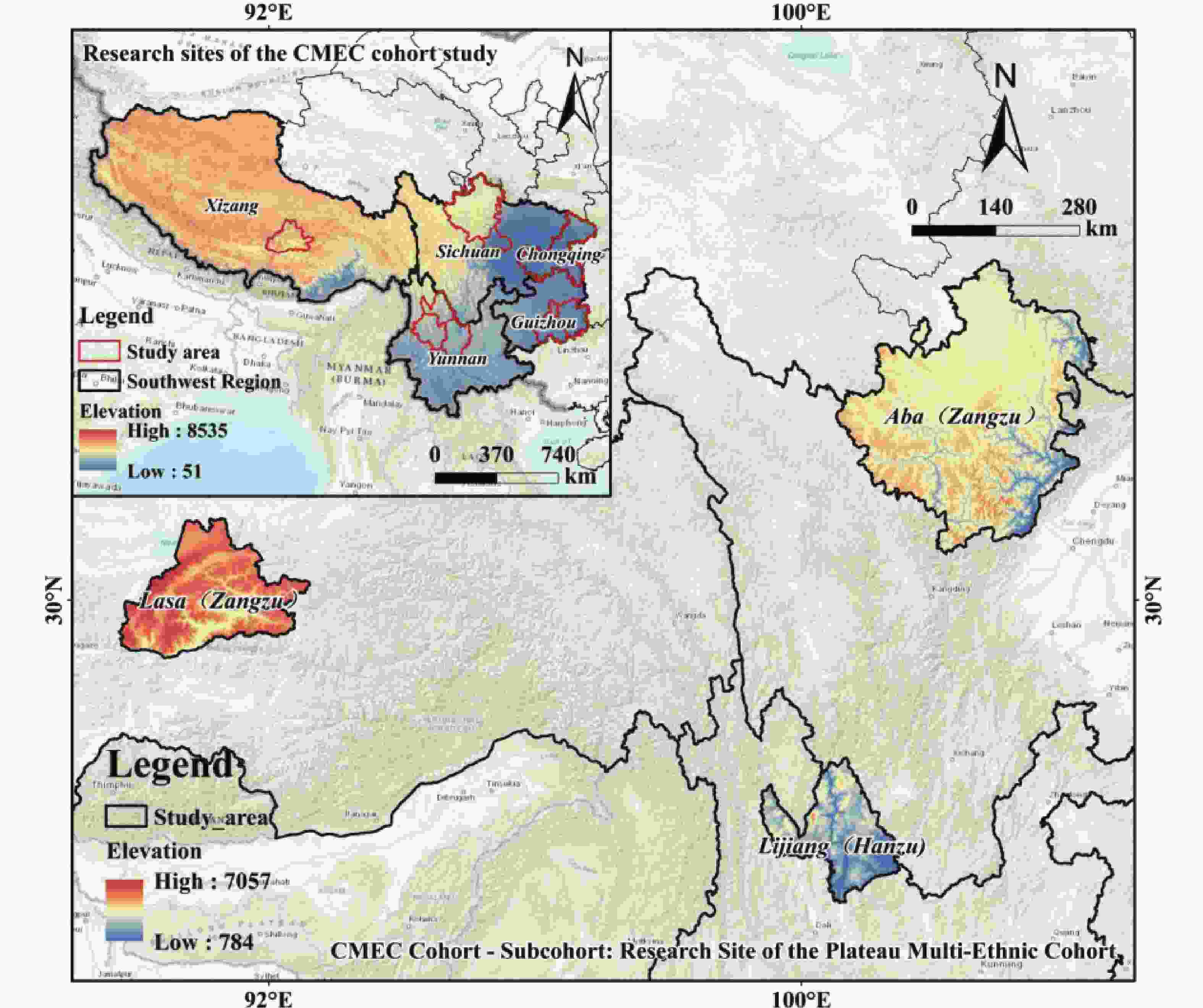
图 1 西南区域高海拔队列研究区域图
(审图号:GS(2024)0650号;底图来源:https://www.arcgis.com/index.html)
Figure 1. Regional map of high-altitude cohort studies in southwest China

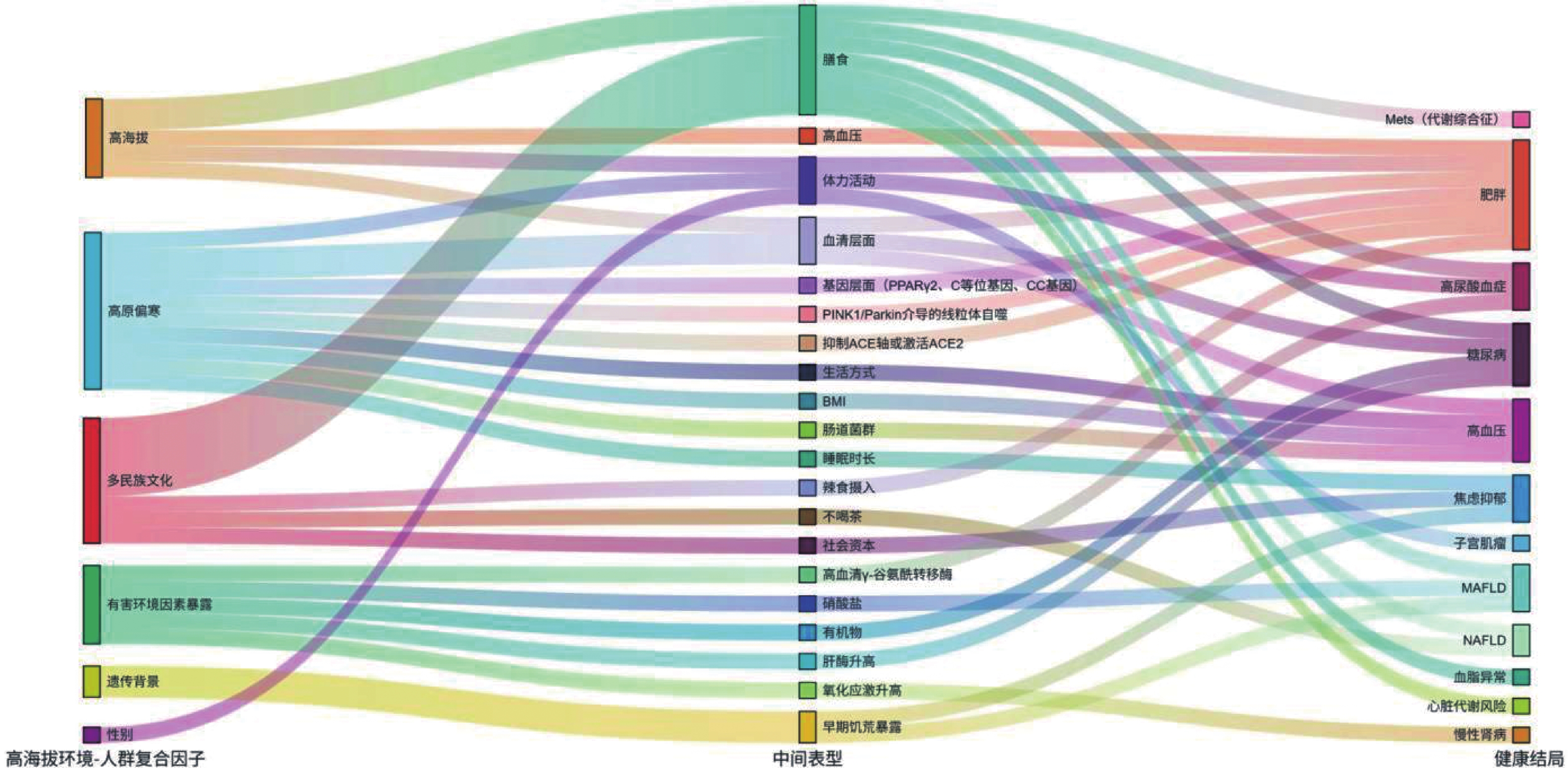
图 2 CMEC队列高海拔环境-遗传-生活方式与健康结局整合研究框架图
Figure 2. Integrative research framework diagram of high-altitude environment-genetics-lifestyle and health outcomes in the CMEC cohort
表 1 国内外10万样本量及以上的队列(1)
Table 1. Domestic and international cohorts with a sample size of 100,000 or more (1)
国际队列 国内队列 研究
类型队列名称 建立
时间地点 样本量 研究
类型队列名称 建立
时间地点 样本量 疾病与健康风险研究 美国护士健康研究队列(NHS) 1976年 美国及加拿大 275,000 自然人群队列 京津冀自然人群队列 2016年 北京、天津、河北 114,850 美国国立卫生研究院退休人员协会饮食与健康研究(NIH-AARP) 1995年 美国 567,000 西北区域自然人群队列 2017年 陕西、甘肃、青海、宁夏回族自治区和新疆维吾尔自治区 117,644 日本癌症风险评估协同队列研究(JACC) 1987年 日本 127,000 东北区域大型自然人群队列 2017年 辽宁、吉林、黑龙江和内蒙古自治区 115,414 欧洲癌症与营养前瞻性调查队列(EPIC) 1992年 丹麦、法国等10个国家 521,000 中国自然人群生物资源库队列 2020年 重庆、山东、北京、广东、江苏、四川等 330,000 澳大利亚45岁及以上人群纵向研究(45 and Up Study) 2006年 澳大利亚 260,000 西南区域自然人群队列 2017年 四川、云南、贵州、西藏自治区、重庆市 119,556 癌症预防研究II(CPS-Ⅱ) 1982年 美国 1,185,106 华南区域自然人群慢性病前瞻性队列 2017年 广东、广西壮族自治区、福建和海南。 116,520 日本公共卫生中心前瞻性研究(JPHC) 1990年 日本 130,000 健康浙江百万人群队列 2022年 开化县、温岭市、长兴县、象山县等 1,000,000 北瑞典健康与疾病研究 1985年 瑞典 125,000 新疆兵团多民族自然人群队列 2018年 新疆伊犁地区 170,000 载脂蛋白相关死亡风险队列(AMORIS) 1985年 瑞典 812,073 人群健康与公共卫生研究 中国心血管代谢与恶性肿瘤队列研究(4C) 2011年 上海,安徽、福建、浙江等 193,846 癌症预防研究II营养队列 1992年 美国 184,194 中国高血压调查流行病学随访研究 1974年 河南、湖北、山西、北京等 200,000 韩国癌症预防研究二期生物样本库(KCPS-II Biobank) 2004年 韩国 156,701 中国糖尿病患者研究队列 2007年 上海、长沙、北京 150,000 墨西哥城前瞻性队列研究 2008年 墨西哥 159,755 国家标准化代谢性疾病管理中心(MMC) 2016年 上海、吉林、南京、云南、福建、大连、北京、郑州等 2,500,000 伊朗前瞻性流行病学研究 2014年 伊朗 180,000 心脏骤停生存与干预策略研究(BASIC) 2019年 山东齐鲁医院 > 40万 纵向女英国卵巢癌筛查合作试验纵向女性队列(UKLWC) 2001年 英国、威尔士、北爱尔兰 202,638 内蒙古自治区全肿瘤检测队列 2008年 内蒙古自治区 170,414 欧洲遗传性流行病学网络(ENGAGE) 2008年 芬兰等13个国家 600,000 妊娠期糖尿病危险因素与子代生长发育队列研究 2010年 宁波 228,784 遗传与基因组学研究 英国生物样本库(UKB) 2006年 英国 500,000 中美叶酸预防神经管畸形合作项目 1990年 江苏、浙江、河北 247,831 FinnGen 2017年 芬兰 500,000 甬江呼吸队列 2017年 宁波 200,000 韩国基因组与流行病学研究(KoGES) 2001年 韩国 210,000 大连MASLD队列 2020年 大连市各地区 200,000 爱沙尼亚基因组计划 2002年 爱沙尼亚 200,000 上海交通大学仁济医院代谢综合征队列 2019年 上海 101,000  下载: 导出CSV
表 1 国内外10万样本量及以上的队列(2)
Table 1. Domestic and international cohorts with a sample size of 100,000 or more (2)
国际队列 国内队列 研究
类型队列名称 建立
时间地点 样本量 研究
类型队列名称 建立
时间地点 样本量 遗传与基因组学研究 23andMe 2007年 美国 6,800,000 人群健康与公共卫生研究 内蒙古城市癌症早诊早治项目动态检测队列 2010年 内蒙古(呼和浩特和通辽市) 180,255 韩国生物样本库 2008年 韩国 830,000 疾病与健康风险研究 中国泰州人群健康跟踪调查(泰州队列) 2007年 江苏省泰州市 200,000 日本生物样本库 2003年 日本 270,000 中国科学院心理研究所大学生身心健康队列 2024年 山东、河北等31省(自治区、直辖市) 173,775 范德堡大学生物样本库 2007年 美国 244,000 大连市健康管理队列(DHMC) 2014年 大连各区 100,000 以色列基因组计划 2019年 以色列 140,000 天津人群慢性炎症与健康队列研究 2007年 天津 100,000 凯撒永久基因、环境与健康研究计划 2008年 美国加州 210,000 山东全人群全生命历程健康医疗大数据队列 2016年 山东省 5,000,000 纽芬兰10万人基因组计划 2018年 加拿大、纽芬兰与拉布拉多省 520,000 北京市健康管理队列研究 2011年 北京 1100 个企事业单位240,000 沙特人类基因组计划 2013年 沙特阿拉伯 100,000 大连市健康人群双向队列 2014年 大连市各地区 300,000 人群健康与公共卫生研究 美国“全民健康”百万人群队列(AoU) 2018年 美国 1,000,000 中国健康体检数据联合研究 2018年 北京、上海、宁波 1,000,000 英国百万妇女研究(MWS) 1996年 英国牛津大学 1,080,000 中国纵向健康长寿调查(CLHLS) 1998年 北京、天津、河北、陕西等23个省市 113,000 德国国家队列(NAKO) 2014年 德国 205,415 中国鄞州电子健康档案研究项目(CHERRY) 2006年 宁波市鄞州区 1,250,000 LifeLines 2006年 荷兰 167,729 全国学生体质与健康调研(CNSSCH) 1987年 全国31个省市自治区 340,000 加拿大健康未来伙伴关系(CanPath) 2008年 加拿大 330,000 慢性病研究队列 中国慢性病前瞻性研究(CKB) 2004年 城市:黑龙江、山东等10个地区 512,891 挪威母亲、父亲和儿童队列研究 1999年 挪威 284,000 胜利研究 2018年 山东省 300,000 东北医疗超级银行项目 2012年 日本 150,000 华中区域常见慢性病前瞻性队列 2016年 湖北、湖南和河南 115,424 挪威基于家庭的生命历程研究 1960年 挪威 5,266,270 中国居民营养与健康状况监测队列 1986年 重庆、云南、浙江、上海、海南 18-20万 非洲健康研究所人群队列(AHRI) 2000年 南非 130,000 孕产妇健康及出生队列研究 中国国家出生队列(CNBC) 2016年 江苏、上海等10个地区 180,000 世代研究(GS) 2003年 英格兰等 113,000 嘉兴出生队列 1999年 浙江嘉兴妇幼保健院 338,413 日本公共卫生中心下一代前瞻性研究(JPHC-NEXT) 2011年 日本 115,000 中国孕产妇及子代健康队列研究 2015年 重庆、深圳、河北等11地 100,000
下载: 导出CSV
表 1 国内外10万样本量及以上的队列(3)
Table 1. Domestic and international cohorts with a sample size of 100,000 or more (3)
国际队列 国内队列 研究
类型队列名称 建立
时间地点 样本量 研究
类型队列名称 建立
时间地点 样本量 人群健康与公共卫生研究 马来西亚队列研究 2007年 马来西亚 106,527 其他 重组(大肠杆菌)戊型
肝炎疫苗Ⅲ期临床试验和
急性肝炎主动监测研究2007年 江苏省东台市 112,000 盖辛格队列——MyCode
社区健康计划2007年 美国 252,160 中国内蒙古自治区亚洲游牧民族后裔筛查队列(Scan-China项目) 2017年 呼和浩特和通辽市 180,255 韩国基因组与流行病学研究 2001年 韩国、越南、柬埔寨等 235,000 健康老龄化社会差异背后的生命历程生物学通路研究(LIFEPATH) 2015年 欧洲、澳大利亚、美国 235,000 挪威诺尔兰郡健康研究(HUNT) 1984年 挪威 106,446 美国精准医学计划(PMI) 2018年 美国 191,105 福拉尔贝格健康监测与促进项目 1985年 澳大利亚 180,000 康斯坦茨项目 2012年 法国 210,000 特殊人群研究 美国千年队列研究(MCS) 2001年 美国 210,000 百万老兵计划 2011年 美国 785,000 芬兰孕产妇队列 1983年 芬兰 950,000 荷兰双胞胎登记 1987年 荷兰 275,000 费城儿童医院生物样本库(CHOP) 2006年 美国、欧洲等 500,000 丹麦国家出生队列 1998年 丹麦 198,028 护士健康研究二期 1989年 美国 116,430 加州教师研究(CTS) 1995年 美国 133,477 英国血液捐献者队列 2012年 英国 100,000 V时代研究(GenV) 2020年 澳大利亚 100,000 多民族队列研究(MEC) 1993年 美国、夏威夷等 215,251 南非人口研究基础设施网络(SAPRIN) 1993年 南非 350,000 妇女健康倡议(WHI) 1993年 美国 161,808
下载: 导出CSV
表 2 中国慢性病队列简介
Table 2. Brief introduction to chronic disease cohorts in China
队列名称 研究对象 研究内容 牵头单位 中国慢性病前瞻性研究(CKB)
(2004年)来自黑龙江、山东、江苏等省份的51.3万名30-79岁成年人 中国人群慢性病的危险因素、流行特征及流行趋势探索 中国医学科学院与牛津大学 河南农村队列
(2015年)河南省驻马店、新乡等城市的 39259 名18-79岁常住居民心脏代谢性疾病的流行病学特征发病机制及防治 郑州大学公共卫生学院 华中常见慢性非传染性疾病队列
(2016年)(1)湖北队列:东风汽车集团退休及在职员工
(2)湖南队列:党政机关公职人员
(3)河南队列:农村成年人阐明中国中部人群慢性病发生和发展的病因和机制。 华中科技大学 多元生命历程队列研究(DLCC)
(2017年)涵盖近13万名不同人群,覆盖从生命早期到老年的全生命周期 聚焦两大核心方面—老龄化与城市化以及饮食、文化和空气污染对人类健康的影响 中国医学科学院基础医学研究所 中国多民族队列研究(CMEC)
(2017年)该研究覆盖四川、云南、贵州、西藏自治区及重庆地区119,556名居民,年龄范围为30-79岁(西藏自治区为18-79岁) 聚焦中国西南高海拔多民族地区,明确少数民族自然人群中常见的慢性高危疾病 (1)四川大学华西公共卫生学院
(2)昆明医科大学公共卫生学院
(3)贵州医科大学公共卫生学院
(4)重庆市疾病预防控制中心
(5)四川省妇幼保健院华南区域自然人群慢性病前瞻性队列(2017年) 该研究覆盖广东、广西壮族自治区福建和海南四省(区)35-74岁常住居民 聚焦华南地区常见重大慢性病,搭建健康信息与生物样本大数据平台 中山大学公共卫生学院
下载: 导出CSV
-
[1] Manolio T A, Goodhand P, Ginsburg G. The International Hundred Thousand Plus Cohort Consortium: Integrating large-scale cohorts to address global scientific challenges[J]. Lancet Digit Health, 2020, 2(11): e567-e568. doi: 10.1016/S2589-7500(20)30242-9 [2] Zhou Y, Lai H, Xu C. Global trends and age-period-cohort effects of chronic respiratory disease mortality attributed to industrial gaseous pollutants from 1990 to 2021[J]. Sci Rep, 2025, 15: 11924. doi: 10.1038/s41598-025-90406-4 [3] Edwards N, Plotnikoff R C. Mobilizing an underused resource: Cohort studies for population health intervention research[J]. Int J Epidemiol, 2018, 47(6): 1730-1733. [4] Doll R, Hill A B. Smoking and carcinoma of the lung[J]. Bmj, 1950, 2(4682): 739-748. doi: 10.1136/bmj.2.4682.739 [5] Lin Y, Chen L, Huang J, et al. Breadth versus depth: Balancing variables, sample size, and quality in Chinese cohort studies[J]. Bmj, 2025, 391: e082566. doi: 10.1136/bmj-2024-082566 [6] China Cohort Sharing Platform(CCSP) [Z]. https://cohortconsortium.com/queues [7] 熊燕, 孟晶, 毛开云, 等. 自然人群前瞻性队列建设现状与趋势[J]. 中国临床医学, 2025, 32(05): 841-55. [8] Zhao X, Hong F, Yin J, et al. Cohort profile: The China multi-ethnic cohort (CMEC) study[J]. Int J Epidemiol, 2021, 50(3): 721-721l. doi: 10.1093/ije/dyaa185 [9] 赵星, 洪峰, 殷建忠, 等. 西南区域自然人群队列简介与研究进展[J]. 中华流行病学杂志, 2023, 44(1): 40. doi: 10.3760/cma.j.cn112338-20221009-00864 [10] Bigham A W, Lee F S. Human high-altitude adaptation: Forward genetics meets the HIF pathway[J]. Genes Dev, 2014, 28(20): 2189-2204. doi: 10.1101/gad.250167.114 [11] Huang T, Zhang X, Li Q, et al. The association between obesity susceptibility and polymorphisms of MC4R, SH2B1, and NEGR1 in tibetans[J]. Genet Test Mol Biomark, 2024, 28(7): 267-274. doi: 10.1089/gtmb.2023.0546 [12] 曾永利. 云南高原偏寒地区汉族人群辣食摄入与肥胖关联研究及其机制探索 [D]; 昆明医科大学, 2022. [13] Zhou J, He R, Shen Z, et al. Altitude and metabolic syndrome in China: Beneficial effects of healthy diet and physical activity[J]. J Glob Health, 2023, 13: 04061. doi: 10.7189/jogh.13.04061 [14] 高留飞. 云南哈尼族和纳西族居民血清Visfatin、A-FABP水平及与慢性病关系的对比研究 [D]; 昆明医科大学, 2019. [15] Tang D, Xiao X, Chen L, et al. Association of dietary patterns with obesity and metabolically healthy obesity phenotype in Chinese population: A cross-sectional analysis of China Multi-Ethnic Cohort Study[J]. Br J Nutr, 2022, 128(11): 2230-2240. doi: 10.1017/S0007114521005158 [16] Qian Y, Che Z, Fu C, et al. Study on the association between dietary quality and overweight/obesity of Han nationality with cold in Yunnan Plateau by DBI-16–a study based on a multi-ethnic cohort in China[J]. Diabetes Metab Syndr Obes, 2023, 16: 2311-2327. doi: 10.2147/DMSO.S420260 [17] Deng Q, Yin J, Peng J, et al. Altitude differences in changes in physical activity and weight gain[J]. Asia Pac J Public Health, 2025, 37(4): 371-378. doi: 10.1177/10105395251325620 [18] Zhao Z, Huang J, Zhong D, et al. Associations of three thermogenic adipokines with metabolic syndrome in obese and non-obese populations from the China plateau: The China Multi-Ethnic Cohort[J]. BMJ Open, 2023, 13(7): e066789. doi: 10.1136/bmjopen-2022-066789 [19] Zhang T, Huang J, Li Y, et al. Plasma fatty acids, not dietary fatty acids, associated with obesity in four ethnic minority groups unique to southwest China: A cross-sectional study[J]. Diabetes Metab Syndr Obes Targets Ther, 2022, 15: 3753-3765. doi: 10.2147/DMSO.S386812 [20] 陈果. 云南高原偏寒冷地区汉族肥胖人群血清Visfatin、A-FABP水平及其影响因素研究 [D]; 昆明医科大学, 2020. [21] 郭艳东. 云南高原偏寒地区汉族PPARγ2基因Pro12Ala、C161-T多态性与肥胖的关联研究 [D]; 昆明医科大学, 2020. [22] 钱映. 云南高原偏寒地区汉族自然人群肥胖与肠道菌群的相关性研究 [D]; 昆明医科大学, 2022. [23] Qian Y, Zeng Y, Mi F, et al. Gut microbiota bridging spicy food intake and obesity: Evidence from the China Multi-Ethnic Cohort (CMEC) study[J]. BMC Public Health, 2025, 25(1): 3267. doi: 10.1186/s12889-025-23936-1 [24] 黄娟. 高浓度瘦素抑制脂肪组织线粒体自噬诱导肥胖的机制研究 [D]; 昆明医科大学, 2023. [25] 洪汝丹. 基于云南偏寒地区肥胖人群研究抑制ACE轴/激活ACE2轴抗肥胖作用及机制 [D]; 昆明医科大学, 2023. [26] Zhang M, Zhu X, Wu J, et al. Prevalence of hyperuricemia among Chinese adults: Findings from two nationally representative cross-sectional surveys in 2015–16 and 2018–19[J]. Front Immunol, 2022, 12: 791983. doi: 10.3389/fimmu.2021.791983 [27] Hong R, Huang J, Xu C, et al. Association of sedentary behavior and physical activity with hyperuricemia and sex differences: Results from the China multi-ethnic cohort study[J]. J Rheumatol, 2022, 49(5): 513-522. doi: 10.3899/jrheum.211180 [28] Wang Y, Zeng Y, Zhang X, et al. Daytime napping duration is positively associated with risk of hyperuricemia in a Chinese population[J]. J Clin Endocrinol Metab, 2021, 106(5): e2096-e2105. doi: 10.1210/clinem/dgab043 [29] Wu X, Tang W, Tang D, et al. Two a posteriori dietary patterns are associated with risks of hyperuricemia among adults in less-developed multiethnic regions in Southwest China[J]. Nutr Res, 2023, 110: 96-107. doi: 10.1016/j.nutres.2022.12.012 [30] Wang Y, Xu F, Zhang X, et al. Cross-sectional association between gamma-glutamyl transferase and hyperuricaemia: The China Multi-Ethinic Cohort (CMEC) study[J]. BMJ Open, 2022, 12(5): e058793. doi: 10.1136/bmjopen-2021-058793 [31] Chen K, Yin J, Dai Y, et al. Associations of long-term exposure to PM2.5 constituents with serum uric acid and hyperuricemia in Chinese adults[J]. Environ Sci Eur, 2023, 35(1): 101. doi: 10.1186/s12302-023-00809-1 [32] Deng H, Zhang X, Cheng N, et al. Asymptomatic hyperuricemia associated with increased risk of nephrolithiasis: A cross-sectional study[J]. BMC Public Health, 2023, 23(1): 1525. doi: 10.1186/s12889-023-16469-y [33] Liang N, Yuan X, Zhang L, et al. Fatty acid oxidation-induced HIF-1α activation facilitates hepatic urate synthesis through upregulating NT5C2 and XDH[J]. Life Metab, 2024, 3(5): loae018. doi: 10.1093/lifemeta/loae018 [34] Essawy S S, Abdel-Sater K A, Elbaz A A. Experimental research Comparing the effects of inorganic nitrate and allopurinol in renovascular complications of metabolic syndrome in rats: Role of nitric oxide and uric acid[J]. Aoms, 2014, 3: 537-545. doi: 10.5114/aoms.2013.33222 [35] Wang Y, Meng Q, Zhang X, et al. Life’ s Essential 8, Life’ s Simple 7 and the odds of hyperuricaemia: Results from the China Multi-Ethnic Cohort Study[J]. Rheumatol Adv Pract, 2023, 8: rkae009. doi: 10.1093/rap/rkae009 [36] Stefan N, Yki-Järvinen H, Neuschwander-Tetri B A. Metabolic dysfunction-associated steatotic liver disease: Heterogeneous pathomechanisms and effectiveness of metabolism-based treatment[J]. Lancet Diabetes Endocrinol, 2025, 13(2): 134-148. doi: 10.1016/S2213-8587(24)00318-8 [37] Quek J, Chan K E, Wong Z Y, et al. Global prevalence of non-alcoholic fatty liver disease and non-alcoholic steatohepatitis in the overweight and obese population: A systematic review and meta-analysis[J]. Lancet Gastroenterol Hepatol, 2023, 8(1): 20-30. doi: 10.1016/S2468-1253(22)00317-X [38] Pan X, Hong F, Li S, et al. Long-term exposure to ambient PM2.5 constituents is associated with dyslipidemia in Chinese adults[J]. Ecotoxicol Environ Saf, 2023, 263: 115384. doi: 10.1016/j.ecoenv.2023.115384 [39] Xie X, Guo B, Xiao X, et al. Healthy dietary patterns and metabolic dysfunction-associated fatty liver disease in less-developed ethnic minority regions: A large cross-sectional study[J]. BMC Public Health, 2022, 22(1): 118. doi: 10.1186/s12889-021-12486-x [40] 张霓裳. 云南汉族、白族和彝族生命早期饥荒暴露与成年期代谢相关脂肪性肝病关联研究 [D]; 昆明医科大学, 2023. [41] 车卓航. 云南白族、彝族与汉族自然人群NAFLD患病率及其影响因素分析 [D]; 昆明医科大学, 2024. [42] Fanaei H, Mard S A, Sarkaki A, et al. Gallic acid treats dust-induced NAFLD in rats by improving the liver's anti-oxidant capacity and inhibiting ROS/NFκβ/TNFα inflammatory pathway[J]. Iran J Basic Med Sci, 2021, 24(2): 240-7. [43] Owens D R, Gurudas S, Sivaprasad S, Zaidi F, Tapp R, Kazantzis D, Evans L, Thomas RL. IDF diabetes Atlas: A worldwide review of studies utilizing retinal photography to screen for diabetic retinopathy from 2017 to 2024 inclusive. Diabetes Res Clin Pract. 2025, 226: 112346. [44] 方可云, 米飞, 孟琼, 等. 大理白族自然人群糖尿病患病情况及相关分析[J]. 重庆医科大学学报, 2022, 47(05): 620-5. [45] Li S, Guo B, Jiang Y, et al. Long-term exposure to ambient PM2.5 and its components associated with diabetes: Evidence from a large population-based cohort from China[J]. Diabetes Care, 2023, 46(1): 111-119. doi: 10.2337/dc22-1585 [46] Wang X, Guo B, Yang X, et al. Role of liver enzymes in the relationship between particulate matter exposure and diabetes risk: A longitudinal cohort study[J]. J Clin Endocrinol Metab, 2022, 107(10): e4086-e4097. doi: 10.1210/clinem/dgac438 [47] Huang J, Chen G, Zhang Q, et al. Correlation between adipocyte fatty acid binding protein and glucose dysregulation is closely associated with obesity and metabolic syndrome: A cohort of Han Chinese population from Yunnan plateau[J]. Lipids, 2022, 57(4-5): 257-264. doi: 10.1002/lipd.12353 [48] Luo M, Li T, Sang H. The role of hypoxia-inducible factor 1α in hepatic lipid metabolism[J]. J Mol Med, 2023, 101(5): 487-500. doi: 10.1007/s00109-023-02308-5 [49] Zhang Z, Hu S, Fan P, et al. The roles of liver inflammation and the insulin signaling pathway in PM2.5 instillation-induced insulin resistance in wistar rats[J]. Dis Markers, 2021, 2021: 2821673. [50] Li J, Li L, Lin T, et al. Dihydromyricetin preserves β-cell function in type 1 diabetes via PI3K/AKT-mediated metabolic reprogramming[J]. Front Nutr, 2025, 12: 1682308. doi: 10.3389/fnut.2025.1682308 [51] Zeng J, Qian Y, Yang J, et al. Nutritional therapy bridges the critical cut-off point for the closed-loop role of type 2 diabetes and bone homeostasis: A narrative review[J]. Heliyon, 2024, 10(7): e28229. doi: 10.1016/j.heliyon.2024.e28229 [52] Zhang N, Xiao X, Xu J, et al. Dietary Approaches to Stop Hypertension (DASH) diet, Mediterranean diet and blood lipid profiles in less-developed ethnic minority regions[J]. Br J Nutr, 2022, 128(6): 1137-1146. doi: 10.1017/S0007114521004013 [53] Xiao X, Qin Z, Lv X, et al. Dietary patterns and cardiometabolic risks in diverse less-developed ethnic minority regions: Results from the China Multi-Ethnic Cohort (CMEC) Study[J]. Lancet Reg Health West Pac, 2021, 15: 100252. [54] Zare P, Bideshki M V, Sohrabi Z, et al. Effect of Dietary Approaches to Stop Hypertension (DASH) diet on lipid profile in individuals with overweight/obesity: A GRADE-assessed systematic review and meta-analysis of clinical trials[J]. Nutr Metab Cardiovasc Dis, 2025, 35(9): 104057. doi: 10.1016/j.numecd.2025.104057 [55] Michielsen C C J R, Hangelbroek R W J, Feskens E J M, et al. Disentangling the effects of monounsaturated fatty acids from other components of a Mediterranean diet on serum metabolite profiles: A randomized fully controlled dietary intervention in healthy subjects at risk of the metabolic syndrome[J]. Molecular Nutrition Food Res, 2019, 63(9): 1801095. doi: 10.1002/mnfr.201801095 [56] Global, Regional, and National Burden of Cardiovascular Diseases and Risk Factors in 204 Countries and Territories, 1990-2023 [J]. J Am Coll Cardiol, 2025, 86(22): 2167-2243. [57] Guo Y, Zheng W, Yue T, et al. GCH1 contributes to high-altitude adaptation in Tibetans by regulating blood nitric oxide[J]. J Genet Genom, 2025, S1673-8527(25): 00114-6. [58] 张小乔. 云南高原偏寒地区汉族自然人群高血压患病现况及影响因素研究 [D]; 昆明医科大学, 2022. [59] 郝歌. 云南世居汉族、白族和彝族高血压与肠道菌群及代谢物的关联研究 [D]; 昆明医科大学, 2023. [60] 张小乔, 汪艳蛟, 米飞, et al. 云南高原偏寒地区汉族高血压患病现况及其影响因素分析[J]. 实用预防医学, 2022, 29(9): 1093-7. [61] 曾素素, 孟琼, 张雪辉, 等. 云南楚雄30~79岁彝族居民健康生活方式现状及其影响因素分析[J]. 中国公共卫生, 2022, 38(7): 876-8. [62] Chen J, Zuo H, Wu X, et al. Diverse associations between adiposity and blood pressure among 80, 000 multi-ethnic Chinese adults[J]. BMC Public Health, 2023, 23(1): 298. doi: 10.1186/s12889-023-15224-7 [63] Yu B, Yin J, Yu P, et al. Unveiling relationships of human instinctive behaviors and blood pressure in Chinese adults: A network analysis[J]. Public Health, 2025, 238: 289-297. doi: 10.1016/j.puhe.2024.12.020 [64] 熊佳, 刘冉, 黄雪娟, 等. 基于16S rDNA测序分析云南高原世居汉族高血压患者肠道菌群的差异[J]. 广西医科大学学报, 2024, 41(6): 926-33. [65] Dong W, Ma L, Huang Q, et al. Gut microbiome alterations in pulmonary hypertension in highlanders and lowlanders[J]. ERJ Open Res, 2023, 9(3): 617-2022. [66] Goldfarb-Rumyantzev A S, Alper S L. Short-term responses of the kidney to high altitude in mountain climbers[J]. Nephrol Dial Transplant, 2014, 29(3): 497-506. doi: 10.1093/ndt/gft051 [67] Wang Y, Mi F, Zhang Q, et al. Effect of life’s essential 8 and exposure to solid fuels for cooking on cardiovascular disease risk[J]. Can J Cardiol, 2025, 41(10): 1946-1954. [68] Yang S, Yu R, Yang F, et al. Mediation role of gut microbiota in the association between ambient fine particulate matter components and cardiovascular disease: Evidence from a China cohort[J]. Environ Res, 2025, 275: 121421. doi: 10.1016/j.envres.2025.121421 [69] Chen X, Wang Y, Mi F, et al. Higher Life’s Essential 8 score is associated with lower risk of kidney stones in Chinese adults: A cross-sectional study[J]. BMC Public Health, 2025, 25(1): 3732. doi: 10.1186/s12889-025-24499-x [70] Dai Y, Yin J, Li S, et al. Long-term exposure to fine particulate matter constituents in relation to chronic kidney disease: Eridence from a large population-based study in China[J]. Environ Geochem Health, 2024, 46(5): 174. doi: 10.1016/j.heliyon.2024.e32497 [71] 陈睿, 楚红, 李鹏飞, 等. 大气颗粒物对慢性肾脏病影响的研究进展[J]. 生物医学转化, 2022, 3(02): 2-8. [72] 刘雨寒. 生命早期饥荒暴露与成年期焦虑抑郁患病的关联研究 [D]; 昆明医科大学, 2024. [73] Hou Z, Chen Y, Sun Y, et al. Sleep duration and insomnia with comorbid depression and anxiety symptoms in Chinese adults: A cross-sectional study[J]. Nat Sci Sleep, 2023, 15: 1079-1091. doi: 10.2147/NSS.S440584 [74] Bai H, Wang Y, Liu Y, et al. Early-Life famine exposure and the risk of depression and anxiety in adulthood: Evidence from the China Multi-Ethnic Cohort (CMEC)[J]. BMC Psychiatry, 2025, 25(1): 967. doi: 10.1186/s12888-025-07375-1 [75] Shen L, Li C, Wang Z, et al. Early-life exposure to severe famine is associated with higher methylation level in the IGF2 gene and higher total cholesterol in late adulthood: The Genomic Research of the Chinese Famine (GRECF) study[J]. Clin Epigenet, 2019, 11(1): 88. doi: 10.1186/s13148-019-0676-3 [76] Eichenauer H, Ehlert U. The association between prenatal famine, DNA methylation and mental disorders: A systematic review and meta-analysis[J]. Clin Epigenet, 2023, 15(1): 152. doi: 10.1186/s13148-023-01557-y [77] Zhang J, Wang S, Zhang X, et al. Mediating role of social capital on the association between negative life events and quality of life among adults in China: A population-based study[J]. Front Public Health, 2022, 10: 987579. doi: 10.3389/fpubh.2022.987579 [78] Wang Y X, Farland L V, Gaskins A J, et al. Endometriosis and uterine fibroids and risk of premature mortality: Prospective cohort study[J]. Bmj, 2024, 387: e078797. doi: 10.1136/bmj-2023-078797 [79] Sun Y, Han X, Hou Z, et al. Association between leisure sedentary behaviour and uterine fibroids in non-menopausal women: A population-based study[J]. BMJ Open, 2023, 13(12): e073592. doi: 10.1136/bmjopen-2023-073592 [80] Yin J, Meng Q, Feng Y. Progress towards global nutrition targets and future directions[J]. Lancet, 2025, 406(10505): 807-808. [81] Zeng D, Li H, Car J, et al. Transforming Chinese cohort studies through artificial intelligence: A new era of population health research[J]. Bmj, 2025, 391: e082568. doi: 10.1136/bmj-2024-082568 [82] Lyu G, Ye W, Gao M, et al. Building sustainable cohort studies in China: A hybrid model for public health research[J]. Bmj, 2025, 391: e082567. doi: 10.1136/bmj-2024-082567 [83] Ji J S, Smith G D, Clark J. Enhancing cohort studies in China and international collaboration[J]. Bmj, 2025, 391: r2026. doi: 10.1136/bmj.r2026 -

 点击查看大图
计量
- 文章访问数: 1476
- HTML全文浏览量: 967
- PDF下载量: 71
- 被引次数: 0
